US Existing Home Sales Soar: Housing market metrics improve
- Sales of previously occupied homes climb 20.7% from May to June.
- Median selling price of $295,000 at all-time record.
- Mortgage applications rose 19% in latest week, rates near historic low.
- Markets unaffected by the rise in home sales.

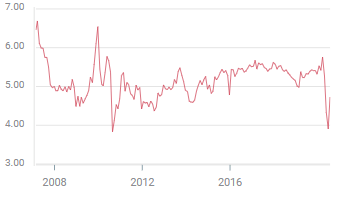
Sales of existing homes, the largest category of the US market, soared 20.7% in June as buyers took advantage of some of the lowest mortgage rates on record with lockdown deferred purchases aiding the total.
The gain was the largest one month increase since the National Association of Realtors began tracking the housing market in 1968 though only about half of the combined 36% decline in March April and May and was less than the 24.5% median forecast. The 4.72 million annualized selling rate in June, up from 3.91 million in May, was down 11.3% over 12 months.
Existing home sales, annualized
Mortgage rates
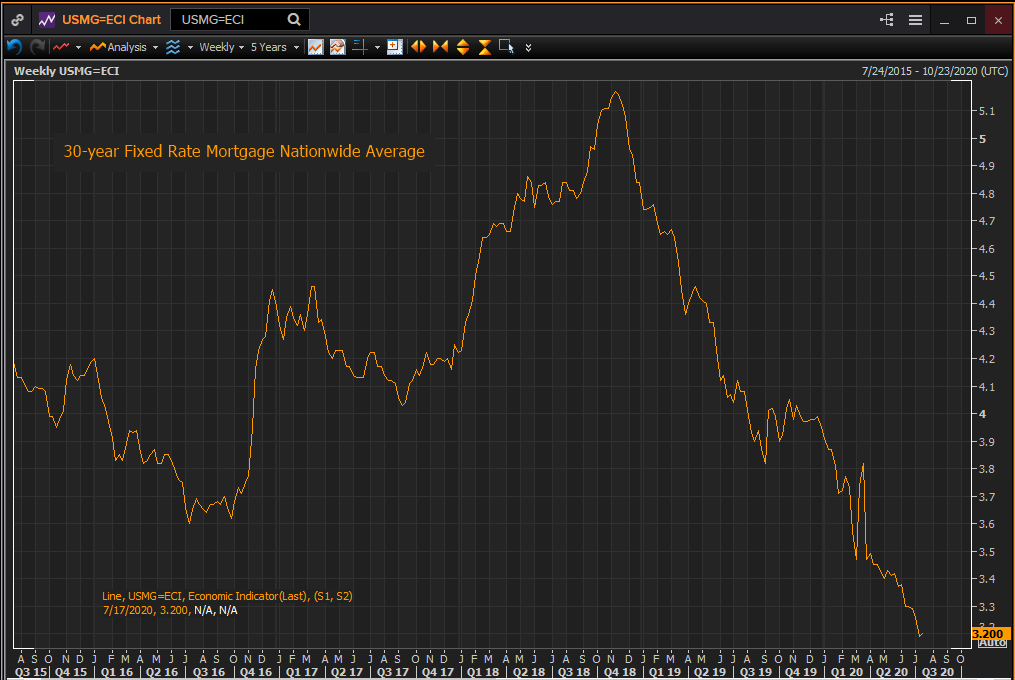
The weekly nationwide average for a 30-year fixed rate mortgage has been declining for almost two years after hitting 5.17% in November 2018. It began a sharp descent in mid-March of this year when the Federal Reserve began buying Treasuries and mortgage-backed securities as part of the bank’s Covid relief package.
From 3.82% on March 20 the rate dropped to 3.47% just one week later equaling the March 6 record set in the early Covid panic and it continued to fall to 3.19% on July 10 before edging up to 3.20% the following week.
The 3.60% all-time low before the pandemic in July 2016 was also the product of Fed intervention in the credit markets, in that case the cumulative effect of the financial crisis quantitative easing programs.
Mortgage applications rose 4.1% in the July 17 week and were up 5.1% the prior week, according to the Mortgage Bankers Association. On the year they were 19% higher. This last statistic may indicate that the demand is more than just the backlog from the two month market closure.
Contracts, supply and price
Existing home sales figures are based on signed contracts which normally take one or two months to close and transfer ownership. The June sales numbers record contracts of April and May, before most of the economy began to reopen and before the summer increase in corona virus cases.
The inventory of homes available for sale has fallen 18.2% in the past 12 months to 1.57 million at the end of June. That is a four-month supply at the current selling rate.
Sales of new homes shot up 16.6% in May after falling a total of 23.5% in February, March and April, and one reason could be the relative scarcity of existing housing on the market.
The median purchase price of an existing home rose 3.5% on the year in June to a record $295,300
Market impact
The surge in June sales had little impact on the markets for a number of reasons.
First it was expected after the three-month near shutdown of sales and had been presaged by the May burst of purchases in the new home sector. Second, record low mortgage rates were sure to encourage buyers among the 90% of labor force who were still employed. Third the June figures represent sales in late April and May that may not continue into June and after. Finally, the return of Covid cases in large parts of the country and the ensuing rollback of economic openings may put the brakes on the market again in June and July.
Author

Joseph Trevisani
FXStreet
Joseph Trevisani began his thirty-year career in the financial markets at Credit Suisse in New York and Singapore where he worked for 12 years as an interbank currency trader and trading desk manager.
















