US Existing Home Sales April Preview: Unemployment drains consumer confidence
- Largest housing sector purchases to fall by one million.
- Mortgage rates have fallen to record low in April.
- Housing sales reflect long-term consumer confidence.
- Markets historically do not react to home sales figures.

Sales of previously occupied homes are expected to decline to their lowest annualized rate in a decade as the crashing labor market has damaged long term economic confidence.
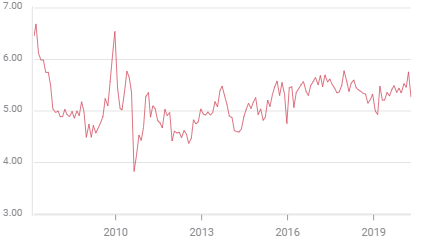
Existing home sales are forecast to fall18.9% to a 4.3 million annualized rate in April from 5.27 million as buyers retreat in the face of soaring unemployment despite the most inexpensive mortgage financing on record.
This would be the lowest sales rate for existing homes, 90% of the US market, since August 2010 and not far from the all-time low of 3.83 that July which also saw the steepest one month decline was from June at 5.37 million.
US existing home sales
Labor market and consumer confidence
The collapse of the US labor market under the government ordered business closures in the last two months is by now a well know event.
Almost 37 million people have lost their jobs with 2.4 million more expected to file for jobless benefits on Thursday. If the projection is correct that would bring the employment losses to 23.6% of the American labor force. The April unemployment rate of 14.7% saw the largest one month jump in US history though the underemployment rate of 22.8% is probably a more accurate measure of the labor market turmoil.
Consumer confidence has seen its steepest drop since the financial crisis and while it is has not yet plumbed the depths of the last recession, unemployment is already almost 50% higher than the worst of that downturn.
Mortgage rates
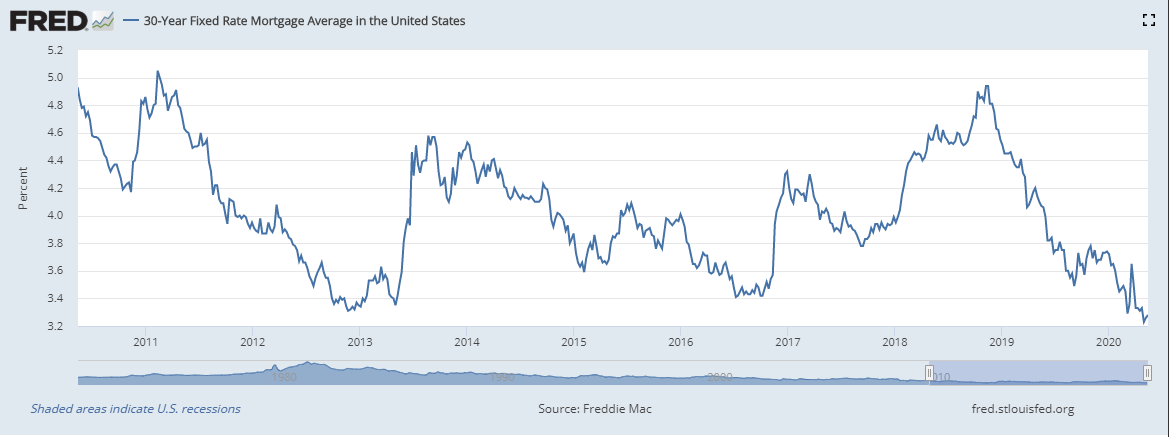
The cost of a 30-year fixed rate mortgage, the most popular US home financing averaged 3.30% in April the lowest on record. Rates have fallen steadily since mid-March as the Federal Reserve purchase program, $200 billion of which is dedicated to mortgage-backed securities and the bank’s drive to lower interest costs across the economy have pushed Treasury rates to all-time lows in several durations.
Conclusion: Jobs, jobs, jobs
Buying a home is the largest financial transaction for most American families and the willingness to commit to long-term mortgage payments reflects confidence in their economic future.
Despite the most inexpensive financing costs in post-war history the unemployment catastrophe has likely convinced many Americans that prudence requires a delay in their home plans.
As with the many ramifications of the shut down of the US economy the impact depends on economic recovery and the return of employment. The old real estate adage about how to decide on a home, location, location, location is now simply jobs, jobs, jobs.
It is possible that by the end of the summer people will again be back at work and shopping for homes, but it also possible that the economy and employment takes far longer to return and the housing market becomes yet another casualty of the coronavirus panic.
Author

Joseph Trevisani
FXStreet
Joseph Trevisani began his thirty-year career in the financial markets at Credit Suisse in New York and Singapore where he worked for 12 years as an interbank currency trader and trading desk manager.