US CPI Preview: Inflation is secondary
- Annual Core CPI predicted to be unchanged in June, overall CPI to fall
- Chairman Powell cited low inflation and changing expectations as one of the Fed’s concerns
- Fed policy unlikely to be swayed by CPI, PCE results

The Bureau of Labor Statistics will issue the June consumer price index on Thursday July 11th at 8:30 am EDT, 12:30 GMT.
Forecast
The consumer price index is expected to gain 0.2% in June after May’s 0.1% increase. Annual inflation will drop to 1.6% from 1.8%. Core CPI is forecast to rise 0.2% in June up from April’s 0.1%. Core inflation is forecast to be unchanged at 2.0%.
Federal Reserve Rate Policy and the US Economy
The Federal Reserve is widely expected to cut its base rate for the first time in a decade at the FOMC meeting at the end of July.
In Congressional testimony on Wednesday, Chairman Jerome Powell cited the threats to the US economy from declining global growth and the unsolved trade dispute with China.
In response to a question on stagnant earnings Mr. Powell said that wages are not rising fast enough to promote inflation. He added that with inflation below the 2% target for much of the past few years there was a danger of it affecting long-term expectations. The bank, he said, will “act as appropriate to sustain the expansion.”
Federal Reserve Policy and Inflation
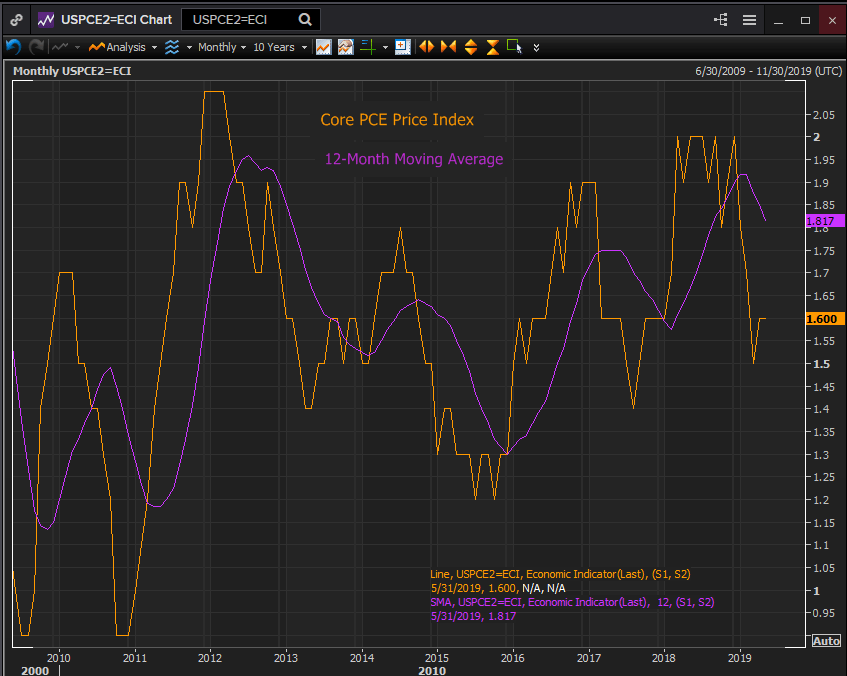
The Fed’s official 2% target for the core personal consumption expenditure (PCE) price index has been observed mostly in the breach in the decade since the financial crisis and recession.
Reuters
The three bank leaders Ben Bernanke, Janet Yellen and now Jerome Powell have paid careful verbal attention to inflation but as a policy goal prices were secondary. It was more important to bring back economic growth and then to normalize interest rates. Inflation was said to be symmetric around its target sometime in the future.
For almost the entire three year period from December 2015 until December 2018 as the FOMC was bringing rates from 0.25% up to 2.5% inflation was below the 2% goal.
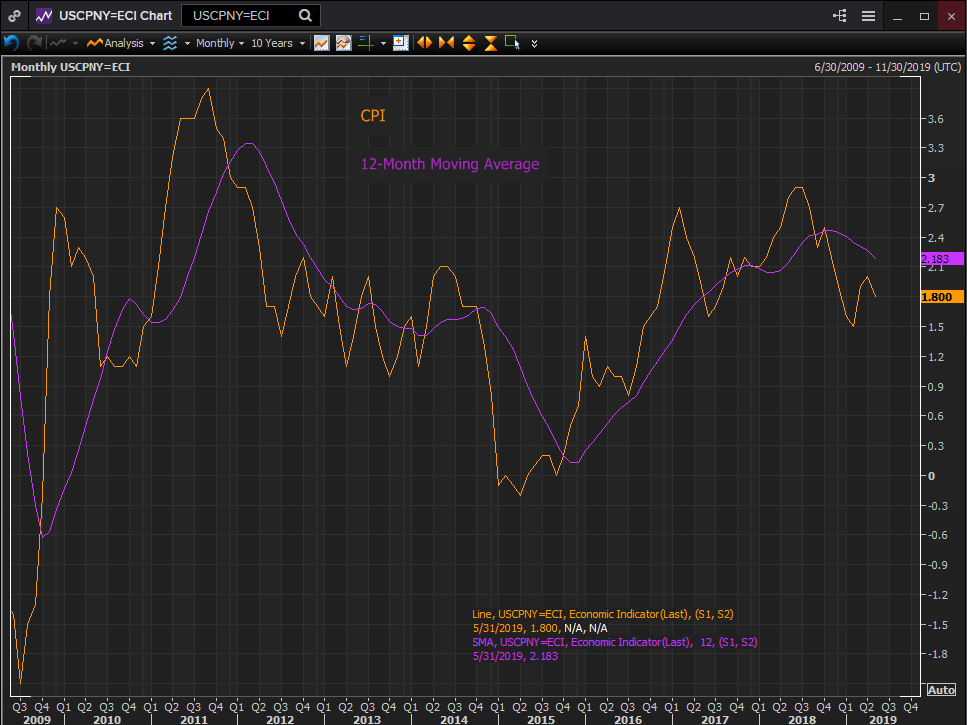
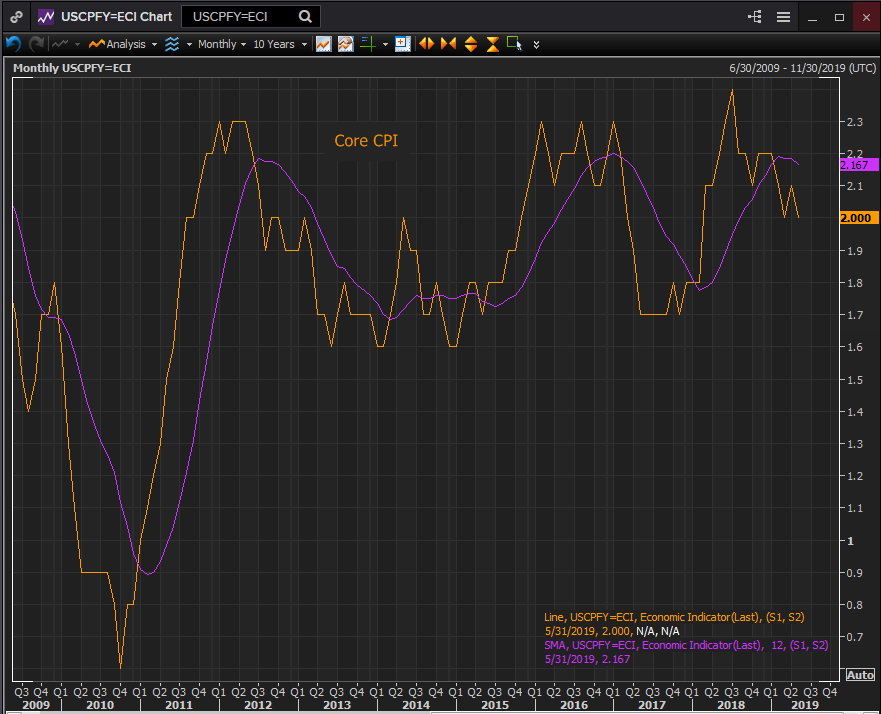
The consumer price index has averaged 2.18% in the 12 months to May. The core rate averaged 2.17%. Both have been falling for almost a year. The core rate from2.4% in July 2018 and the overall from 2.9% in the same month.
Reuters
Reuters
These declines mimic at a slightly higher level the drop in the core PCE price index from 2% in December to 1.6% in May.
The consumer price index and more directly the PCE price index are, in the current Fed playbook, secondary indicators for a rate decrease the governors clearly want to make.
If CPI and PCE are lower than anticipated they will reinforce the Fed case for the July rate cut. If not the Fed has staked the majority of its economic logic on factors external to the US economy. Either way markets have fully priced the July cut and are unlikely to be moved from that conviction regardless of the inflation numbers for June.
The core PCE index for June comes out on July 30th the day before the FOMC decision.
Author

Joseph Trevisani
FXStreet
Joseph Trevisani began his thirty-year career in the financial markets at Credit Suisse in New York and Singapore where he worked for 12 years as an interbank currency trader and trading desk manager.
















