US ADP Jobs Preview: A weakening trend US private
- US private sector job creation is expected to slow to 195K in August.
- The last four ADP reports surpassed expectations by a wide margin.
- The US Dollar remains strong, supported by US data, primarily in the labor market.

On Wednesday, at 12:15 GMT, Automatic Data Processing (ADP) will release its employment report for August. The market consensus is for an increase in US private payrolls of 195,000. If the reading aligns with the forecast, it would indicate the slowest growth in five months. However, the last four reports have shown numbers significantly above market consensus. In July, private employment rose by 324,000, surpassing the estimated 191,000.
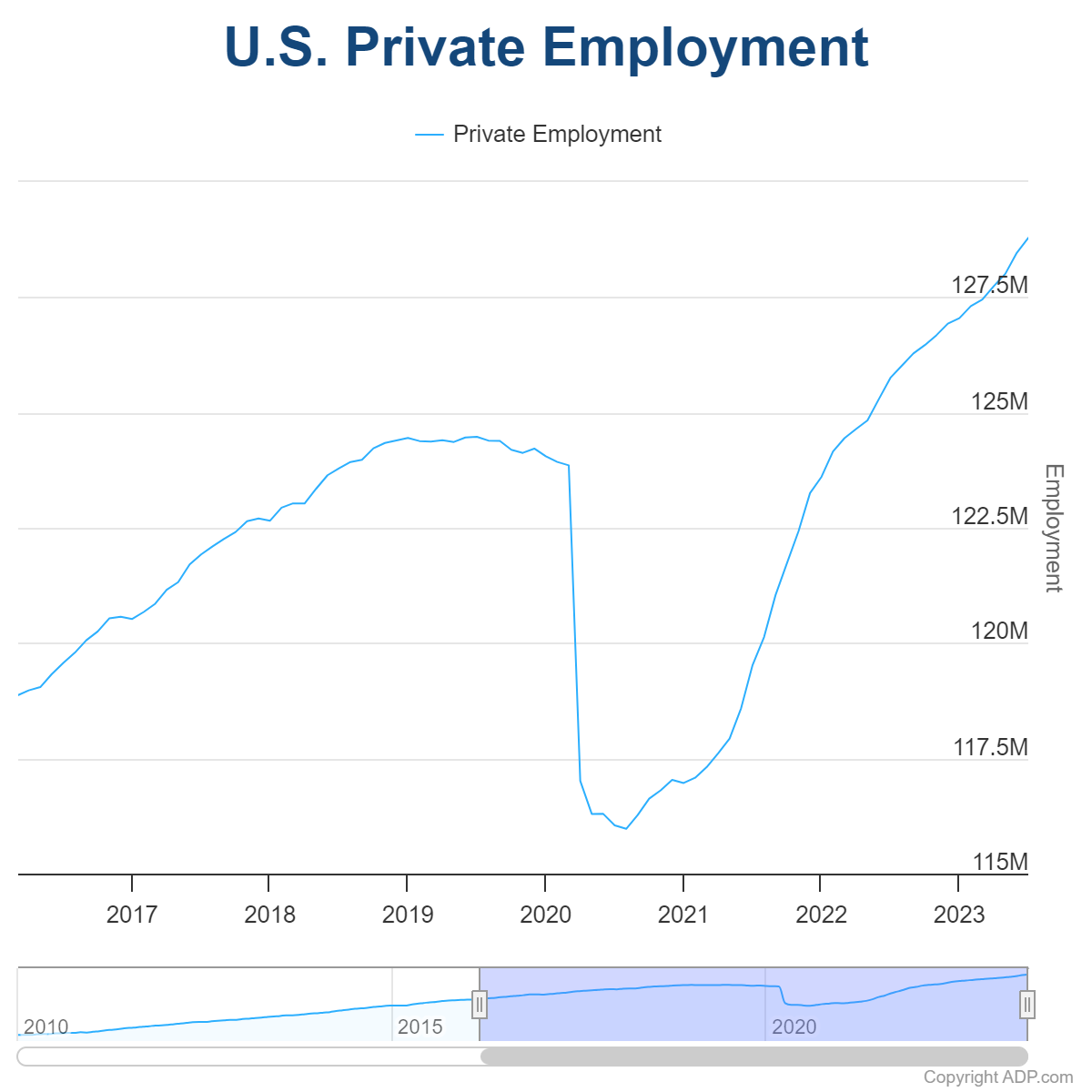
On August 2, July's positive ADP employment number boosted the US Dollar initially, as it raised expectations for a positive surprise in the Nonfarm Payrolls (NFP) report. However, the NFP report missed expectations, causing the US Dollar to move in the opposite direction.
More recently, on Tuesday, the JOLTS Job Openings report for July (https://www.fxstreet.com/news/us-jolts-preview-job-openings-set-to-decline-further-in-july-202308290832) showed numbers below estimates, which further weighed on the US Dollar. Considering this, an ADP number below expectations could fuel the correction of the Greenback.
However, any US Dollar pullback could be short-lived. Even if market participants show less conviction for another rate hike from the Federal Reserve (Fed), the divergence in economic performance between the US and other major economies, such as Europe, Japan, and China, could limit the weakening of the Dollar.
Another essential factor to consider is that alongside ADP, other crucial reports will be released this week. On Wednesday, there will be a new estimate of Q2 Gross Domestic Product (GDP) growth, followed by the Core Personal Consumption Expenditure (PCE) Index and the weekly Jobless Claims on Thursday.
All these reports will be closely watched and could help shape expectations regarding the next FOMC meeting on September 19-20. August's ADP and NFP reports will be the last employment reports before that meeting, while more inflation data is due the week before the meeting, with the Consumer Price Index and the Producer Price Index.
The markets are anticipating a weakening trend in the labor market, and the upcoming ADP and other reports will be crucial in confirming these expectations. If there is a negative surprise in the data, with figures indicating more than just weakening – such as stagnation or a negative change in employment – it would likely hurt the US Dollar. On the contrary, if the numbers exceed expectations, suggesting a persistently tight labor market, they could potentially boost the US Dollar to fresh monthly highs.
Technical DXY: Bullish but overbought
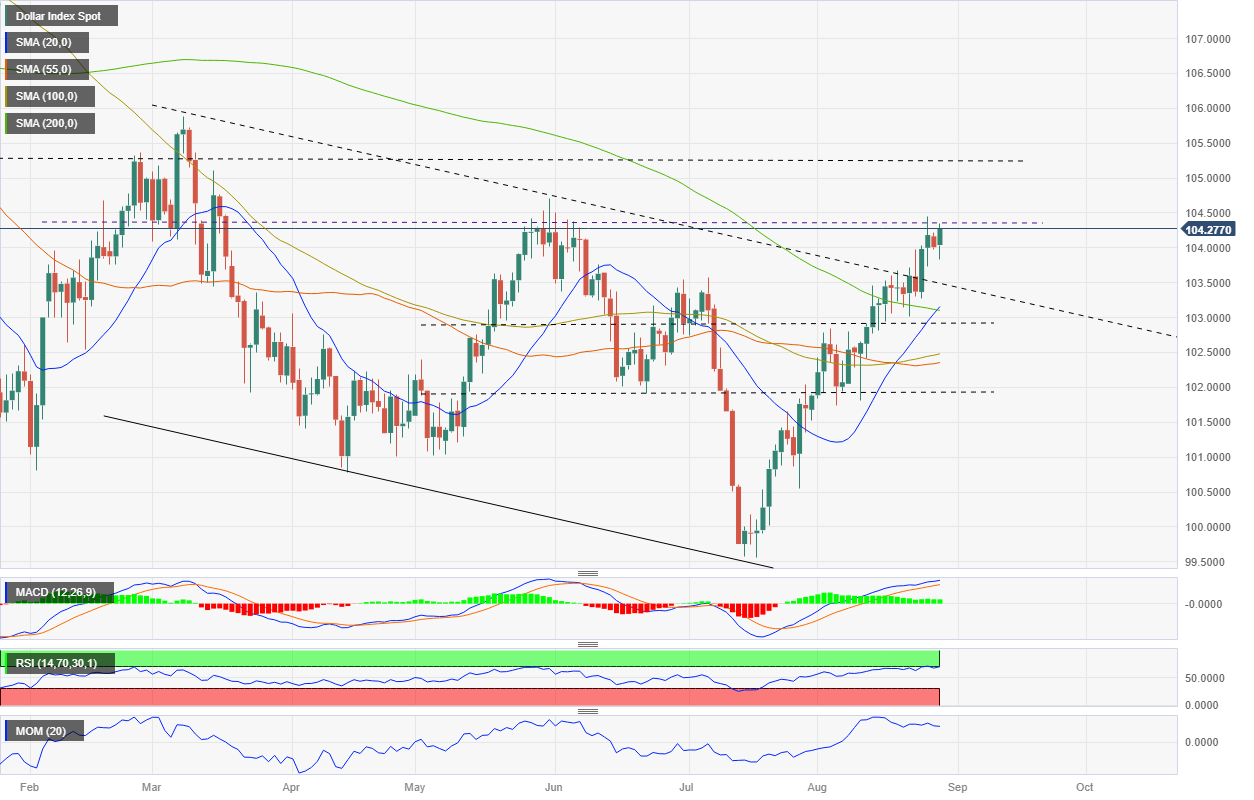
The US Dollar Index (DXY) broke a downtrend line last week and tested levels above 104.00. The bias is to the upside, with the price holding well above key daily Simple Moving Averages. The Relative Strength Index (RSI) is flat at 70, as it has been for over a week, suggesting potential consolidation or correction ahead.
The DXY faces a medium-term resistance area between 104.30 and 104.50. If it breaks and holds above this level, it will likely open the door to further gains, targeting 105.00 and beyond. On the flip side, a move below 103.50 could weaken the bullish outlook, indicating a possible correction towards 103.10.
Premium
You have reached your limit of 3 free articles for this month.
Start your subscription and get access to all our original articles.
Author
Matías Salord
FXStreet
Matías started in financial markets in 2008, after graduating in Economics. He was trained in chart analysis and then became an educator. He also studied Journalism. He started writing analyses for specialized websites before joining FXStreet.

















