Non–Farm Payrolls: If this is a slowdown we’ll take it

The US economy continued to produce jobs at a healthy rate as unemployment fell to a five decade low and wage growth slowed unexpectedly
Unemployment dropped 0.2% to 3.5% as the economy created 136,000 new jobs in September and added 45,000 in prior months, reported the Bureau of Labor Statistics on Friday. Annual wages rose 2.9% and the jobless rates for Hispanics and African-Americans registered all-time lows.
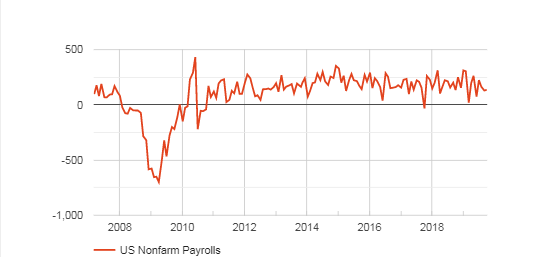
Consensus estimates had been for payrolls of 145,000, an unchanged unemployment rate of 3. 7% and wage expansion stable at 3.2%.
The report mollified market fears, stoked by this month’s purchasing managers’ reports that showed the manufacturing sector in contraction for the second month and a sharp decline in service industries, that the US economy was succumbing to the disruptions of the trade war with China and global economic weakness.
Markets responded to the better than forecast data by giving the dollar a modest boost and opening 150 points higher in the Dow after futures were 38 points negative prior to the release.
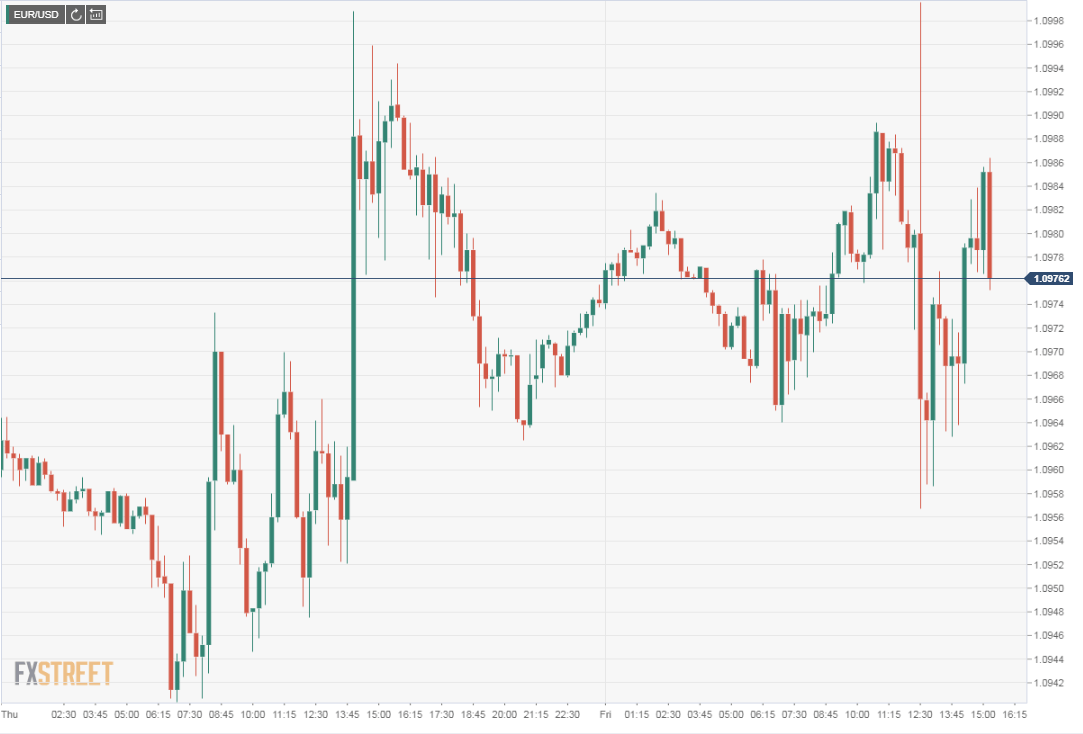
Bonds were little changed with the yield on the 2-Year generic up 2 points at 1.41% and the 10-Year down 1 basis point at 1.52% for a 11 point spread (11:30 EDT)
The labor force participation rate was unmoved at 63.2%. The underemployment rate, which includes discouraged workers who have searched for a position in the previous year, decreased 0.3% to 6.9% its lowest in 19 years and just above the record low of 6.8%.
September’s job performance did not change the overall American economic picture. The labor market continues to produce more than enough jobs to cover new entrants to the work force though the 161,000 average this year is substantially lower than the 223,000 for the same period in 2018.
The unanswered question is how long can the economy produce high levels of employment with the manufacturing sector in contraction and the continuing drag from the China trade conflict?
Business investment and sentiment have been the weak points for a year as China and concerns about global growth have sapped outlook and the willingness to spend for the future.
Interestingly the sharp and prolonged decent in business confidence has had limited effect on hiring decisions as firms continue to seek and hire new workers.
Consumers on the other hand have used their rising disposable income to maintain the highest level of retail sales in 16 years.
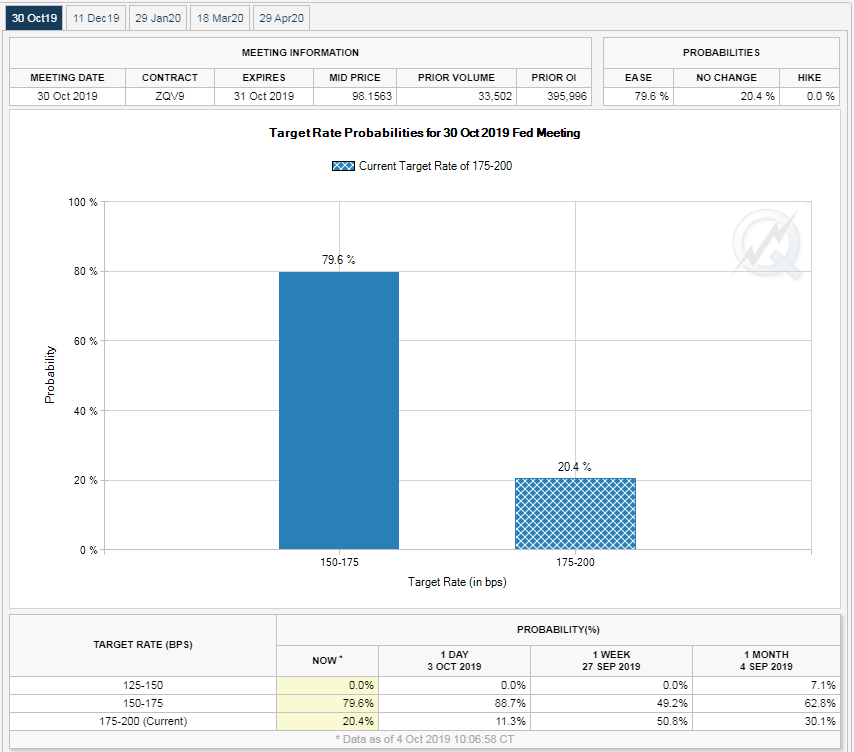
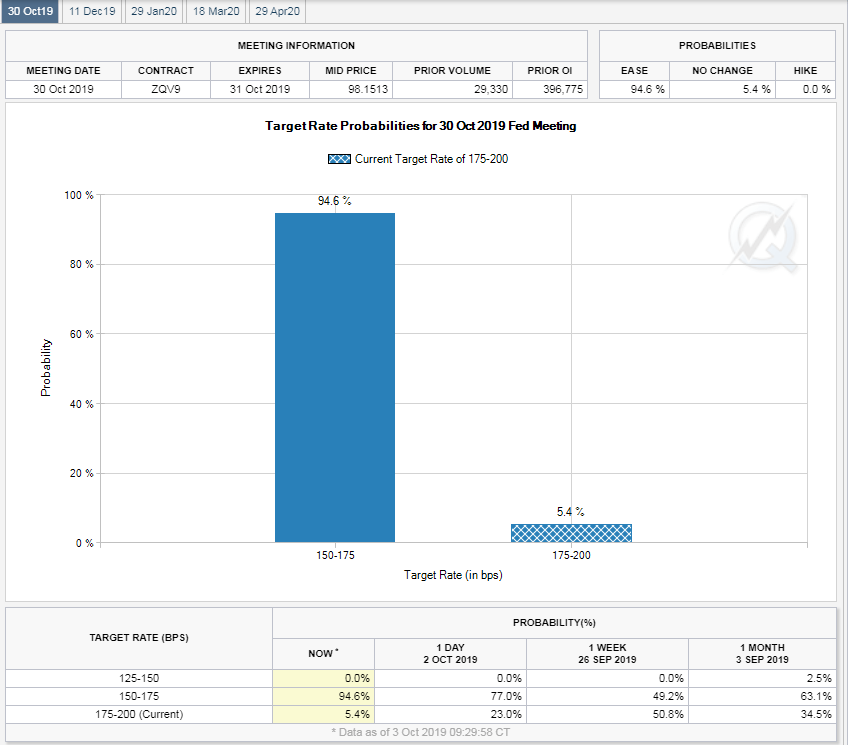
The NFP report will mitigate some of the immediate pressure on the Federal Reserve for another 0.25% rate cut at the October 29-30 meeting. The FOMC has reduced its base rate 25 basis point at the last two meeting, citing global and trade threats to the US economy.
CME Group
On Thursday afternoon they were 94.6% positive for a rate cut. After the release the chance was 79.6%.
CME Group
Author

Joseph Trevisani
FXStreet
Joseph Trevisani began his thirty-year career in the financial markets at Credit Suisse in New York and Singapore where he worked for 12 years as an interbank currency trader and trading desk manager.
















