Ichimoku cloud analysis: XAU/USD, NZD/CAD, USD/CHF

XAU/USD, “Gold vs US Dollar”
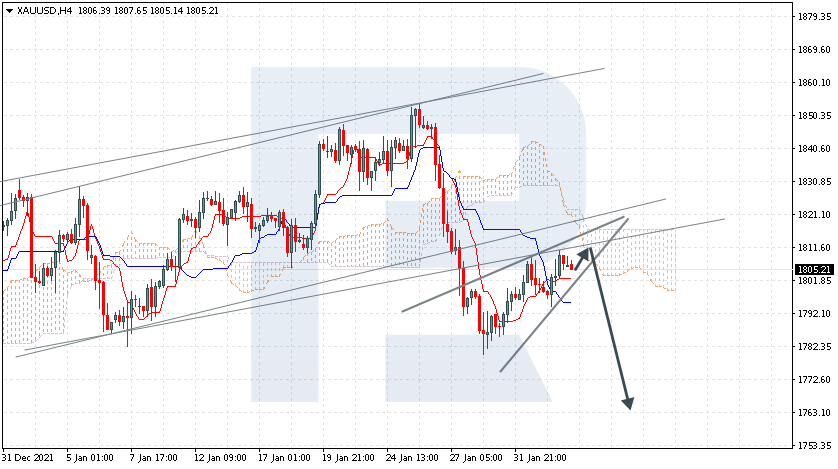
XAU/USD is trading at 1805.00; the instrument is moving below Ichimoku Cloud, thus indicating a descending tendency. The markets could indicate that the price may test the cloud’s downside border at 1810.00 and then resume moving downwards to reach 1765.00. Another signal in favour of a further downtrend will be a rebound from the rising channel’s downside border. However, the bearish scenario may no longer be valid if the price breaks the cloud’s upside border and fixes above 1830.00. In this case, the pair may continue growing towards 1860.00. To confirm further decline, the asset must break the downside border of the Wedge pattern and fix below 1795.00.
NZD/CAD, “New Zealand Dollar vs Canadian Dollar”
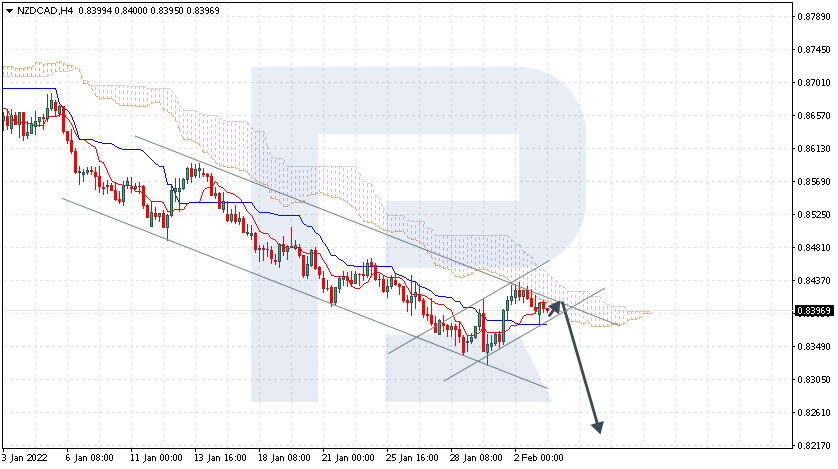
NZD/CAD is trading at 0.8396; the instrument is moving below Ichimoku Cloud, thus indicating a descending tendency. The markets could indicate that the price may test the cloud’s downside border at 0.8405 and then resume moving downwards to reach 0.8245. Another signal in favour of a further downtrend will be a rebound from the bearish channel’s upside border. However, the bearish scenario may no longer be valid if the price breaks the cloud’s upside border and fixes above 0.8455. In this case, the pair may continue growing towards 0.8545.
USD/CHF, “US Dollar vs Swiss Franc”
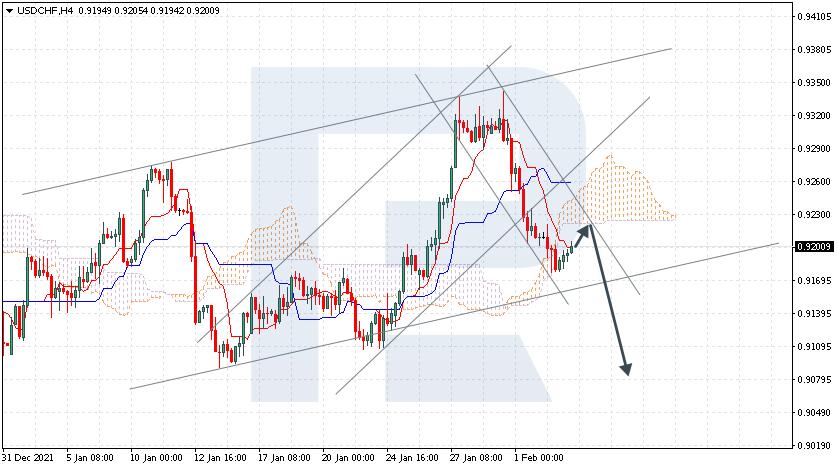
USD/CHF is trading at 0.9200; the instrument is moving below Ichimoku Cloud, thus indicating a descending tendency. The markets could indicate that the price may test the cloud’s downside border at 0.9225 and then resume moving downwards to reach 0.9080. Another signal in favour of a further downtrend will be a rebound from the bearish channel’s upside border. However, the bearish scenario may no longer be valid if the price breaks the cloud’s upside border and fixes above 0.9305. In this case, the pair may continue growing towards 0.9395. To confirm further decline, the asset must break the rising channel’s downside border and fix below 0.9140.
Author

RoboForex Team
RoboForex
RoboForex Team is a group of professional financial experts with high experience on financial market, whose main purpose is to provide traders with quality and up-to-date market information.