GBP/USD Weekly Forecast: Bulls to face an uphill battle, with geopolitics in play
- GBP/USD flirts with monthly top amid hotter UK inflation, dovish Fed minutes.
- Cable’s further upside appears limited amid geopolitical woes, sparse UK docket.
- 200-day SMA aligns as the next critical resistance for the pair.

GBP/USD is heading into a fresh week on the front foot, having booked three straight weekly gains. The high-beta British pound remained resilient to the Russia-Ukraine crisis that dominated all through the week, as hotter UK inflation ramped up aggressive rate hike expectations from the Bank of England (BOE). Cable traders look forward to the Preliminary Business PMIs from both sides of the Atlantic, BOE’s Monetary Policy Report (MPR) and the Fed’s preferred inflation gauge for fresh trading directives.
GBP/USD in the hindsight: Hotter UK inflation eclipses geopolitical risks
The pound has once again defied bearish odds, coming out a clear winner for the third week in row when compared to the US dollar. The currency pair enjoyed bargain-buying and built upon the previous week’s gains. Bulls gave into the bearish pressure at the start of the new week on Valentine’s Day, as the risk-off trade extended from late Friday after the US reported of a likely Russian invasion beginning this week. No love on Valentine’s Monday as the calendar remained data-dry.
Tuesday also saw risk being sold heavily into the Russia-Ukraine tensions and the major tumbled to two-week lows of 1.3485, as US officials expressed doubts over a withdrawal of Russian troops from the Ukrainian border, adding that, if anything, the Russians were amassing more troops. On Wednesday, bulls jumped in and helped stage an impressive V-shaped recovery, as the US dollar fell across the board ahead of the release of the Fed’s minutes. Meanwhile, GBP traders paid little heed to the mixed UK labor market report. The UK’s official Unemployment Rate steadied at 4.1% in December vs. 4.1% expected. The number of people claiming jobless benefits fell to -31.9K in January.
GBP/USD extended its renewed upside on Wednesday, as the UK annualized inflation rate hit a fresh 30-year high, arriving at 5.5%, a tad hotter than the 5.4% expected. Soaring inflation in Britain fanned expectations of an aggressive BOE rate hike in the year ahead. On the other hand, the January Fed minutes disappointed hawks and triggered a fresh wave of dollar selling.
Swap markets began dialing back the probability of a 50-basis points (bps) March Fed rate hike amid the ongoing war-like situation concerning Russia and Ukraine. The greenback was offered support from the risk-off market profile, once again ignited by reports from the Russian media on Thursday, citing that the Ukrainian military and rebels fired grenades and mortars in four Luhansk People's Republic (LPR) localities, which are in the war-torn Donbass region. Risk-aversion intensified after the US’s warnings over a potential Russian incursion of Ukraine, which kept cable’s bullish streak capped below the previous week’s high of 1.3645.
On Friday, GBP bulls struggled to extend control amid an improvement in risk sentiment, courtesy of receding fears over an imminent war. Russian troops continued to return to bases after completion of their drills while US officials scheduled talks with their Russian counterparts, sparking hopes of diplomacy and de-escalation. Amidst the Russia-Ukraine conflict, looming Brexit concerns took a back seat, as geopolitics led the way.
GBP/USD: Week ahead
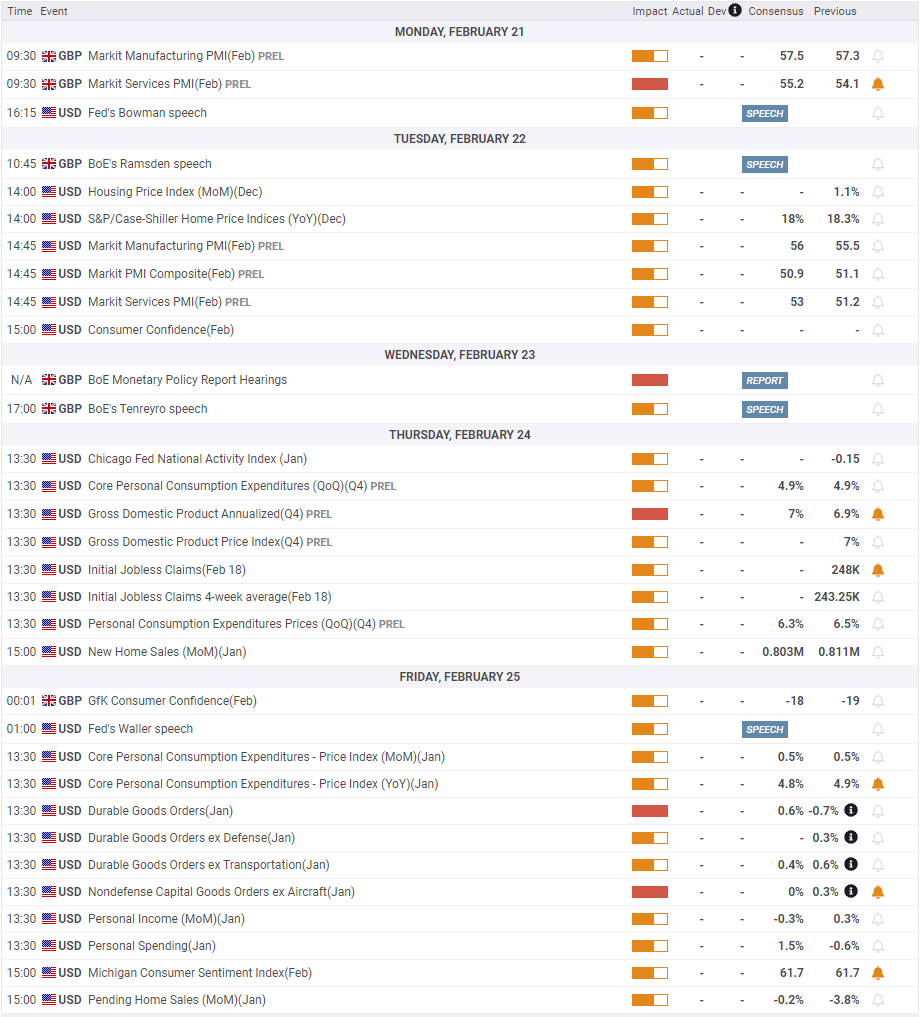
The week kicks off with the UK Preliminary Markit Manufacturing and Services PMI reports on Monday, although it will be a slow start as US markets observe Presidents' Day.
On Tuesday, mid-tier UK Industrial Order Expectations and a speech from BOE Deputy Governor Dave Ramsden fills up an otherwise sparse docket. Meanwhile, the US releases the Preliminary Markit Business PMIs.
The BOE’s quarterly MPR will be published on Wednesday ahead of Thursday’s opening remarks by the central bank Governor Andrew Bailey at the BOE's First Annual BEAR Conference, in London. The second revision of the US Q4 GDP and weekly Jobless Claims will also keep traders entertained in the second half of the week.
Friday sees the releases of the US PCE Price Index and Durable Goods data, followed by the revised UoM Consumer Sentiment. The UK has nothing of relevance to offer on the final trading day of the week.
Despite a relative data-light week, the main underlying theme will be determined by Russia-Ukraine geopolitical updates. The planned meeting between the US Secretary of State Antony Blinken and Russian Foreign Minister Sergey Lavrov will hold the key for markets.
GBP/USD: Technical Analysis
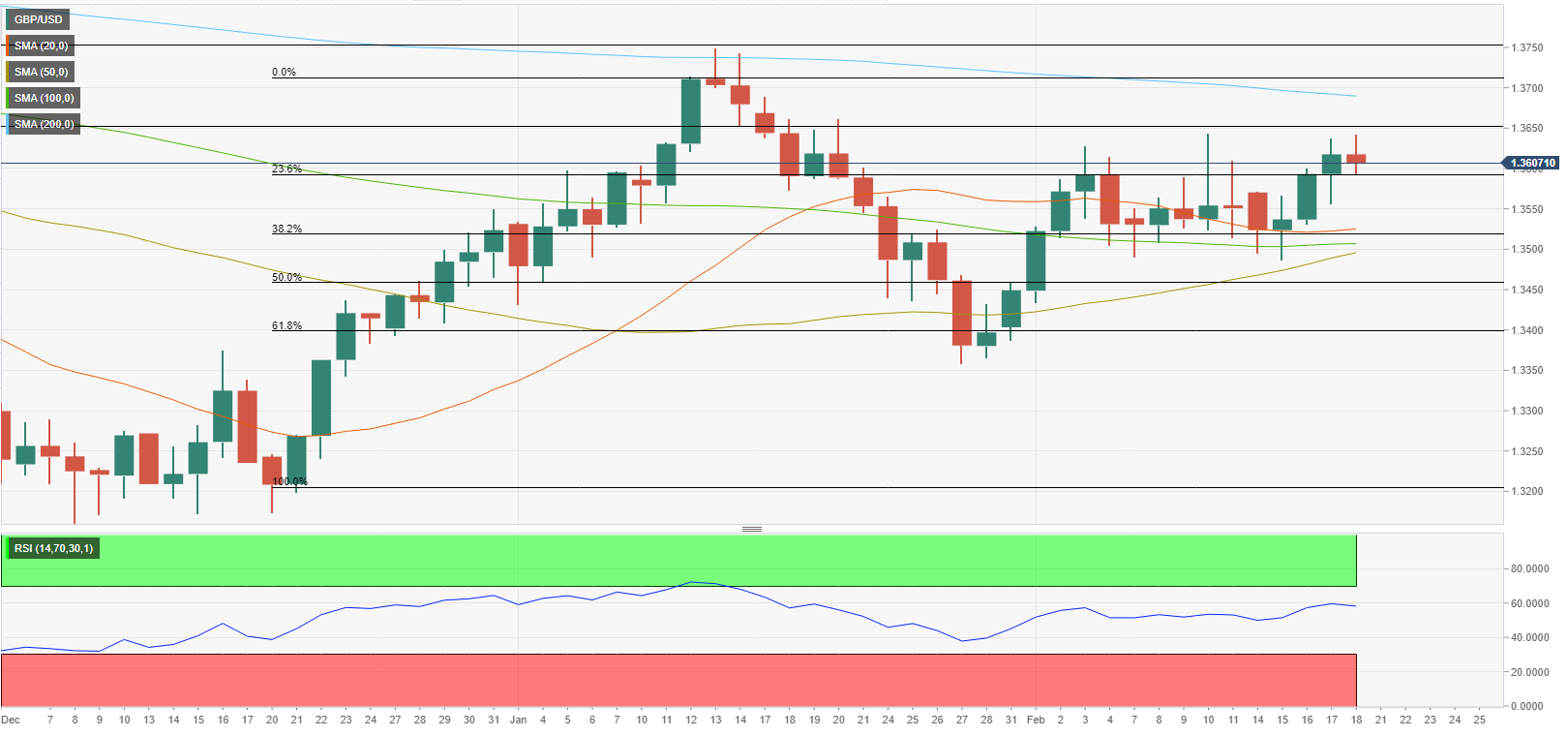
Interim resistance for GBP/USD seems to have formed at 1.3650 following this week's action. In case the pair clears that hurdle by making a daily close above, it is likely to face stiff resistance at 1.3700 (200-day SMA, psychological level, static level) ahead of 1.3750 (static level, February 23 high).
On the downside, 1.3600 (psychological level, former resistance) aligns as the first support. If the pair falls below that level and starts using it as resistance, next bearish targets could be seen at 1.3500 (100-day SMA, 50-day SMA, Fibonacci 38.2% retracement of the latest uptrend) and 1.3450 (Fibonacci 50% retracement).
In the meantime, the Relative Strength Index (RSI) indicator on the daily chart holds above 50, suggesting that a bullish bias stays intact in the near term.
GBP/USD: Forecast poll
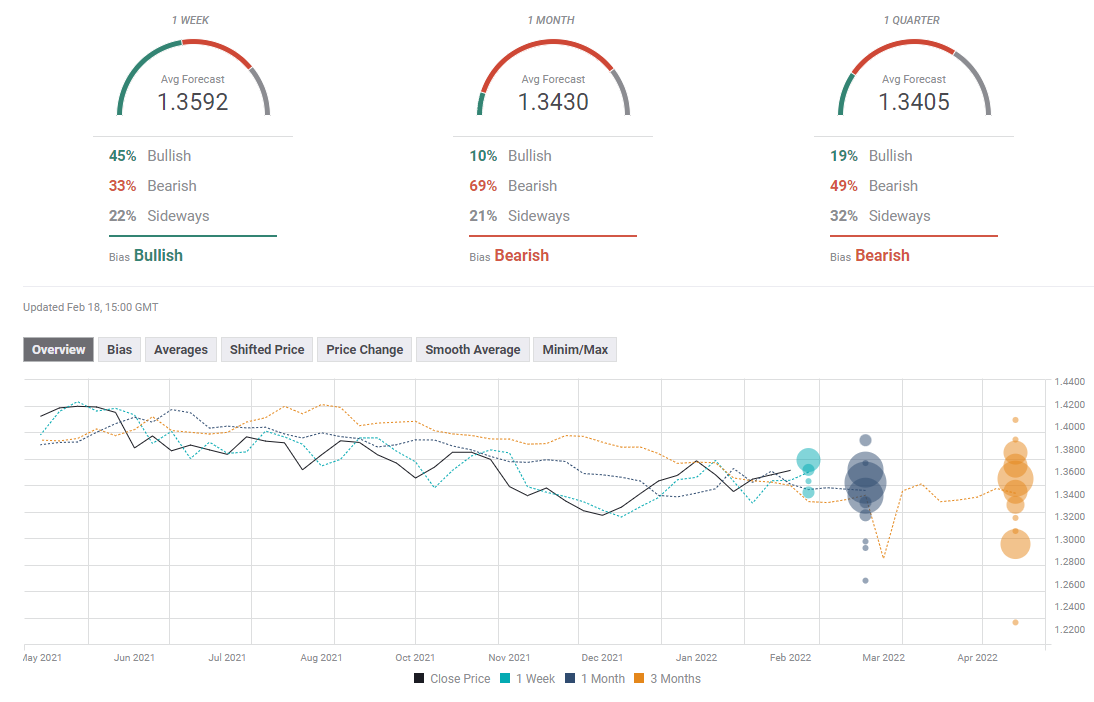
The FXStreet Forecast Poll shows that experts don't see GBP/USD building on this week's gains with the one-week average sitting at 1.3592. The one-month outlook, however, remains overwhelmingly bearish.
Author

Dhwani Mehta
FXStreet
Residing in Mumbai (India), Dhwani is a Senior Analyst and Manager of the Asian session at FXStreet. She has over 10 years of experience in analyzing and covering the global financial markets, with specialization in Forex and commodities markets.