FOMC preview: The Fed is paralyzed by uncertainty, but the Dots might still bite
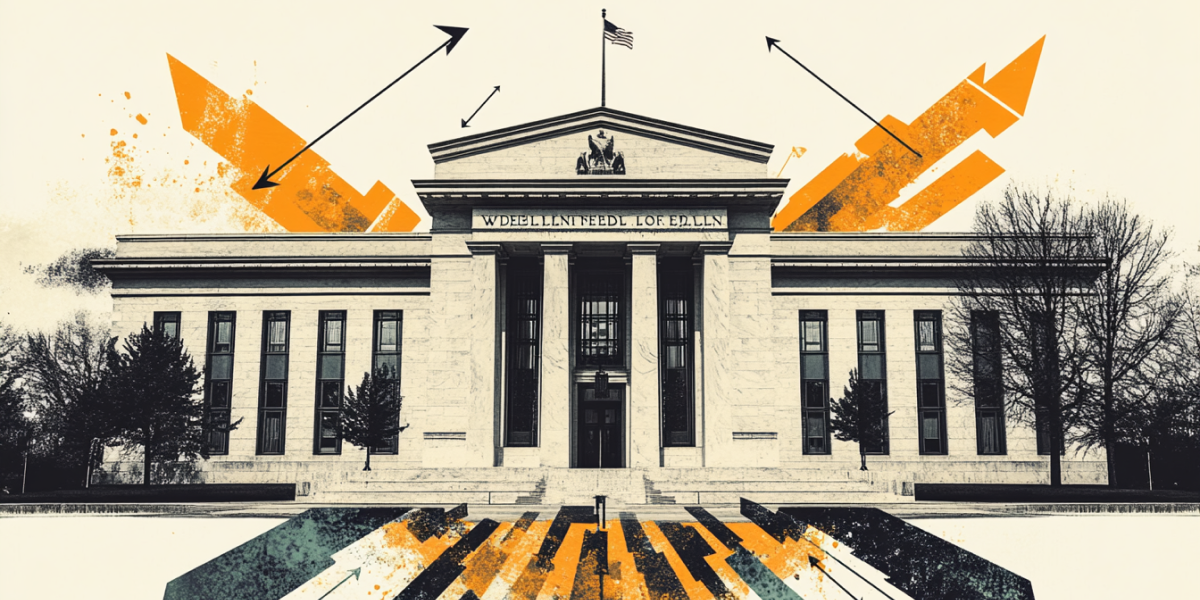
The Fed walks into today’s meeting wearing a straightjacket of its own making—shackled by uncertainty, cornered by tariffs, and surrounded by data that won’t cooperate with any clean narrative. Rates will stay frozen at 4.25–4.50%, that’s a lock. But the real game isn’t the decision—it’s the dots, and what they whisper about the path ahead. Markets aren’t expecting fireworks, but they should at least brace for a few sparks. The dot plot—Wall Street’s favourite Rorschach test—could get a hawkish smudge, and if Powell plays coy at the press conference, traders will have to guess whether the fog is real or strategic.
This isn’t your garden-variety “higher for longer.” The Fed is trying to hike without hiking, to project policy toughness while the world melts under rising trade costs and geopolitical stress. Trump’s tariff regime, now effectively embedded at a 14% rate, is a stealth tax still working its way through the economic plumbing. But it’s perceived to be a two-headed monster: it pressures inflation higher and growth lower. The Fed is trying to stay on the fence, but the fence is electrified. Inflation is cooling just enough to suggest that we should consider cutting, but not enough to justify a cut. Meanwhile, the labour market is holding firm, but cracks are appearing in participation and forward indicators. There’s no clean macro read. So Powell will likely say a lot, but commit to nothing.
Here’s where the market could get tagged. In March, the Fed had pencilled in two cuts this year. Today, even one might be a stretch. The 2025 median dot could inch up toward 4.125%, reflecting a grudging acceptance that cuts are slipping toward the horizon. Some participants may even pull their cuts entirely, citing tariff-driven inflation or rising geopolitical risk premiums. It won’t take much for the center of gravity to shift. Just two governors nudging higher could tilt the balance. And given how hawkish Powell sounded in May—dropping bidirectional optionality and doubling down on price stability—markets should be prepared for a more resolute stance.
The Summary of Economic Projections will likely bear the scars of tariff economics. Expect downward revisions to GDP growth and upward bumps in inflation and unemployment. The Fed will attempt to balance this with language that emphasizes flexibility. Still, the SEP could quietly overshadow the hope of September cuts under a pile of 3%-handle PCE forecasts and 4.5% unemployment rate projections. Powell will thread the needle by leaning on uncertainty—pointing to ongoing Middle East instability, imported inflation risks, and sticky service prices—while dodging any firm commitment. It’s the classic Powell dodge: confuse with nuance, soften with academic vagueness, and punt to the next payroll print.
Dollar traders are caught between two crosscurrents: macro silence and positioning noise. The dollar has become increasingly macro-agnostic, drifting more on global risk flows than domestic policy. A hawkish dot plot could jolt DXY off its cycle lows and flush out some extended EUR longs, but the bar is high. Without a real policy pivot or fresh data catalyst, FX will likely trade in fits and starts, chasing headline risk and cross-asset momentum.
Rates traders are bracing for an uptick in the 2025 median dot, which could flatten the curve in the short term. But the longer arc still bends toward steepening. As the fiscal monster continues to lurch through Washington, and the Fed eventually blinks in the face of slowing growth, the front end will be the first to give. For now, it’s a structural steepener’s market—quiet, coiled, and waiting for the unemployment rate to tip the scales.
Today’s Fed meeting won’t move rates, but it could move markets. If Powell leans too hard on the inflation side of the mandate, or if the dots creep up even modestly, expect yields to climb, equities to wobble, and FX to churn. However, if he navigates the tightrope cleanly, with a nod to downside risks and no significant change to forward guidance, we could slip into a holding pattern until the next CPI shock—or a geopolitical flashpoint—breaks the spell. In a world where the data fog is thick and the Fed refuses to light the way, all traders can do is trade the shadows.
Author

Stephen Innes
SPI Asset Management
With more than 25 years of experience, Stephen has a deep-seated knowledge of G10 and Asian currency markets as well as precious metal and oil markets.