Explainer: Where next for GBP/USD and when it could tackle the 1.3150-1.32 support zone
- GBP/USD may suffer from the Fed's ongoing hawkishness and fall toward the late-2020 lows.
- A "buy the rumor, sell the fact" could later support a recovery for the pair.
- Later, Brexit could limit any move toward 1.40.

Where is GBPUSD going next in the short and long term? How likely is it GBP/USD will break below 1.3150-132? The currency pair that always trades on the fast lane had an exciting 2021 and is heading for another roller coaster in 2022.
* Note: This content first appeared in a response to a Premium User's question on Trading Studio. Sign up to get initial access to this outlook and many more.
GBP/USD and the dollar storm
In the immediate term, a drop of some 350-400 pips is unlikely, but GBP/USD volatility is quite significant. The currency pair traded under 1.32 as late as mid-December, less than a month ago.
It could resume its fall to that zone if the US Federal Reserve ramps up its hawkish rhetoric and if US data remains strong, there is room for substantial dollar gains across the board.
The US jobless rate dropped to 3.9% and wages are up 4.7% in 2021. Is inflation still high? An answer is due out in the next few days with the CPI report, but every inflation-related data point is critical.
If the Fed not only raises rates in March but also moves forward with selling bonds – basically withdrawing money out of the markets, the opposite of printing dollars – there is room for more gains.
In that scenario, GBP/USD can fall sharply, regardless of Britain's current success with mitigating Omicron. Covid cases have been falling for several days, in what seems like the peak of a huge wave. However, that will likely happen in the US and Europe afterward, meaning GBP/USD has a limited advantage.
GBP/USD beyond the Fed hawkishness
Later on, the dollar might fall on a "buy the rumor, sell the fact" response. Once the Fed begins tightening, the news will be out and there will be no more reasons to buy the dollar in the longer term. It is also essential to note that the Bank of England is also on a tightening path, so the pound would be on a good footing to compete with the greenback on the monetary policy front.
Later in the year, US inflation will likely fall and drag the dollar down with it. The pound will likely struggle to make big gains, however. It is above current levels, but moving above 1.40 would be limited by Brexit. The UK economy could lag others and monetary policy by the BOE could follow.
GBP/USD Technical Outlook
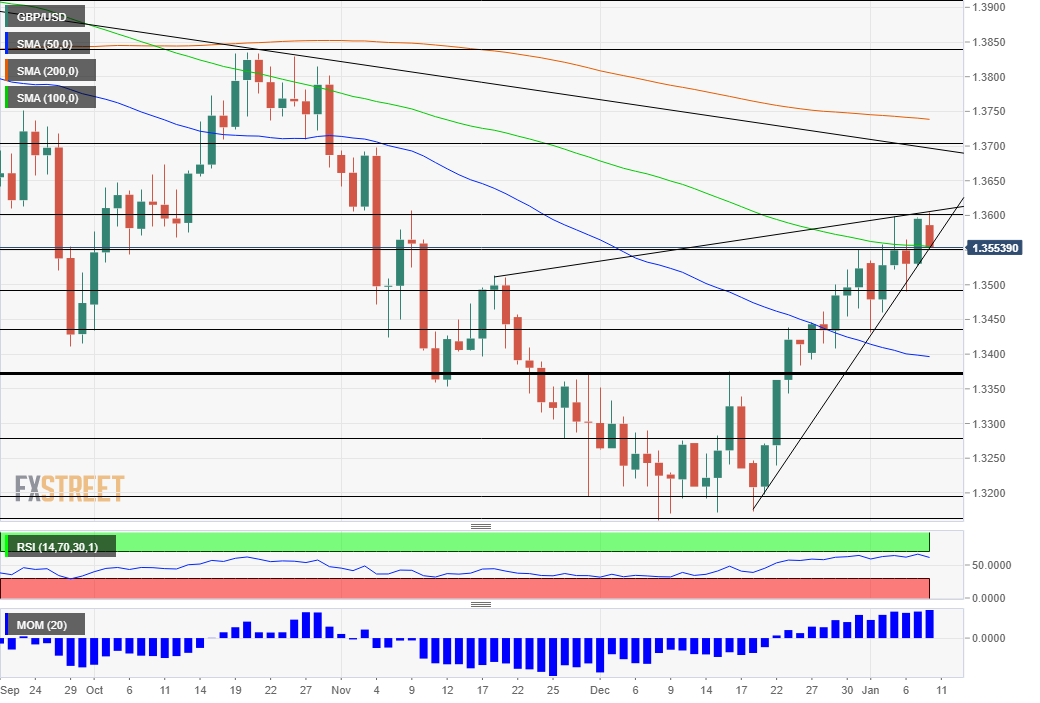
Overall, GBP/USD could drop in response to dollar strength, bounce on a relief rally, but then fail to advance.
Technically, GBP/USD is trading in an uptrend, benefiting from upside momentum on the daily chart and surpassing the 50 and 100-day SMAs on its way up. For the scenario of a fall in the next month to materialize, it would need to break below this uptrend support line. Horizontally, 1.3480, 1.3430, and critically 1.3380 provide support. Further below, 1.3280 and 1.32 are eyed, before the December trough of 1.3175.
Resistance is at 1.36, followed by 1.37, 1.3840, and 1.3910.
Premium
You have reached your limit of 3 free articles for this month.
Start your subscription and get access to all our original articles.
Author

Yohay Elam
FXStreet
Yohay is in Forex since 2008 when he founded Forex Crunch, a blog crafted in his free time that turned into a fully-fledged currency website later sold to Finixio.