Energy shock: Why inflation risks could persist into 2027
Rising diesel, LNG and jet fuel prices are creating new inflationary pressures across the global economy. Even if crude oil prices stabilize, the transmission into consumer prices, corporate margins and monetary policy may continue well into 2027.
Global energy markets are facing renewed uncertainty as geopolitical tensions in the Middle East continue to threaten critical supply routes.
However, the most important development may no longer be the direction of crude oil prices alone.
While Brent crude briefly reached $111.99 per barrel on October 20 before retreating to $108.79, refined petroleum products and natural gas remain under significant pressure.
The distinction matters because businesses and consumers do not purchase crude oil directly. They depend on diesel, aviation fuel, natural gas and electricity, all of which are affected by refining capacity, transportation constraints and regional supply conditions.
This raises an important macroeconomic question: Could inflation remain elevated even if crude oil prices begin to decline?
Crude oil prices do not tell the entire story
The ongoing conflict involving Iran has increased the geopolitical risk premium embedded in global energy markets.
Attacks on shipping routes and energy infrastructure have raised concerns about the reliability of supplies passing through the Strait of Hormuz and the Red Sea.
Although crude shipments from the Persian Gulf have partially recovered, the availability of refined products remains constrained.
This creates a distinction between crude oil supply and the availability of fuels used throughout the real economy.
Diesel is particularly important because it is closely connected to freight transportation, agricultural production and industrial supply chains.
According to the US Energy Information Administration's October Short-Term Energy Outlook, higher crude oil prices and widening refining margins have contributed to elevated US diesel prices.
When diesel becomes more expensive, the economic impact extends beyond the energy sector. Transportation companies face higher operating costs, manufacturers may encounter increasing distribution expenses, and retailers can experience additional pressure on their margins.
Businesses must then decide whether to absorb these costs or pass them on to consumers.
The longer energy-related expenses remain elevated, the greater the risk that the initial supply shock spreads into broader consumer prices.
LNG prices introduce another inflation risk
The natural gas market is showing similar signs of pressure.
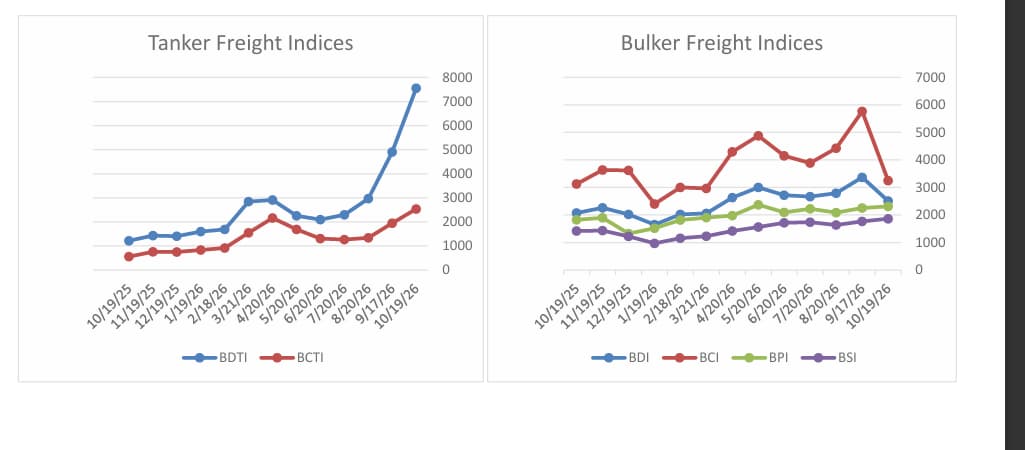
Asian spot LNG prices reached approximately $30.40 per million British thermal units on October 19, their highest level since December 2022, according to Bloomberg.
Disruptions affecting Qatari LNG exports have forced some buyers to seek alternative supplies on the spot market.
This has intensified competition between Asian and European importers ahead of the Northern Hemisphere winter.
European gas storage levels were reported at approximately 75%, compared with a seasonal five-year average of 89%.
These conditions could increase European exposure to further supply disruptions and higher electricity and heating costs.
The implications extend beyond household energy bills.
Energy-intensive industries face increased production expenses, while higher electricity costs may also affect businesses that rely heavily on computing infrastructure.
For the global economy, simultaneous pressure on oil products and natural gas creates a more complicated inflation environment than a temporary increase in crude oil alone.
Aviation provides evidence of delayed price transmission
One of the clearest examples of how energy inflation can spread into services comes from the aviation industry.
According to the International Air Transport Association, the global average jet fuel price recently reached approximately $192.44 per barrel.
Airlines have not yet fully passed these higher costs on to passengers, partly because many operators previously secured fuel at lower prices through hedging agreements.
However, these protections are gradually approaching expiration.
Ryanair CEO Michael O'Leary warned on October 20 that European airfares could increase by as much as 20% in 2027.
According to Reuters, Ryanair has hedged only around 15% of its fuel requirements for the coming year, leaving the company substantially more exposed to prevailing market prices.
The challenge is not limited to European airlines.
United Airlines has also warned that elevated fuel costs could persist throughout 2027, potentially weighing on profitability even as carriers attempt to increase ticket prices.
This illustrates an important characteristic of the current energy shock.
The economic impact of higher energy prices does not necessarily occur at the same time as the initial commodity price increase.
Contract structures, hedging arrangements and corporate pricing decisions can delay the transmission of energy costs into final consumer prices.
As existing protections expire, additional inflationary pressure may emerge even without another major increase in crude oil.
What does this mean for US inflation?
Recent US inflation data already suggest that energy prices are contributing to renewed price pressures.
September's Consumer Price Index increased by 3.7% year over year, while core inflation reached 2.6%.
Producer prices also accelerated, with the headline Producer Price Index increasing by 1.3% month over month.
These developments indicate that businesses are operating in an environment of elevated input costs.
However, an important distinction must be made between headline inflation and underlying inflation.
A temporary increase in gasoline prices can push headline CPI higher without necessarily producing persistent core inflation.
The more significant risk emerges when higher transportation, utility and production costs begin affecting a broader range of goods and services.
Airfares are particularly relevant because they are included in core CPI, even though their operating costs are heavily influenced by energy prices.
If higher fuel costs are passed through to ticket prices during 2027, aviation services could become another source of underlying inflation pressure.
Nevertheless, higher costs do not guarantee higher consumer prices. Weakening household demand could limit the ability of companies to pass on expenses, resulting instead in declining profit margins.
The balance between pricing power and consumer demand will therefore be critical.
Treasury yields and the Nasdaq face competing forces
For financial markets, the interaction between energy prices, inflation expectations and economic growth is particularly important.
Persistently elevated energy costs could complicate the Federal Reserve's efforts to restore price stability.
If investors begin expecting inflation to remain higher for longer, expectations for monetary easing could weaken.
Higher real yields would generally create additional valuation pressure for growth-oriented equities, including the Nasdaq 100.
However, the reaction of the Treasury market may not be straightforward.
Higher energy prices also reduce household purchasing power and increase operating costs, potentially weakening economic activity.
If investors become more concerned about slowing growth than persistent inflation, Treasury yields could decline despite the energy shock.
Such a decline would not automatically represent a bullish signal for equities.
Lower yields driven by deteriorating growth expectations may coincide with weaker earnings projections, widening credit spreads and declining risk appetite.
For the Nasdaq 100, the distinction between inflation-driven yield movements and growth-driven yield movements is therefore essential.
A decline in Treasury yields can provide valuation support, but that support may prove insufficient if deteriorating economic conditions simultaneously weaken corporate earnings expectations.
The outlook: A broader energy shock or temporary disruption?
The coming months will help determine whether the current energy shock becomes a persistent source of inflation or gradually fades as supply conditions improve.
A sustained geopolitical de-escalation could reduce risk premiums in crude oil and improve energy transportation conditions.
However, lower crude prices would not necessarily translate immediately into cheaper diesel, LNG or aviation fuel.
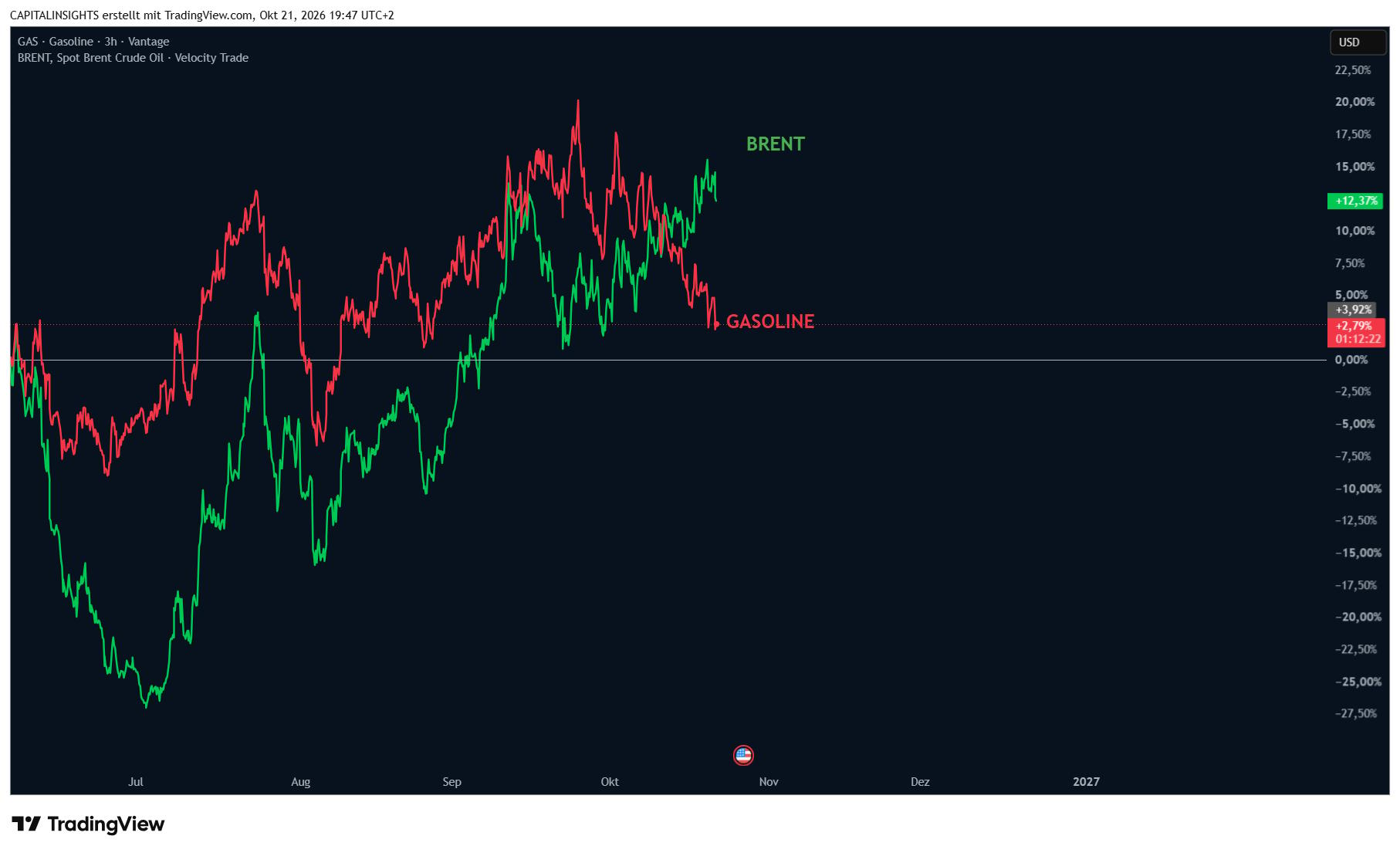
Refining constraints, depleted inventories, shipping disruptions and existing contractual arrangements can delay the adjustment.
Conversely, renewed attacks on energy infrastructure or transportation routes could intensify the supply shock and further increase pressure on businesses and consumers.
From a macroeconomic perspective, the key indicators will be refined-product prices, LNG markets, underlying consumer inflation, corporate pricing power and the response of Treasury yields.
Conclusion
The current energy crisis is increasingly becoming a question of economic transmission rather than crude oil prices alone.
Diesel affects transportation and production costs. LNG influences electricity prices and industrial competitiveness. Aviation fuel demonstrates how higher energy costs can reach consumer services with a significant delay.
Together, these developments suggest that the inflationary consequences of the energy shock could extend beyond the immediate geopolitical disruption.
For central banks, this creates a difficult balance between containing inflation and protecting economic growth.
For equity markets, particularly the Nasdaq 100, the decisive factor may not be whether oil prices rise or fall on any individual trading day, but whether broader energy costs begin changing inflation expectations, monetary policy pricing and the outlook for corporate earnings.
The risk is not simply that energy prices remain high. It is that their economic consequences may persist long after the initial price shock.
Author

Serhad Colak
Capital Insights
Serhad Colak is the founder of Capital Insights. His work focuses on macroeconomic research, monetary policy and cross-asset analysis, with particular attention to inflation, labor-market developments and interest-rate expectations.
















