Following the Oil shock, El Niño threatens to hurt macroeconomic resilience in Sub-Saharan Africa further

Seven months after the start of the war in the Middle East, which has led to a sharp rise in oil prices, sub-Saharan Africa is holding up well overall. The deterioration in external accounts and the rise in inflation are more contained than in 2022, during the last oil shock. However, this resilience is fragile and is eroding as the conflict drags on. Furthermore, an exceptional El Niño event could significantly worsen the macroeconomic environment in 2027.
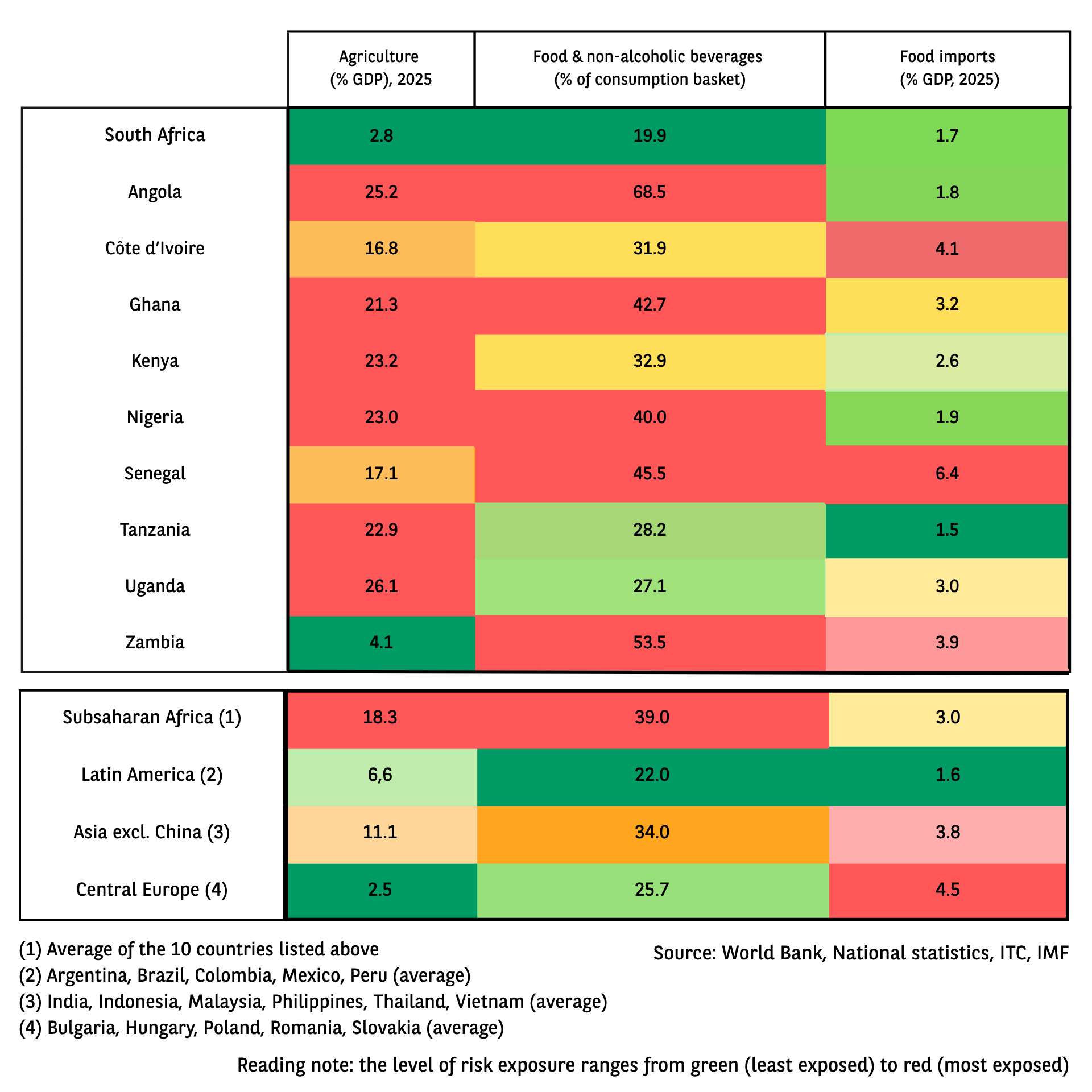
Sub-Saharan Africa is highly vulnerable to climate shocks via the agricultural commodities channel
Economic growth remains robust
For countries with available data, GDP growth held up well in the first half of 2026. In mid-October, the IMF revised its regional forecast for the full year upwards to 4.5% (+0.2 percentage points compared with April), in line with the performance for 2025.
A mitigated shock on terms of trade
High prices for export commodities (gold, copper, platinum) have helped to cushion the impact on terms of trade and the external accounts of hydrocarbon-importing countries. For the 10 countries in our sample (see heatmap), the depreciation of their currencies against the US dollar since last February has been moderate overall (2.3% on average).
Inflation has started to rise again, but it is still being contained so far
In the ten countries in our sample, although inflation is rising again, it is lower year-on-year for the first eight months of 2026 than it was for the same period in 2022. This is due to:
- Monetary policies that were still restrictive before the conflict started;
- Fuel subsidies;
- Macroeconomic reforms implemented in recent years (a return to orthodox monetary policy in Nigeria, and efforts towards fiscal consolidation in many countries)
- Moderate currency depreciation since February.
As a result, few central banks have tightened their monetary policy since February (South Africa, Uganda and Tanzania).
However, this resilience is still fragile…
On the one hand, governments that have chosen to cap fuel price rises are seeing their public finances deteriorate. In Senegal, energy subsidies will go above 3% of GDP in 2026, which is unsustainable. On the other hand, the region’s external accounts are exposed to volatile global commodity prices and tighter international financing conditions.
… and the macroeconomic environment could quickly worsen in 2027, due to an exceptional El Niño event
The region is particularly vulnerable to climate shocks via the agricultural commodities channel. Given agriculture’s high share in its GDP, sub-Saharan Africa is more exposed to downside risks to growth than Latin America, Asia or Central Europe (1st column of the heatmap). It is also more exposed than other regions of the world to the inflationary effect of rising food prices, given their higher share in the consumer basket (2nd column). Finally, even though its dependence on food imports is lower than in Asia and Europe (3rd column), the region is highly vulnerable to rising international food commodity prices due to its fragile external accounts. For several countries in our sample, foreign exchange reserves cover less than four months’ worth of imports of goods and services (Uganda, Tanzania, Ghana and Zambia), leaving little room for manoeuvre for absorbing a further external shock.
In addition to shocks via the agricultural commodities channel, other localised risks must be considered. In Southern Africa, El Niño is expected to intensify droughts and threaten electricity generation as a result, particularly in Zambia (where hydropower accounts for nearly 80% of domestic electricity generation). In East Africa, the increased flooding that El Niño is expected to cause will threaten infrastructure – particularly logistics infrastructure – which is already less efficient than the global average[3]. These two sources of vulnerability could also increase pressure on growth, prices and the external accounts.
In conclusion, if oil prices remain high and El Niño is exceptionally severe, the region will struggle to absorb this double shock in 2027. Despite their status as net exporters of hydrocarbons, Nigeria and Angola are also exposed to a deterioration in the macroeconomic environment in 2027. Only South Africa appears to be better positioned to absorb the shock.
Author

BNP Paribas Team
BNP Paribas
BNP Paribas Economic Research Department is a worldwide function, part of Corporate and Investment Banking, at the service of both the Bank and its customers.
















