The US Dollar fell. Gold didn't rally. That tells you everything

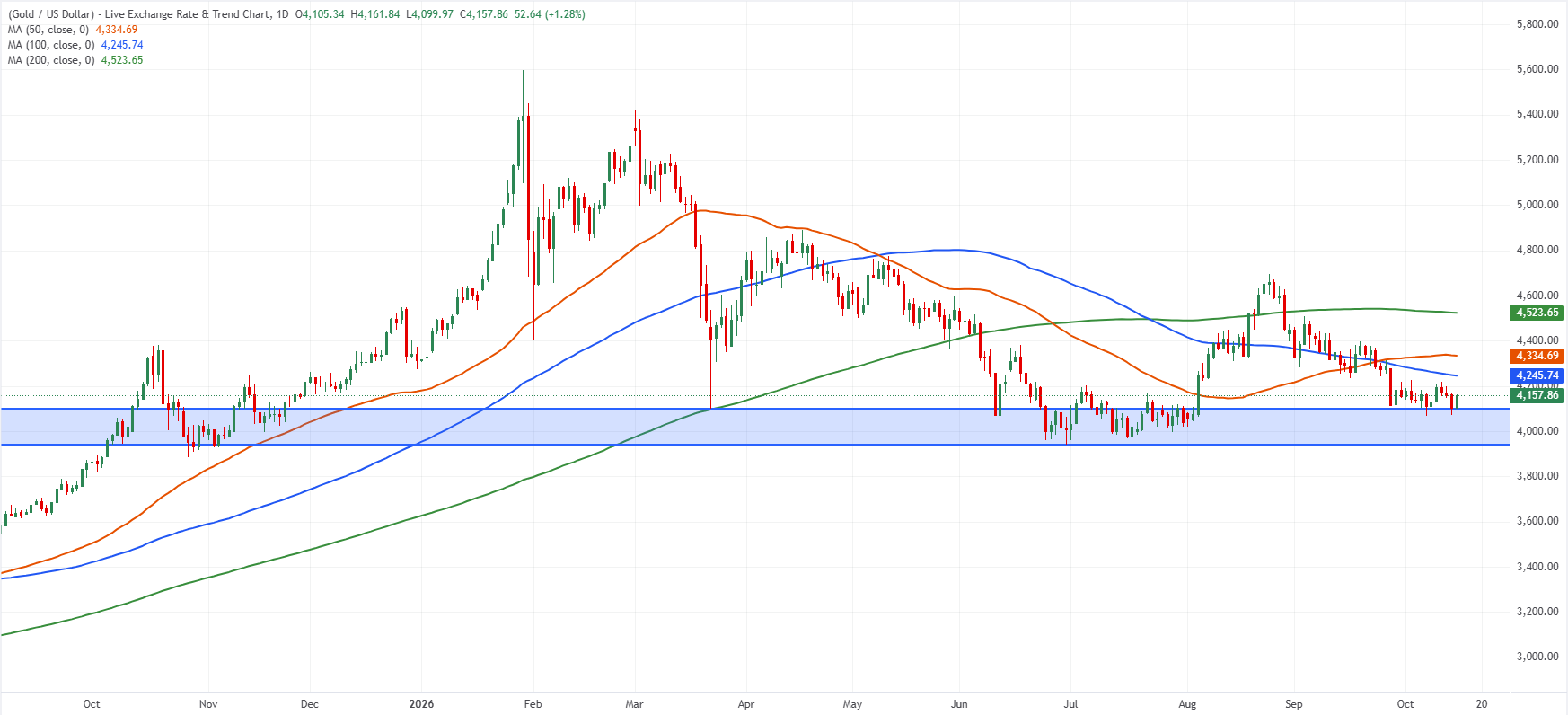
Gold (XAU/USD) is struggling to capitalize on a weaker US Dollar (USD), after repeatedly failing to establish itself above the $4,200 level. The precious metal remains confined to a relatively narrow trading range despite a combination of developments that would normally support higher prices.
The US Dollar retreated last week, while United States (US) Treasury yields fell sharply from their recent highs as investors reassessed the Federal Reserve's (Fed) interest rate outlook and growing concerns surrounding Artificial Intelligence (AI) investments.
Under normal circumstances, this combination should provide meaningful support for Gold. A weaker US Dollar makes the metal more affordable for international buyers, while declining bond yields reduce the opportunity cost of holding an asset that pays no interest.
Yet Gold's recovery remains surprisingly restrained. The divergence suggests that investors are looking beyond the immediate retreat in the US Dollar and Treasury yields. Persistent inflation, expectations of further monetary tightening and uncertainty surrounding the sustainability of the recent bond rally are preventing buyers from committing to a more decisive advance.
The question is no longer simply whether the US Dollar can continue falling. It is whether the forces pushing it lower are strong enough to overcome the monetary policy risks still weighing on Gold.
The US Dollar weakened, but Gold missed its opportunity
The US Dollar Index (DXY), which measures the Greenback against six major currencies, ended last week lower after four consecutive weekly advances, retreating from a year-to-date high near 102.95. The decline occurred despite stronger-than-expected US inflation figures, which would typically reinforce expectations of higher interest rates and support the Greenback.
Meanwhile, the benchmark 10-year US Treasury yield fell on Friday, extending a sharp correction driven partly by concerns about the outlook for AI-related investment and economic growth.
Gold initially benefited from this adjustment, recovering from its post-inflation sell-off toward $4,200. However, the metal failed to extend its gains convincingly and continues to struggle below that psychological level. The limited reaction is particularly revealing because both major financial variables that traditionally influence Gold moved in its favor.
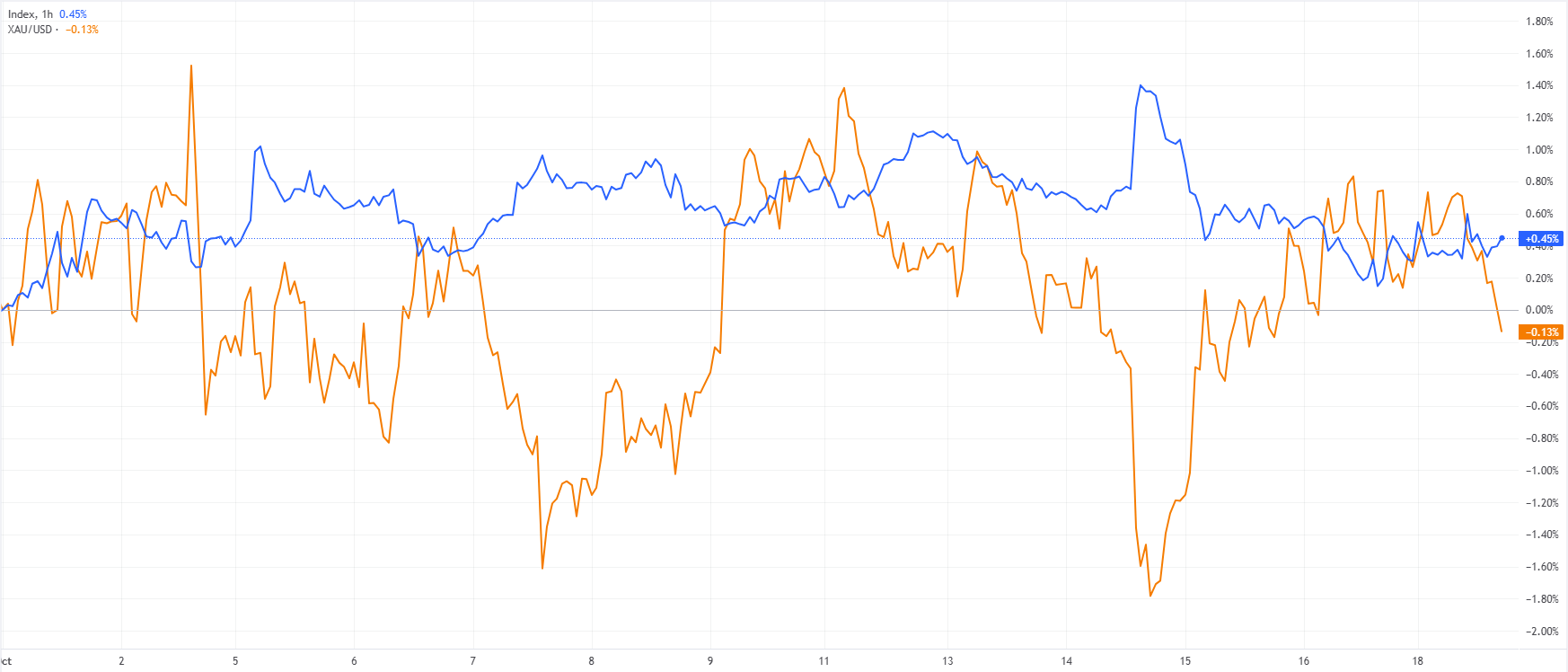
But the relationship between Gold, the US Dollar and Treasury yields is not mechanical. The reasons behind changes in interest rates can matter as much as the direction of those changes.
In this case, falling yields partly reflect growing concerns about financial markets and future economic activity rather than clear evidence that inflation is returning toward the Fed's target. That distinction helps explain why investors remain reluctant to aggressively increase their exposure to the precious metal.
The Fed is still the problem Gold cannot ignore
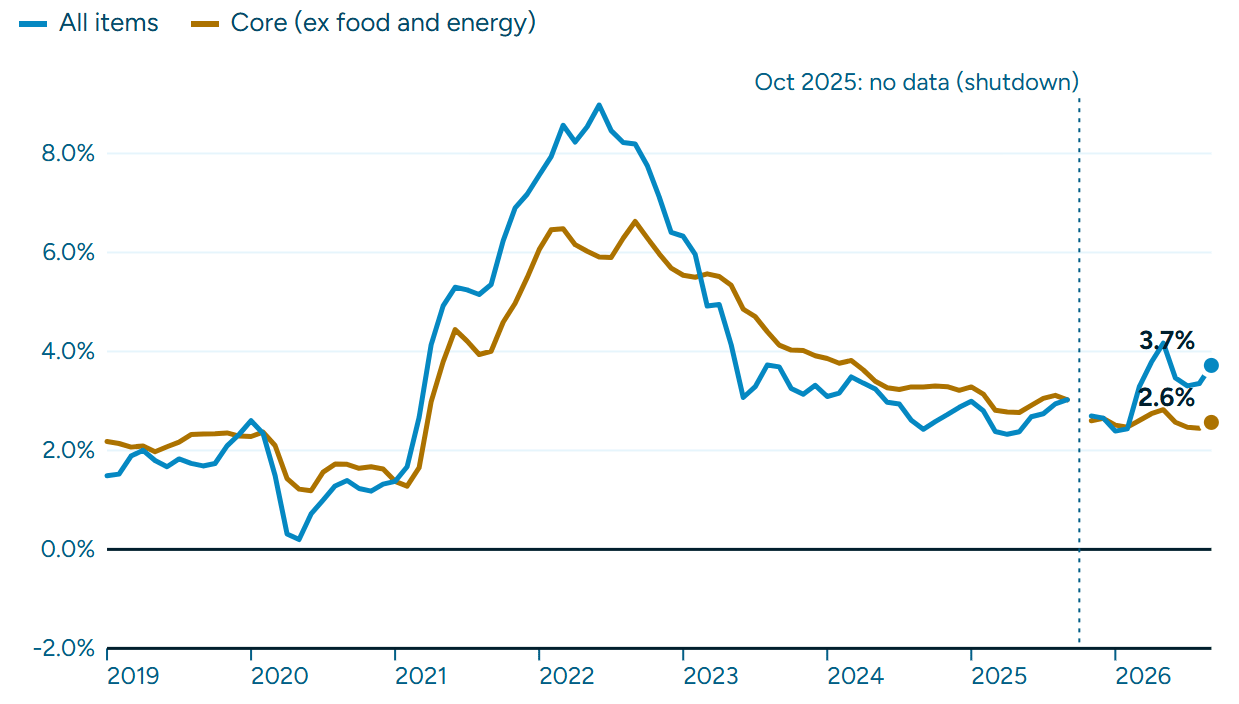
The latest US inflation figures provide an important explanation for Gold's hesitation. The September Consumer Price Index (CPI) rose 3.7% YoY, exceeding expectations of 3.6% and up from 3.4% in August. Meanwhile, the Producer Price Index (PPI) rose by 6.3% annually, significantly above the 5.3% consensus. These figures suggest that inflationary pressures remain persistent, complicating the Fed's efforts to restore price stability.
Although investors have substantially reduced expectations of another interest rate hike at the October 27-28 meeting, they continue to anticipate additional tightening before year-end. According to the CME FedWatch Tool, markets assign approximately a 17% chance of an October rate hike, while the chance of a December increase remains close to 90%.
This creates an uncomfortable environment for Gold. Even if the US Dollar temporarily weakens, the prospect of higher interest rates limits the attractiveness of holding a non-yielding asset. Furthermore, any renewed increase in Treasury yields could quickly undermine the precious metal's recovery.
Nordea analysts maintain a particularly hawkish assessment of the monetary policy outlook, stating that they "still expect one more hike this year and another next year, with the risks tilted to the upside." The bank also argues that "monetary policy still does not look restrictive enough for an economy in this shape," emphasizing that inflation remains significantly above the Fed's objective.
For Gold investors, the implication is important. A temporary decline in the US Dollar does not necessarily signal the beginning of a sustained monetary easing cycle. As long as the Fed remains inclined toward further tightening, Gold may struggle to translate currency weakness into a durable rally.
Falling bond yields may be sending the wrong signal
The US Treasury market has become another source of uncertainty. Last week's decline in government bond yields initially appeared supportive of Gold, particularly after investors moved toward safer assets amid concerns about the sustainability of the AI investment boom.
According to Deutsche Bank, "the theme of the day was a big global rate rally, as the prospect of slower AI growth pushed yields lower across the board." The bank noted that the US 10-year Treasury yield declined by 12.7 basis points to 5.06%, even as economic data continued to point toward persistent inflation.
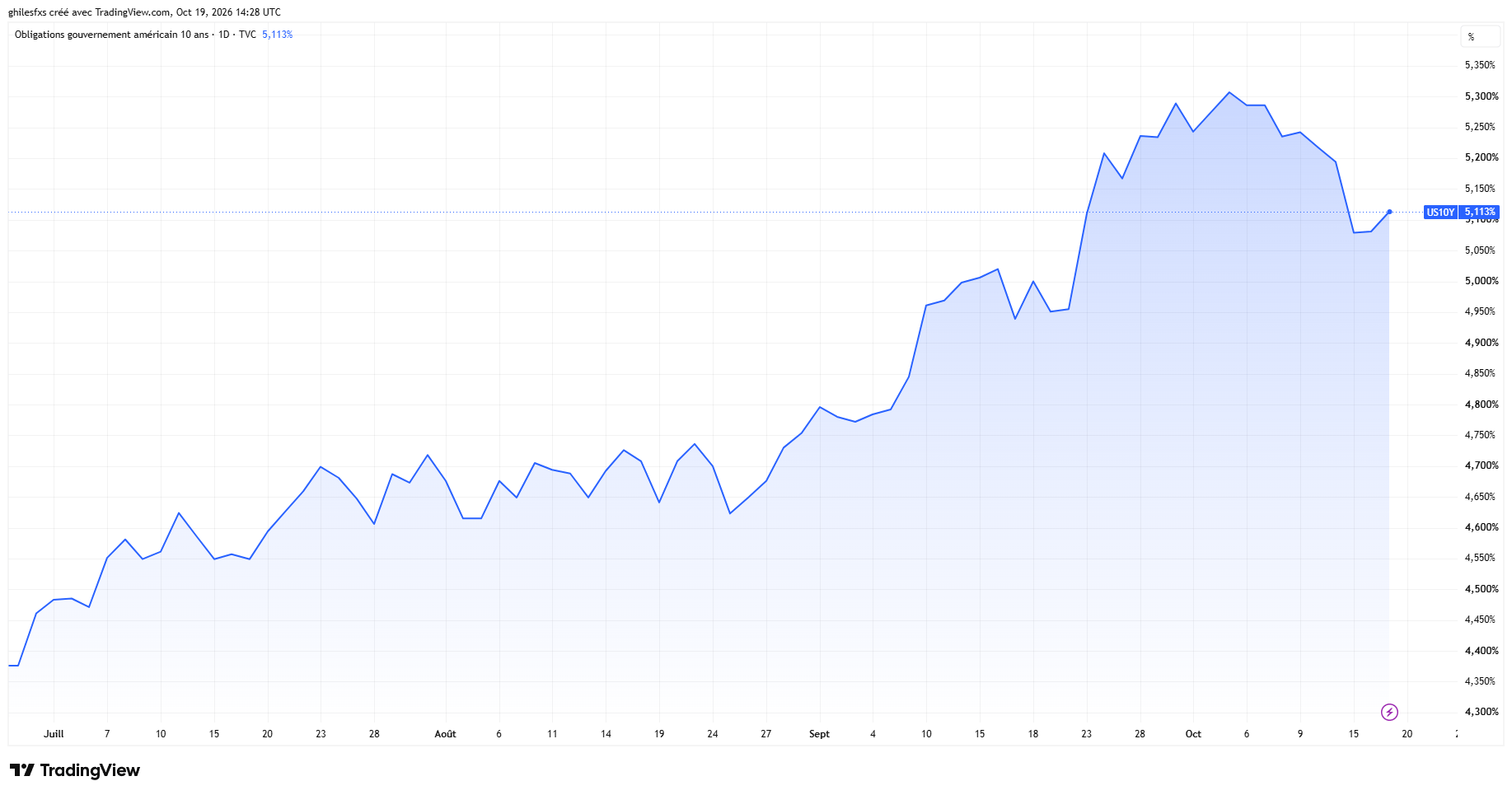
This apparent contradiction matters for Gold. Lower nominal bond yields generally support the precious metal, but the effect also depends on inflation expectations and real yields, which represent the inflation-adjusted return available to investors. If Treasury yields decline because inflation expectations are falling faster than nominal yields, the resulting increase in real yields could limit Gold's attractiveness. Conversely, a sustained decline in real yields would provide stronger fundamental support for the metal.
Analysts at OCBC capture this distinction particularly well, describing the latest recovery as "another reminder that Gold is trading the bond market’s reaction to US data rather than the data itself." The bank also warns that "underlying inflation pressures remain elevated, and the recent decline in yields has been partly driven by risk aversion rather than improving inflation fundamentals."
This suggests that Gold's recent recovery may remain vulnerable if Treasury yields stabilize or resume their advance. The key question, therefore, is not simply whether yields are falling, but whether the decline reflects a lasting improvement in financial conditions for non-yielding assets.
Gold's resilience is real, but so is the lack of conviction
Despite its inability to overcome $4,200, Gold is not experiencing a broad collapse in demand. The precious metal has recovered from its recent decline toward $4,073, suggesting that buyers remain willing to absorb selling pressure at lower prices.
This resilience is consistent with the investment flows highlighted by TD Securities. The bank notes that "macro discretionary positions remain elevated, while ETF inflows and central bank demand also remain strong." According to its analysts, these flows "have ultimately offered strong support for gold," and are expected to "remain robust, especially in the $4,000-4,100/oz region."
This creates an important distinction between a market lacking sufficient momentum to rally and one experiencing a structural deterioration in demand. Short-term investors remain sensitive to inflation surprises, changes in Treasury yields and shifting expectations for monetary policy. Meanwhile, longer-term investment demand appears more resilient.
As a result, Gold can remain supported without necessarily developing a sustained upward trend. The current price behavior may therefore reflect a confrontation between two groups of investors: those concerned about further monetary tightening and those willing to accumulate Gold as a longer-term portfolio asset. Neither side has established a decisive advantage.
The next move depends on what happens after the Dollar's decline
The Fed's upcoming October 27-28 meeting will be an important test for Gold. With policymakers entering their blackout period, investors will have fewer opportunities to reassess the central bank's intentions through official speeches.
Attention will consequently shift toward Treasury yields, geopolitical developments and upcoming US economic indicators, particularly the preliminary Purchasing Managers’ Index (PMI) figures.
Three broad scenarios could emerge. If Treasury yields continue declining and markets further reduce expectations of monetary tightening, Gold could finally benefit more decisively from a weaker US Dollar.
If yields rebound as inflation concerns persist, the metal may remain under pressure even if the US Dollar struggles to recover.
A third possibility is that AI-related concerns deepen, weakening both US equities and the Greenback while encouraging additional Treasury purchases. In that environment, Gold's direction would depend heavily on whether falling real yields and safe-haven demand outweigh fears of persistent inflation.
The recent market reaction has already demonstrated that US Dollar weakness alone is not enough to guarantee higher Gold prices. The precious metal continues to attract underlying demand, but investors remain unwilling to disregard the prospect of additional Fed tightening.
Ultimately, the most revealing development is not the US Dollar’s fall. It is that Gold has struggled to capitalize on it. That hesitation suggests the market is still treating the recent decline in Treasury yields as potentially temporary, rather than as confirmation of a more favorable monetary environment.
Until that perception changes, Gold may continue finding buyers on declines without generating the sustained momentum needed for a stronger rally. The US Dollar has already offered Gold an opportunity. The bond market and the Fed will determine whether it can finally take it.
Author

Ghiles Guezout
FXStreet
Ghiles Guezout is a Market Analyst with a strong background in stock market investments, trading, and cryptocurrencies. He combines fundamental and technical analysis skills to identify market opportunities.