Chapter two
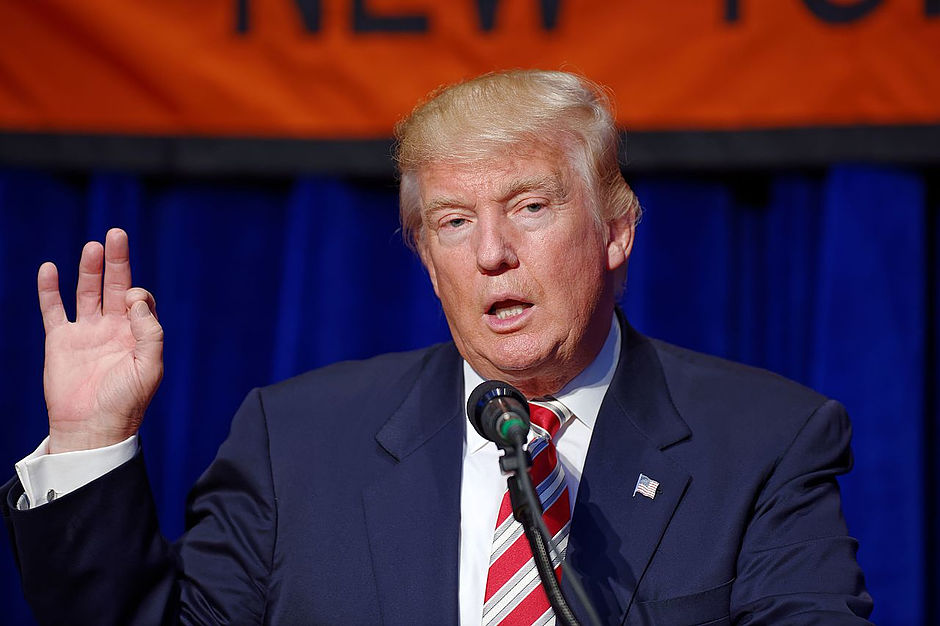

The 2024 US election delivered a decisive victory for Donald Trump, with Republicans positioned to gain control of both houses of Congress.
The S&P500 jumped 2.5% to a fresh record and recorded its best post-election gain. The energy stocks surged nearly 4%. Nasdaq 100 advanced 2.74%, to a fresh record high, as well. Tesla soared almost 15% as Technoking Elon Musk’s heavy campaigning for Donald Trump now leaves him with super-close connections to the White House. Then, the Dow Jones surged more than 3.5% to a fresh record as well, as bank stocks rallied hard on Trump’s promise of deregulation. Invesco’s KBW Bank ETF, for example, jumped more than 10%. Bitcoin, of course, rallied to a fresh record high, and the small caps gained nearly 6% on hope that Trump’s protectionist stance will help their business.
In the FX, the US dollar soared to the highest levels since summer. Gold dived to its 50-DMA on relief that the election result was clear. And the USDCHF received a greenlight to step into the medium-term bullish consolidation zone.
As such, the Trump trade went according to the plan. US equities rallied, banks and small caps led gains, the US dollar gained, as the US yields rose on anticipation of further ballooning of the national debt. Everything that has to do with green, alternative, clean energy lost.
Beyond the borders
I was writing yesterday, before the market open, that the DAX and Eurostoxx futures were in the negative on fear that Trump would hit the European companies with new tariffs. Well, they turned positive at the open on hope that Trump presidency would call for a swift dovish response from the European Central Bank (ECB) to counter the shock. But gains remained short-lived and the European indices closed the session in the negative.
On top, Olaf Scholz called for a snap election in Germany as his three-way coalition collapsed under the weight of economic difficulties European carmakers faced a tough day, pressured by fears of higher tariffs.
Among the European indices, the Swiss SMI and FTSE 100 ended with relatively small losses – the SMI because it’s defensive by nature, and the FTSE 100 because the US dollar’s surge gave a boost to the FTSE 100 companies that get a clear majority of their revenues from abroad. But Trump policies are pro-US growth and anti-global growth. Therefore, the SMI is a good option for investors seeking defensive names. But Trump’s medium-term impact on mining companies’ revenues will not necessarily be positive. Copper futures – a gauge of global growth - dived more than 5% as a reaction to Trump win.
Trumpflation
For the US, it’s clear: pro-growth policies, tax cuts, tariffs point at higher inflation in the US. The Federal Reserve (Fed) is expected to announce a 25bp cut today, but the policy beyond today’s decision must be readjusted accordingly. The expectation, so far, was that the Fed would cut today by 25bp, and deliver another 25bp cut in December, and a full point cut next year. Now, the December cut is on a slippery ground and the Fed should not consider more than 2-3 rate cuts next year. That’s – at least – the policy response that you would reasonably expect from a central bank as an economist.
Elsewhere, opinions diverge. Some believe that the US will export its Trumpflation – if nothing by a stronger US dollar, but others argue that cheap Chinese goods – heavily taxed in the US - will spill over into the rest of the world, potentially keeping price pressures contained elsewhere.
In this new context (as says Emmanuel Macron), the Bank of England (BoE) has the hard task to deliver its first policy decision post-Trump. The BoE is expected to cut rates by 25bp today. The markets price in two more rate cuts by the end of next year and gives a 35% chance for a third one. Of course, the BoE must also deal with the higher government spending that Rachel Reeves promised a few days ago – that alerted the BoE hawks that the easing must be carefully measured to counter the fiscal expansion, as well. But since then, the gilt yields soared so sharply that they wiped out all the UK’s fiscal headroom. And now, the bank analysts are lowering their post-Trump growth expectations for the UK – which is, in return, dovish for the BoE bets.
In summary, no one knows quite which foot to dance on. All eyes are on Powell and Bailey to help chart a roadmap.
Author
Ipek Ozkardeskaya
Swissquote Bank Ltd
Ipek Ozkardeskaya began her financial career in 2010 in the structured products desk of the Swiss Banque Cantonale Vaudoise. She worked in HSBC Private Bank in Geneva in relation to high and ultra-high-net-worth clients.

















