|premium|

CFTC Positioning Report: USD turns net short for the first time since April

These are the main takeaways of the CFTC Positioning Report for the week ending October 8.

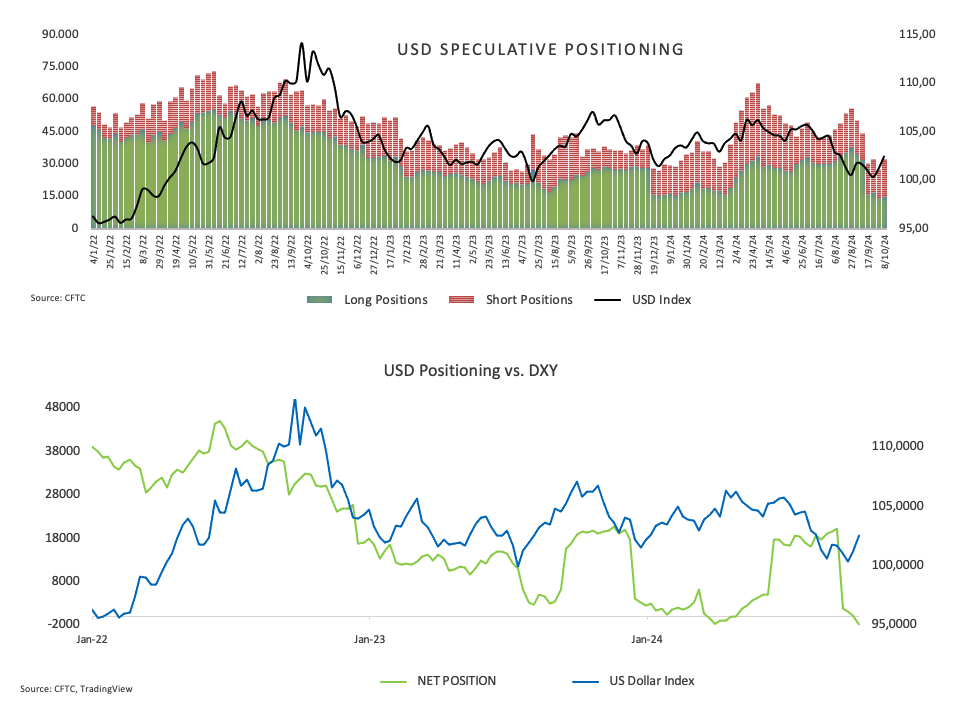
  • Non-Commercial traders held net shorts in the US Dollar for the first time since April at nearly 2K contracts amidst a slight retracement in open interest. During this period, the US Dollar Index (DXY) continued its recovery from lows around the key 100.00 level, pushing well beyond the 102.00 threshold. This rebound was driven by diminishing expectations of a 50 bps rate cut in November, alongside data and Fedspeak supporting a soft landing for the US economy.
  • Speculators trimmed their net longs in the Japanese yen to six-week lows around the 36.5K contracts, while hedge funds and other commercial players also reduced their net shorts to multi-week lows, all amidst a marginal increase in open interest. The resurgence of a firm selling pressure around the Yen motivated USD/JPY to advance to new two-month peaks past the 149.00 hurdle.
  • Speculative net longs in the Euro shrank to eight-week lows around 39K contracts, while commercial players sent their net shorts to levels last seen in late July. Open interest, in the meantime, contracted for the second week in a row. EUR/USD embarked on a corrective decline, which broke below the key support at 1.1000, almost exclusively on the back of the resumption of Dollar’s strength.
  • Net longs in the British pound dropped slightly from the previous week, along with a small decline in open interest. In line with the rest of the broad risk complex, GBP/USD edged lower, accelerating its corrective move after hitting yearly peaks north of 1.3400 the figure in late September. In addition, dovish remarks from the BoE’s Bailey also collaborated with the retracement.
  • Non-Commercial net longs in Gold deflated to levels last seen in mid-August around 278K contracts amidst a marked reduction of gross longs, while open interest retreated modestly for the second straight week. Gold prices have made several attempts to consolidate near their record highs, consistently supported by the $2,600 mark per ounce troy.
Premium

You have reached your limit of 3 free articles for this month.

Start your subscription and get access to all our original articles.

Subscribe to PremiumSign In

Author

Pablo Piovano

Born and bred in Argentina, Pablo has been carrying on with his passion for FX markets and trading since his first college years.

More from Pablo Piovano

Share:

Editor's Picks

GBP/USD back to 1.3250, down modestly for the day

GBP/USD now comes under fresh downside pressure and recedes toward the mid-1.3200s on Tuesday, partially reversing the optimism seen at the beginning of the week. Meanwhile, Cable’s bearish tone follows the resumption of the upside traction in the Greenback, always amid the sharp rally in USD/JPY.

EUR/USD looks inconclusive in the low 1.1400s

EUR/USD alternates gains with losses in the 1.1420 region in the latter part of the NA session on turnaround Tuesday. The pair’s vacillating price action comes amid the lack of clear direction in the US Dollar. Meanwhile, market participants are expected to gear up for the upcoming key releases on the US docket and developments from the ECB Forum in Sintra.

Gold clings to daily gains beyond $4,000

Following multi-month lows near $3,950, Gold now manages to regain some composure and reclaim the area beyond the key $4,000 yardstick per troy ounce on Wednesday. Still, any meaningful recovery appears limited as a broadly firmer US Dollar and rising US Treasury yields weigh on the yellow metal.

Ethereum: Sharplink makes first treasury purchase in 2026 amid ETH's fall from grace

Ethereum treasury firm Sharplink resumed accumulation of the second-largest cryptocurrency by market capitalization last week after months on the sidelines. The Florida-based firm acquired 10,000 ETH last week at an average price of $1,611 per ETH, marking its first purchase since October. The move has pushed its holdings to 886,725 ETH worth roughly $1.4 billion at the time of writing.

Why a hawkish Bank of Japan could trigger the next Bitcoin sell-off

The Japanese Yen hits a 40-year low of 162.00 against the US Dollar, raising concerns about intervention or additional rate hikes by the Bank of Japan. BoJ may sell US Treasuries to buy back Yen, potentially pushing US bond yields higher and making Bitcoin less attractive to investors.

Kevin Warsh isn't expected to say much in Sintra: That's exactly why markets will listen

Financial markets could find an important catalyst in the enchanting, fairytale-like landscape of Sintra this week. The ECB Forum will, as it does every year, gather the crème de la crème of central banks. The new boss at the Fed, who has clearly said that the Fed should stop explaining everything, will need to talk – and traders should listen.