Canada Employment Change July Preview: USD/CAD action is south of the border
- Job rolls expected to add 400,000 workers in July.
- Unemployment rate forecast to drop to 11% from 12.3%.
- Canadian dollar improves as US economic prospects feared to be stalling.

The Canadian labor market appears set to reach the half-way mark in the recovery of pandemic job losses with strong employment growth for the third straight month.
National payrolls are forecast to expand by 400,000 when Statistics Canada reports on the July net change in employment on Friday at 8:30 am EDT. The unemployment rate is expected to drop to 11% from 12.3% and the participation rate should rise to 65.4% from 63.8% in June.
Canadian and US employment
During the Covid closure of the Canadian economy just over 3 million workers were fired or furloughed in March and April.
Canada net change in employment
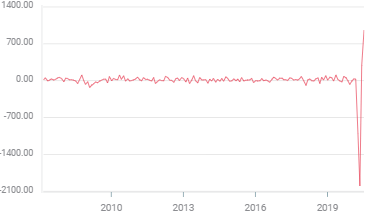
Despite predictions that 500,000 more employees would lose employment in May the labor market turned and companies hired back 289,600 workers. That continued in June with another 952,900 returnees.
If the July consensus forecast of 400,000 is accurate--the combined May and June predictions underestimated the results by 84% (forecast 200,000 vs actual 1,242,500) -- it would bring the reconstitution to 1,642,000 employees or 54.7% of the job losses.
In comparison if the US NFP July estimate of 1.6 million positions is correct just 41% of the March and April job losses would have been made good in the following three months.
American forecasters have been even worse than their northern colleagues in predicting the timing and extent of the labor market reversal. Job losses were forecast to be 8 million in May followed by a 3 million gain in June for a total of -5 million combined. In reality US employers added 7.499 million workers in those two months, a 12.499 million swing or a 250% underestimate.
Purchasing managers’ index
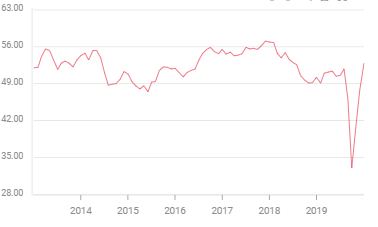
Canadian manufacturing sentiment has made a strong recovery from its pandemic collapse. The Markit purchasing mangers’ index registered 52.9 in July well ahead of the 44.1 forecast and June’s 47.8 score. The April low of 33 is far distant.
Markit manufacturing PMI
The index from the Richard Ivey School of Business in London, Ontario is expected to dip to 57.5 in July from 58.2 in June when it is reported on Friday.
All three North American PMI figures reported so far, the US manufacturing and services indexes from the Institute for Supply Management and the Markit number for Canada have been notably stronger than their forecasts.
Conclusion and the USD/CAD
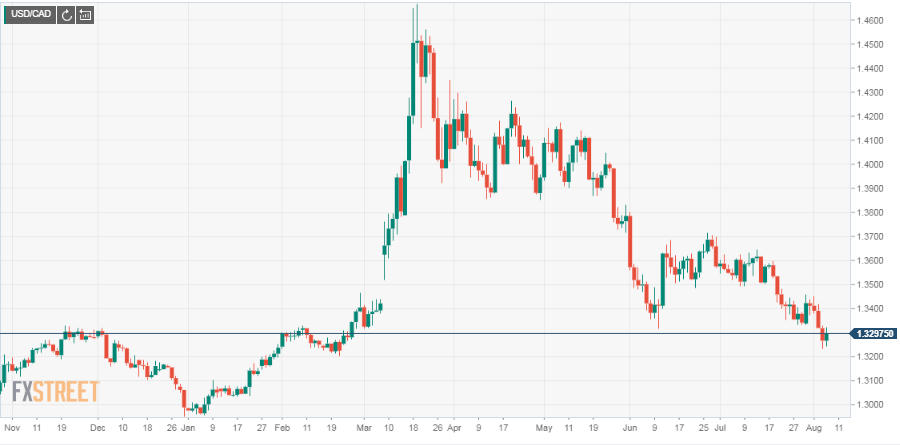
The record of a stronger recovery in the Canadian labor market is likely to continue in July. The pertinent question for the USD/CAD is the state of the US job market.
The US dollar has been sold for three week on the notion that the Covid spread in some Western and Southern states would extract a heavy toll from the US economy. That is the main reason for the drop in July NFP estimates by two-thirds to 1.6 million from June’s 4.8 million payrolls.
If the forecasts are on target at 1.6 million or less the USD weakness will continue. If NFP is stronger than predictions the degree of dollar impact will equate closely to the size of the payroll number.
Author

Joseph Trevisani
FXStreet
Joseph Trevisani began his thirty-year career in the financial markets at Credit Suisse in New York and Singapore where he worked for 12 years as an interbank currency trader and trading desk manager.