Bypassing Powell

Trump denied earlier intelligence reports suggesting that the US strikes on Iranian nuclear sites caused only limited damage. On the contrary, he claimed the operation was a historic success and even declared the war over — ‘except that it could maybe restart soon.’ Still, the US and Iran are scheduled to meet for diplomatic talks in Iran this weekend, which appears to be a signal that Trump genuinely wants to de-escalate tensions in the Middle East.
US crude is consolidating near its 100-DMA, just above the critical $65pb level — a major Fibonacci retracement of this year’s decline. This line distinguishes between a continuation of the latest rally and a return to the bearish trend that has been building since the start of the year.
But geopolitics aside, the supply-demand dynamics continue to favour softer oil prices. Global demand prospects are weakening due to trade uncertainties, while supply is ample thanks to faster production restoration from OPEC+. Russia said yesterday it’s open to another output hike at the next OPEC+ meeting due on July 6th. So, if Middle East tensions are truly done and dusted, oil is more likely than not to fall back toward, or even below, the $60pb level.
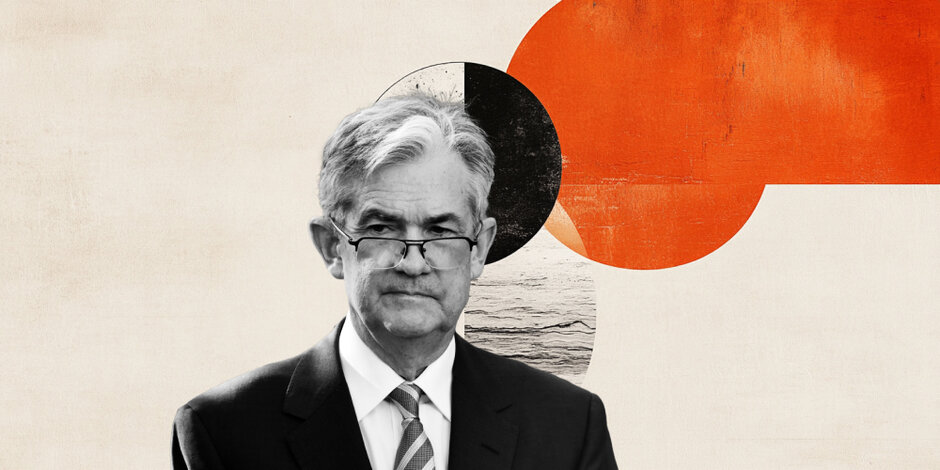
That’s good news for the Federal Reserve’s (Fed) inflation battle — but unfortunately, it’s not the only risk factor. The real threat to US inflation now is tariffs, and there’s been little progress on that front. Fed Chair Powell keeps insisting the US doesn’t need to rush into rate cuts until there’s more clarity on trade policy. But no one listens — even less so now, as there’s growing concern that Trump could prematurely appoint the next Fed Chair to sideline Powell, who has resisted rate cuts. A new Trump-approved Chair would likely be more willing to cut rates, pleasing Trump, who insists the U.S has no inflation problem. Technically, that’s true — for now. But it could, and that’s the problem.
That said, don’t forget: cutting rates doesn’t guarantee yields will fall. If markets perceive a policy mistake, yields could disconnect from the policy rate — that’s called a loss of credibility. So lower rates — if not justified — aren’t necessarily good news for sovereign bonds. US debt is exploding, and Trump’s spending cuts on social programs don’t come close to offsetting the tax benefits granted to the wealthiest Americans. Debt will rise, and the US must ensure global markets absorb this additional issuance — essentially, to keep funding a policy that makes rich Americans richer. The problem? Investors are backing off. There’s growing appetite for ex-US sovereign bonds, especially in Europe.
In short, Trump has power to do a lot, but he still needs funding. Investors will have the final say.
Dollar pain, equity gain
The US dollar remains heavily unloved. The dollar index continues to slide, despite Powell’s cautiously hawkish tone. But a weaker dollar supports major US equities, as about 40% of S&P 500 revenues come from abroad, including 10–12% from Europe and around 8–10% from Asia. As the dollar weakens (or other currencies strengthen), overseas revenues translate into higher dollar earnings for S&P 500 companies.
Still, a recent Bloomberg Intelligence analysis — factoring in Treasury yields, earnings, and the equity risk premium — warns that S&P 500 earnings would need to rise by as much as 30% over the next year for current valuations to be considered ‘fair.’ Is that possible? It seems stretched for the S&P 493 — but perhaps not for the AI leaders.
Micron just announced stronger-than-expected revenue and gave an upbeat forecast for the current quarter, driven by AI demand. Its high-bandwidth memory chips — essential for running AI tools — are selling like petits pains, as the French say. The company is betting on rising demand for increasingly complex chips to fuel further growth. Micron shares have doubled since their April dip, though they remain below last summer’s highs.
Elsewhere, Nvidia hit a fresh record yesterday. CEO Jensen Huang is now looking beyond both the US and AI — toward robotics — to expand market share. The Middle East and Europe may become the next big markets to help fill the gap left by Trump’s export restrictions to China.
But stepping back to the S&P 500 more broadly, trade risks loom and could hurt sentiment in the short run.
On the geopolitical front, Trump is now furious with Spain, which declined to raise its military budget to 5% of GDP, unlike several other NATO members this week. European stocks fell yesterday, with the Spanish IBEX underperforming. Meanwhile, defense stocks rallied nearly 2% after Babcock announced its first-ever buyback — a move that confirms the boom in European military spending. The company also raised its dividend and boosted medium-term guidance, sending the stock up more than 10%.
The EUR/USD traded past 1.17, and Cable climbed above 1.37. The next natural targets are 1.20 for euro bulls, and 1.40 for Cable. Pullbacks may offer attractive dip-buying opportunities — not because the European economies are particularly strong, but because spending plans are solidly funded… and the dollar is weakening.
Author
Ipek Ozkardeskaya
Swissquote Bank Ltd
Ipek Ozkardeskaya began her financial career in 2010 in the structured products desk of the Swiss Banque Cantonale Vaudoise. She worked in HSBC Private Bank in Geneva in relation to high and ultra-high-net-worth clients.

















