ADP payrolls surge into year end
- Private sector job creation zoomed to 202,000 in December far ahead of 160,000 forecast.
- Report leads into Friday’s NFP report which is predicted to add 164,000 positions.
- November’s total revised to 124,000 from 67,000.

The US labor market finished the year in excellent fashion as private payroll growth rose above the annual trend with the service and manufacturing sectors both contributing to the gains.
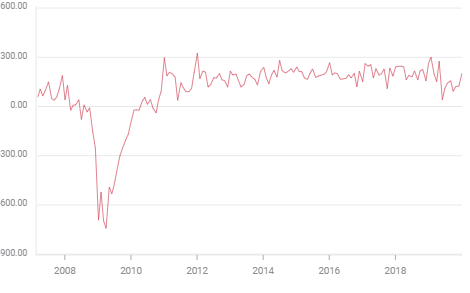
Firms using Automatic Data Processing’s (ADP) payroll services added 202,000 workers in December as the US labor market continued to excel in the 11th year of expansion. It was the largest increase since April. Goods producing industries added 29,000 employees after shedding 17,000 in November and services providing businesses hired the 173,000 balance.
ADP Payrolls
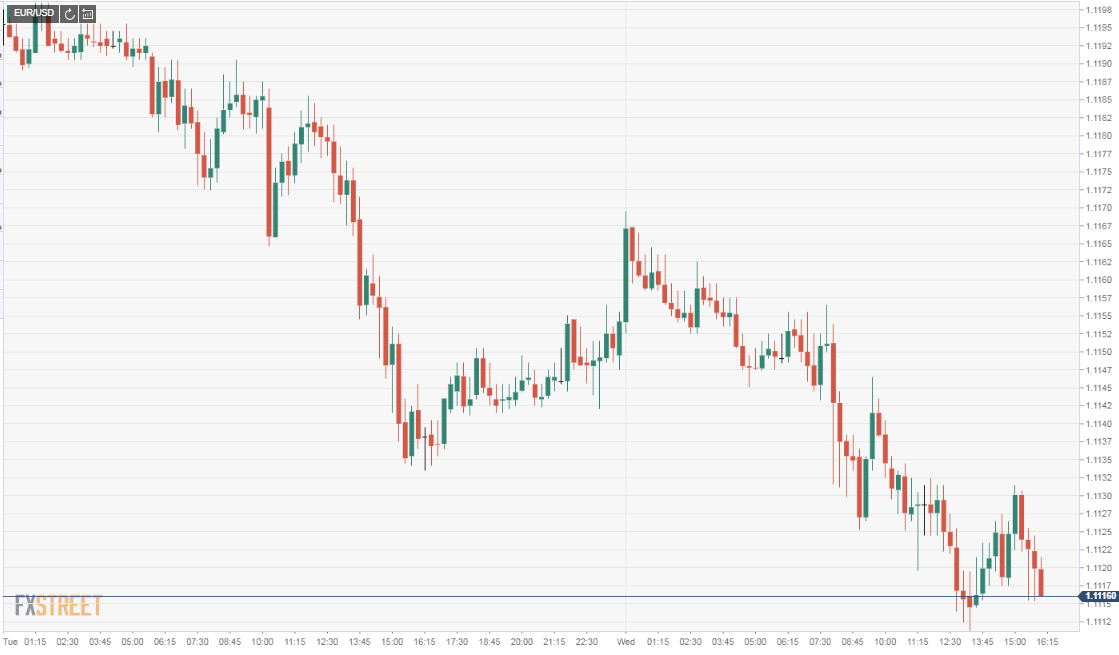
The dollar saw modest gains after the release with the EUR/USD falling from 1.1150 just before the 8:15 EST release to 1.1115 by 11:00 EST. USD/JPY gained about 20 points to 108.65.
Jobs were spread across all three categories of companies with small firms (1-49 employees) adding 69,000 workers, mid-size firms (50-499 employees) 88,000 and large companies (500+ employees) 45,000.
Construction trades grew by 37,000, its best score since April and reversing November’s 5,600 decline. Trade, transportation and utilities added 78,000 and professional and business services 61,000. Education and health services rose by 49,000 and financial services 10,000.
Firms losing workers were in leisure and hospitality at 21,000 and information services at 14,000.
The ADP report is tabulated from its approximately 411,000 US clients. It is released on the Wednesday before the Bureau of Labor Statistics (BLS) Employment Situation Report which is usually issued on the first Friday of every month.
Correlation between the two statistics can diverge substantially on a monthly basis. In November the unexpectedly weak initial ADP figure of 67,000 contrasted with the equally unanticipated strength of 266,000 in the NFP. However, over time over time the trends in the two statistics are complementary.
NFP
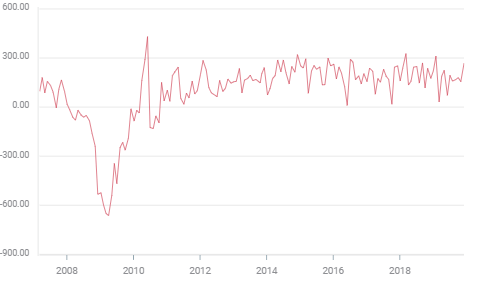
The 12-month moving average for non-farm payrolls dropped 22% from January 2019 to November, 235,000 to 184,000. The ADP average fell 26% in the same period from 222,000 in April to 165,000.
Author

Joseph Trevisani
FXStreet
Joseph Trevisani began his thirty-year career in the financial markets at Credit Suisse in New York and Singapore where he worked for 12 years as an interbank currency trader and trading desk manager.
















