USD/JPY lurches higher after Powell splashes cold water on rate cut hopes
- USD/JPY fell to the 143.00 region after the Fed held rates steady on Wednesday.
- Market anticipation of a rate cut in July accelerated after Fed warned of rising economic risks.
- Market sentiment reversed course sharply after Fed Chair Powell warned that tariffs make it difficult for the Fed to achieve its goals.

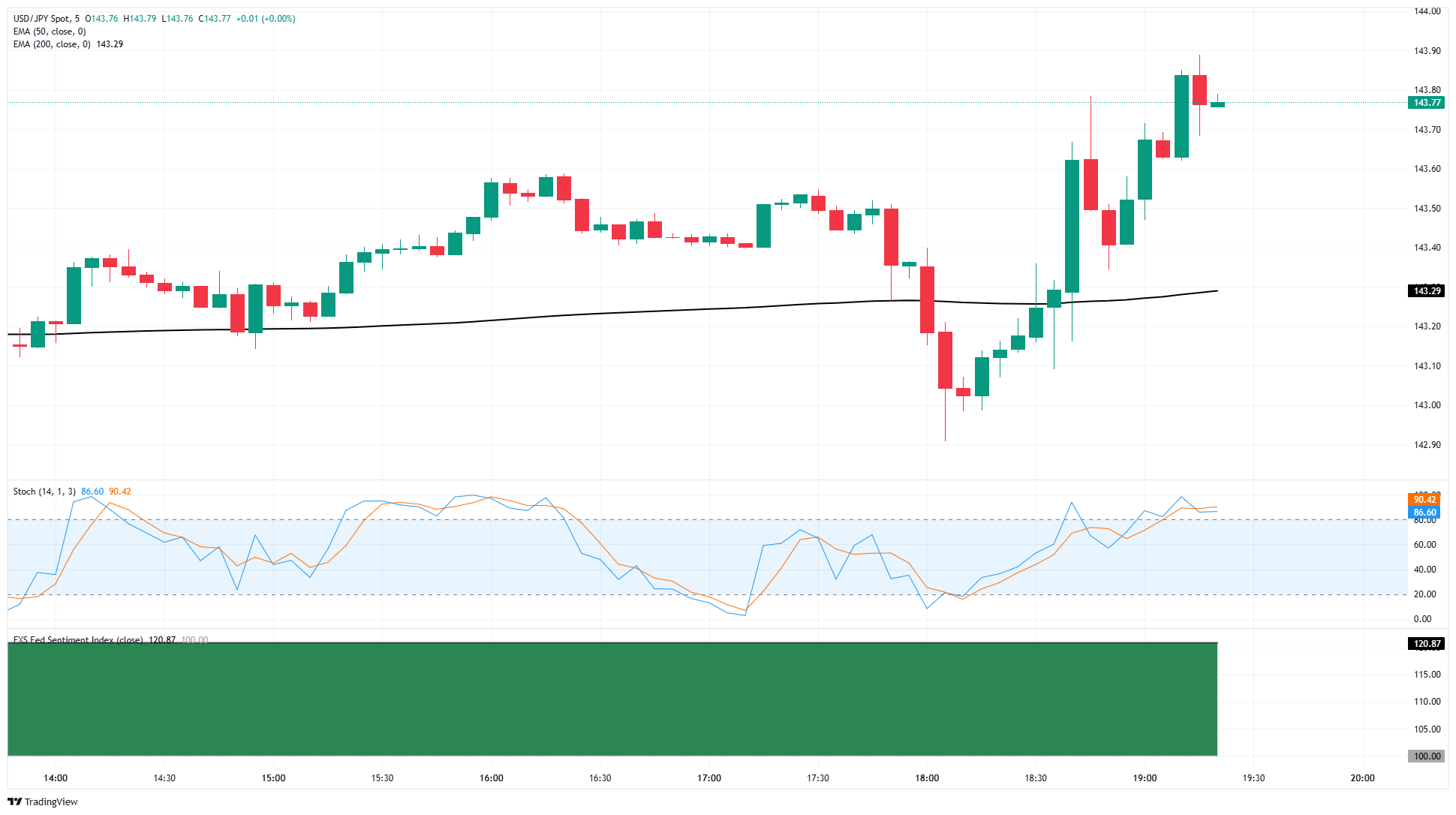
USD/JPY took a header on Wednesday, falling to 143.00 in intraday trading after the Federal Reserve (Fed) held rates steady at 4.25-4.5%, as many investors had expected. Market bets of an impending pivot by the Fed into a rate-cutting cycle rose after Fed policymakers warned of rising economic risks. However, Fed Chair Jerome Powell reversed market flows sharply after noting that the risks for the Fed to maintain its wait-and-see stance remain very low.
Based on the Fed's recent rate announcement, policymakers indicated that although US employment and economic activity are generally stable, the risks to labor and production have increased. This rise in risk primarily stems from uncertainties related to tariffs and US trade policies. The concerns voiced by Fed officials about economic risks fueled market expectations for potential rate cuts, resulting in an unexpected surge in risk appetite.
Read more Fed news here: We don't have to be in a hurry
Market sentiment declined after Fed Chair Jerome Powell's press conference. He pointed out that if US trade tariffs remain, they will hinder the Fed's goals regarding inflation and employment for the rest of the year. Powell also warned that persistent policy uncertainty will likely lead the Fed to maintain its 'wait-and-see' stance on interest rates. Despite significant damage to consumer and business confidence caused by the Trump administration's tariff policies, hard economic data has shown little negative impact, complicating the Fed's ability to justify any immediate changes in interest rates.
According to the CME's FedWatch Tool, the rate markets continue to anticipate a quarter-point rate cut in July; however, the probability of another rate hold in July has increased to 30%, dampening widespread expectations for a smooth transition into another rate-cutting phase.
USD/JPY 5-minute chart
Fed FAQs
Monetary policy in the US is shaped by the Federal Reserve (Fed). The Fed has two mandates: to achieve price stability and foster full employment. Its primary tool to achieve these goals is by adjusting interest rates. When prices are rising too quickly and inflation is above the Fed’s 2% target, it raises interest rates, increasing borrowing costs throughout the economy. This results in a stronger US Dollar (USD) as it makes the US a more attractive place for international investors to park their money. When inflation falls below 2% or the Unemployment Rate is too high, the Fed may lower interest rates to encourage borrowing, which weighs on the Greenback.
The Federal Reserve (Fed) holds eight policy meetings a year, where the Federal Open Market Committee (FOMC) assesses economic conditions and makes monetary policy decisions. The FOMC is attended by twelve Fed officials – the seven members of the Board of Governors, the president of the Federal Reserve Bank of New York, and four of the remaining eleven regional Reserve Bank presidents, who serve one-year terms on a rotating basis.
In extreme situations, the Federal Reserve may resort to a policy named Quantitative Easing (QE). QE is the process by which the Fed substantially increases the flow of credit in a stuck financial system. It is a non-standard policy measure used during crises or when inflation is extremely low. It was the Fed’s weapon of choice during the Great Financial Crisis in 2008. It involves the Fed printing more Dollars and using them to buy high grade bonds from financial institutions. QE usually weakens the US Dollar.
Quantitative tightening (QT) is the reverse process of QE, whereby the Federal Reserve stops buying bonds from financial institutions and does not reinvest the principal from the bonds it holds maturing, to purchase new bonds. It is usually positive for the value of the US Dollar.
Author

Joshua Gibson
FXStreet
Joshua joins the FXStreet team as an Economics and Finance double major from Vancouver Island University with twelve years' experience as an independent trader focusing on technical analysis.