|

USD/CAD flirting with daily lows around 1.2870 ahead of data

  • The Canadian Dollar trades on a firm note near 1.2870.
  • Spot keeps the sideline theme between 1.2800 and 1.2950.
  • US ISM Manufacturing and Markit’s manufacturing PMI next on tap.

USD/CAD looks to US data

The pair is flirting with recent lows in the 1.2875/70 band on Monday following a softer tone surrounding the greenback and a bid bias around crude oil prices.

In fact, the greenback has accelerated its correction lower after breaking below the key support at 90.00 the figure when tracked by the US Dollar Index (DXY), as market participants continue to adjust to the recently imposed Chinese tariffs in US imports.

Adding to the buying interest around CAD, prices of the barrel of the West Texas Intermediate stay in the area of recent tops above the critical $65.00 mark, looking to prolong last week’s recovery.

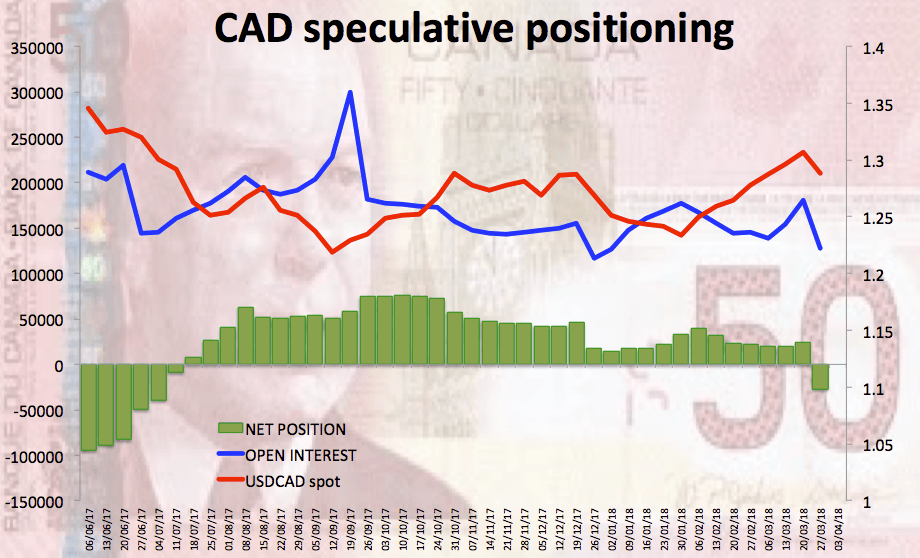
On the positioning front, speculators turned net shorts on CAD for the first time since July 11 2017 during the week ended on March 27, according to the latest CFTC report.

Data wise today, the US manufacturing sector will be in centre stage in light of the publication of the ISM and Markit gauges.

USD/CAD significant levels

As of writing the index is retreating 0.16% at 1.2875 facing immediate contention at 1.2812 (low Mar.27) seconded by 1.2803 (low Mar.12) and then 1.2722 (38.2% Fibo of the 2017 drop). On the flip side, a surpass of 1.2927 (50% Fibo of the 2017 drop) would aim for 1.2936 (high Mar.29) and finally 1.3126 (2018 high Mar.19).
Author

Pablo Piovano

Born and bred in Argentina, Pablo has been carrying on with his passion for FX markets and trading since his first college years.


More from Pablo Piovano
Share:

Editor's Picks

AUD/USD rises to 0.6950 as USD slips on Fed's Warsh

AUD/USD regains traction and extends the bounce toward 0.6950 in the Asian session on Friday. Fed Chair Warsh's comments reinforce the selling pressure on the US Dollar, allowing the pair to stretch higher. Warsh said that he remains committed to delivering price stability without giving away anything on future interest rate path.

USD/JPY falls in symc with USD, gives up 158.00 after Warsh's speech

USD/JPY has come under fresh selling pressure and gives up 158.00 in the Asian session on Friday amid the emergence of fresh US Dollar selling. Fed Chair Warsh's non-committal commentary on the future tightening path, weighs on the US Dollar and the pair.

Gold extends gains nearing $4,200 as US Dollar struggles

Gold heads north for the second consecutive day, trading near $4,180, with bulls aiming for the $4,230 area, the top of October’s trading range. Precious metals have been boosted by lower US Treasury yields and dovish comments from Federal Reserve officials this week, which have undermined speculative support for the Greenback.

Busy week for Ripple’s RLUSD: What changes for stablecoin holders?
Ripple’s RLUSD is gaining ground across institutional finance, with a major bank launching custody services, a new wallet integration making it easier for developers to build payments and agentic experiences on the network, and a brokerage platform planning to use the stablecoin for settlement.
Hot inflation, falling yields: A new test for global markets
Global markets are confronting a difficult combination: renewed inflation pressure, expensive capital and growing scrutiny of the investment supporting the AI boom. The most revealing development this week was the demand for government bonds even as US inflation accelerated. My assessment is that investors should treat this as a test of financing resilience.
Everyone's dumping Gold after hot US inflation. Here's why $4,100 could be a floor, not a cliff
Gold (XAU/USD) is recovering from a sharp sell-off triggered by hotter-than-expected United States (US) inflation data released on Wednesday. The precious metal briefly plunged toward $4,073 as investors increased their bets on further Federal Reserve (Fed) interest rate hikes before recovering as US Treasury yields and the US Dollar (USD) reversed their initial gains.















