USD/CAD bulls step back in and take control in bullish weekly outlook
- USD/CAD bulls are back in control following a turbulent start to the day.
- Mixed messages from the Fed is driving forex volatility.
- Technically, USD/CAD is poised for a significant breakout from a weekly perspective.

USD/CAD is trading around flat near 1.2550 as the US sessions volatility dies down.
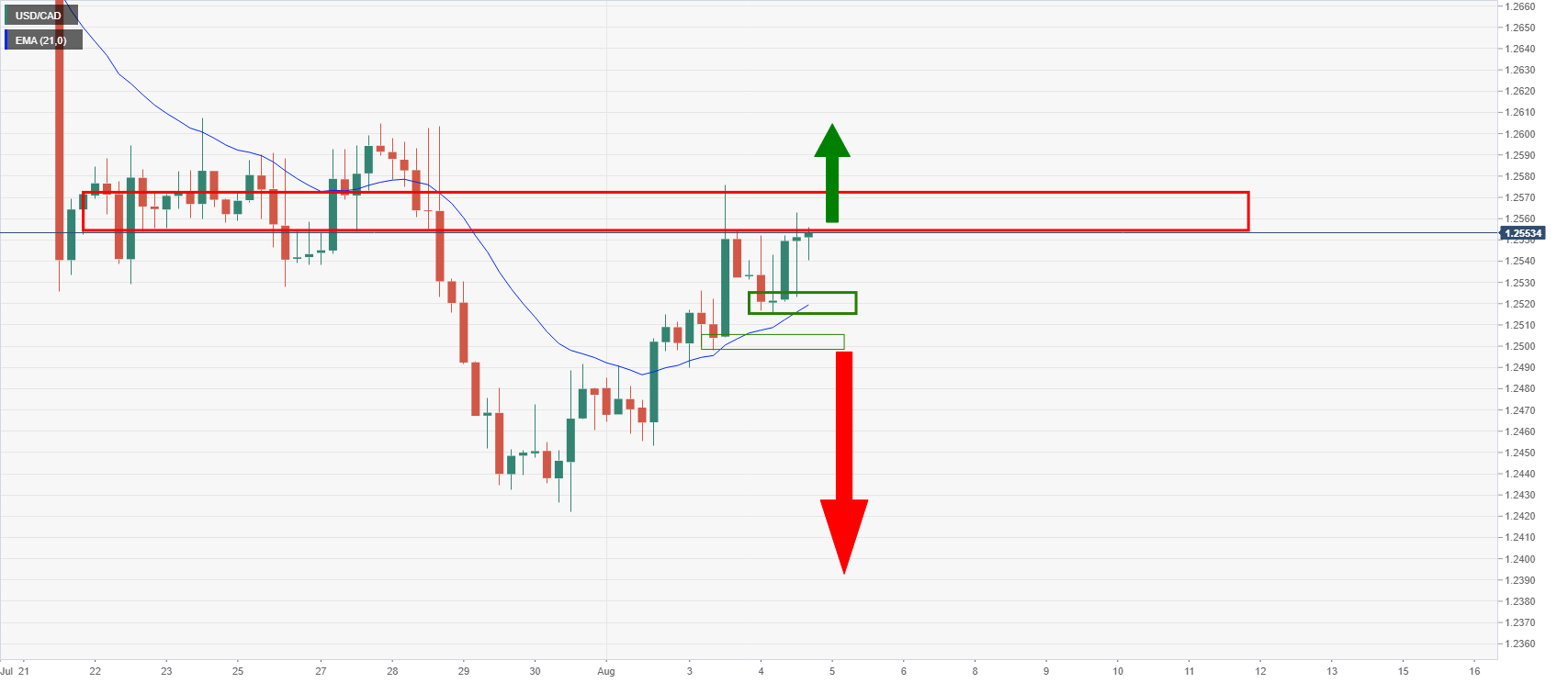
The pair travelled between a low of 1.2515 and a high of 1.2562 on the day within US dollar turmoil, lower oil prices and mixed central bank sentiment.
Firstly, oil prices fell for the third day in a row to a two-week low on Wednesday.
There was a surprise build in US crude stockpiles and the negative US economic reports have not helped.
The US Energy Information Administration (EIA) said crude stockpiles rose by an unexpected 3.6 million barrels last week, while gasoline inventories fell by a bigger-than-forecast 5.3 million barrels.
There are also concerns mounting over the spread of the coronavirus Delta variant that is expected to weigh on global energy demand.
At $68.35, US West Texas Intermediate (WTI) crude spot is down some 2.6% at the time of writing, recovering from the $67.88 lows seen earlier in the session.
As for the coronavirus, the Delta variant poses new risks for the world's second-biggest economy, China, which is a huge consumer of oil and commodities in general which are correlated to CAD.
Numerous cities in southern China and a few in the north including Beijing have reported infections.
The emergence of the variant, which is more transmissible than the original strain first detected in the city of Wuhan in late 2019, has seen the return of tough counter-epidemic measures.
This has put a dampener on world growth. China grew more slowly than expected in April-June, and in combatting the new delta variant will come at some economic cost.
The surge in Delta variant cases is also rattling the globe. Parts of Asia that were previously relatively successful in containing COVID-19, such as the Philippines, Thailand and Vietnam, are now locking down hot spots.
In the US, the variant is also causing concern.
Minneapolis Federal Reserve Bank President Neel Kashkari told CBS' "Face the Nation" that the Delta variant was "creating a bunch of caution" among millions of out-of-work Americans and could slow the US labour market recovery.
The US dollar smile theory is in play
However, this is a double edge sword for the greenback.
On one hand, the dollar would be expected to crumble in the face of a more dovish Fed as timings of tapering and rate increases are dialled back due to a worsening outlook for the economy.
On the other hand, the US dollar was one of the outperformers during the initial phases of the global pandemic and can attract a safe-haven bid vs currencies of economies of nation's also impaired by the virus.
In trade today, there was volatility in forex pertaining to variability among Fed member's outlooks for the US economy vs hard data.
In early trade, the dollar dropped sharply when the ADP National Employment Report missed expectations by a mile.
US July ADP employment came in as 330K vs the 695K estimate and was seen as possibly foreshadowing softness in jobs data due on Friday from the American government.
However, the dollar recovered quickly from a fall on Wednesday when comments from a top US Federal Reserve official appeared to suggest that the central bank may reduce support for the improving economy more quickly than widely thought.
Feds Bullard speaking at Wall Street Journal event reiterated some hawkish statements of late.
However, he thinks inflation will be more persistent than some people think and now sees it at 2 1/2% to 3% in 2022.
''We don't really need asset purchases at this point,'' he said.
The official's bullish comments on the US economy triggered a rebound in US Treasury yields and turned currency market attention away from the release, just two hours earlier, of the unexpectedly weak private employment report.
Additionally, a solid Services report showed that US consumers are flooding back into restaurants, bars and hotels as activity in the services sector expanded at a record pace.
The Institute for Supply Management's (ISM) non-manufacturing purchasing managers' index (PMI) delivered an all-time high reading of 64.1, stronger than the 60.5 projected by economists.
All of the data counts in the build-up to the Jackson Hole, Wyoming at the end of the month where some participants are expecting an announcement of the timing of tapering from the Fed.
Meanwhile, the central bank divergence theme will continue to be the driver of USD/CAD and the wider implications of this week's hawkish hold from the RBA are worth discussing.
''The biggest takeaway is that despite the spread of the delta variant, central banks around the world will continue to roll back emergency policy settings,'' analysts at TD Securities said.
''This holds for BOE, BOC, and RBA (all tapering), along with Norges Bank (possible rate hike in September) and RBNZ (QE ended and likely rate hike in August 18) on deck as the first to hike. Add the Fed to the list as we still think tapering will be seen before year-end.''
On Friday, should the Nonfarm Payrolls data not be underwhelming, the balance of risks from a market pricing perspective might be sooner, rather than later, in terms of tapering and a rate hike from the Fed.
This will be implying a tougher time pushing a weak USD narrative into the fall and go to serve the US dollar smile theory.
That is to say, the US dollar will benefit from both the spread of the delta variant throughout the world and a tighter monetary policy.
USD/CAD technical analysis
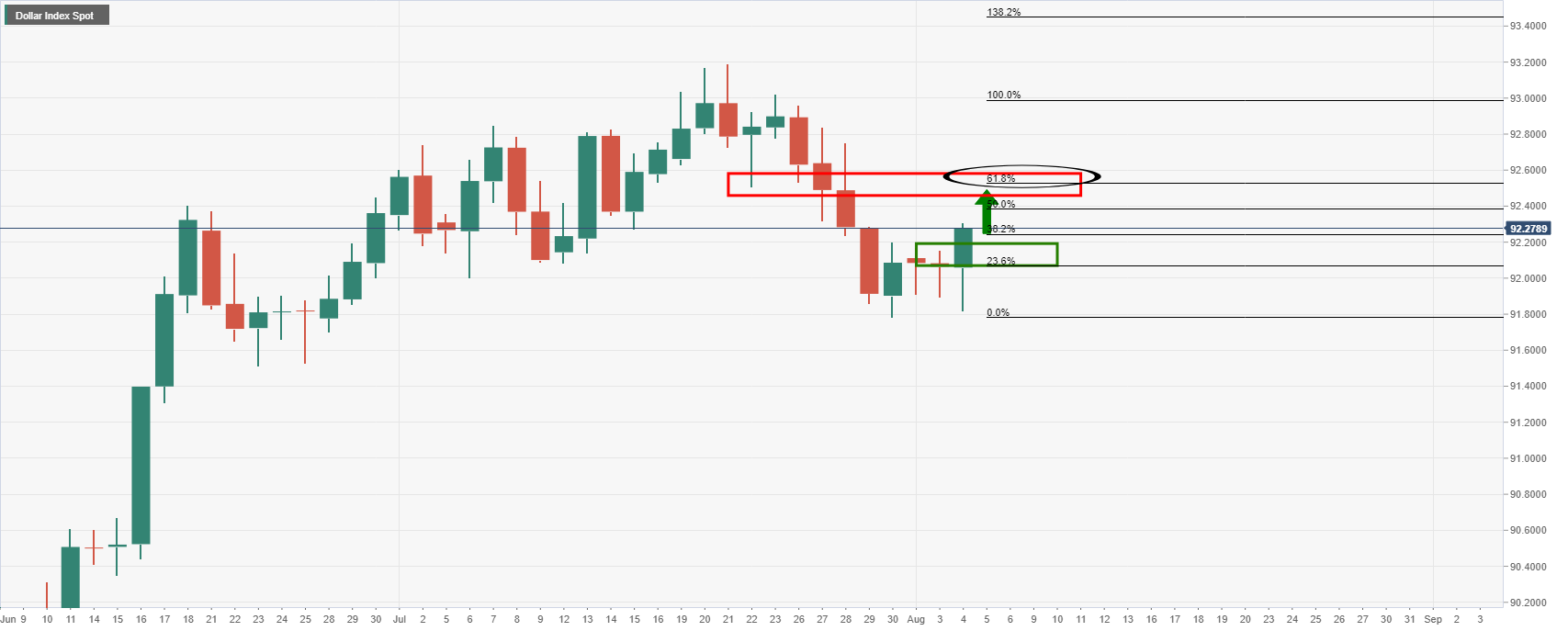
There is an upside bias on US dollar strength and prospects of a stronger daily correction above 92.20:
In USD/CAD, the 4-hour support is holding up in bouts of dollar weakness:
All that is needed is a break of resistance USD/CAD will be well on its way for a higher daily high in what is a weekly bottoming structure playing out:
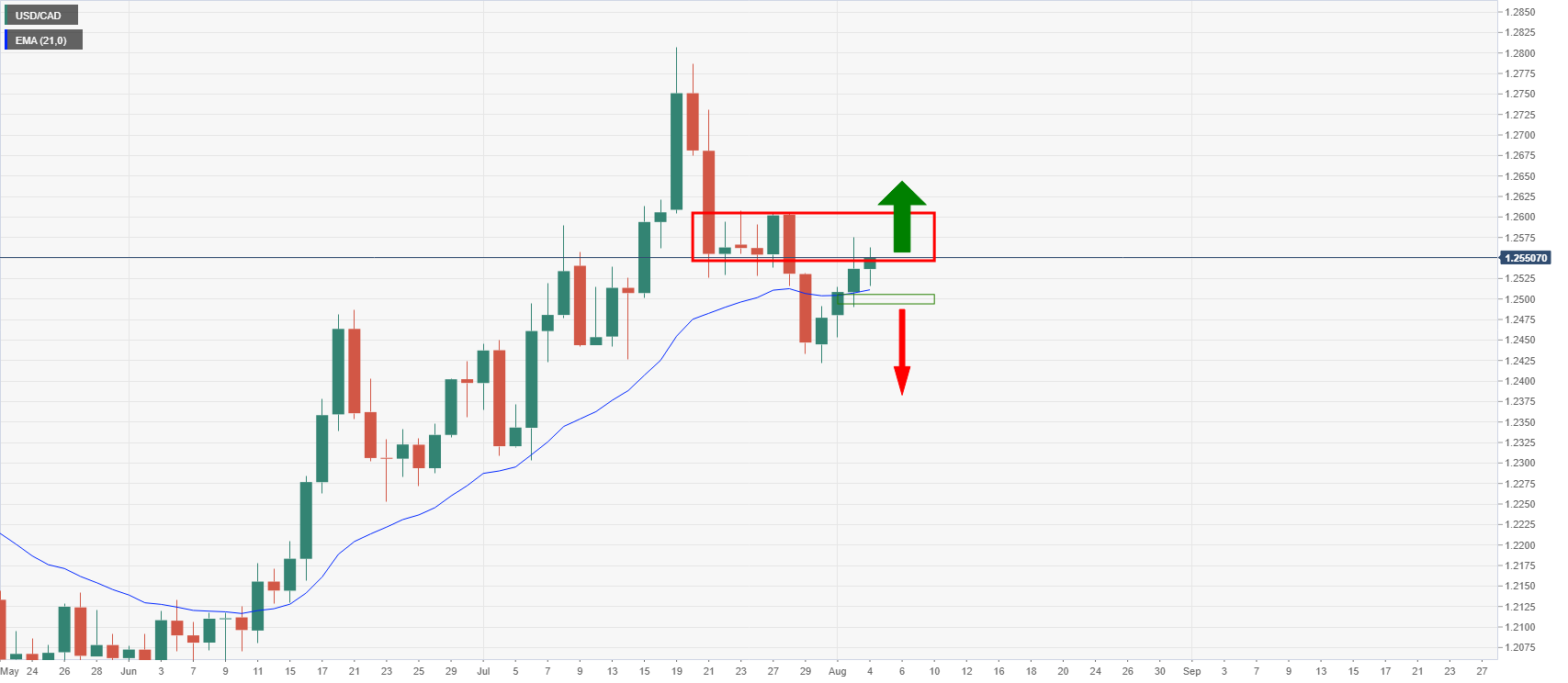
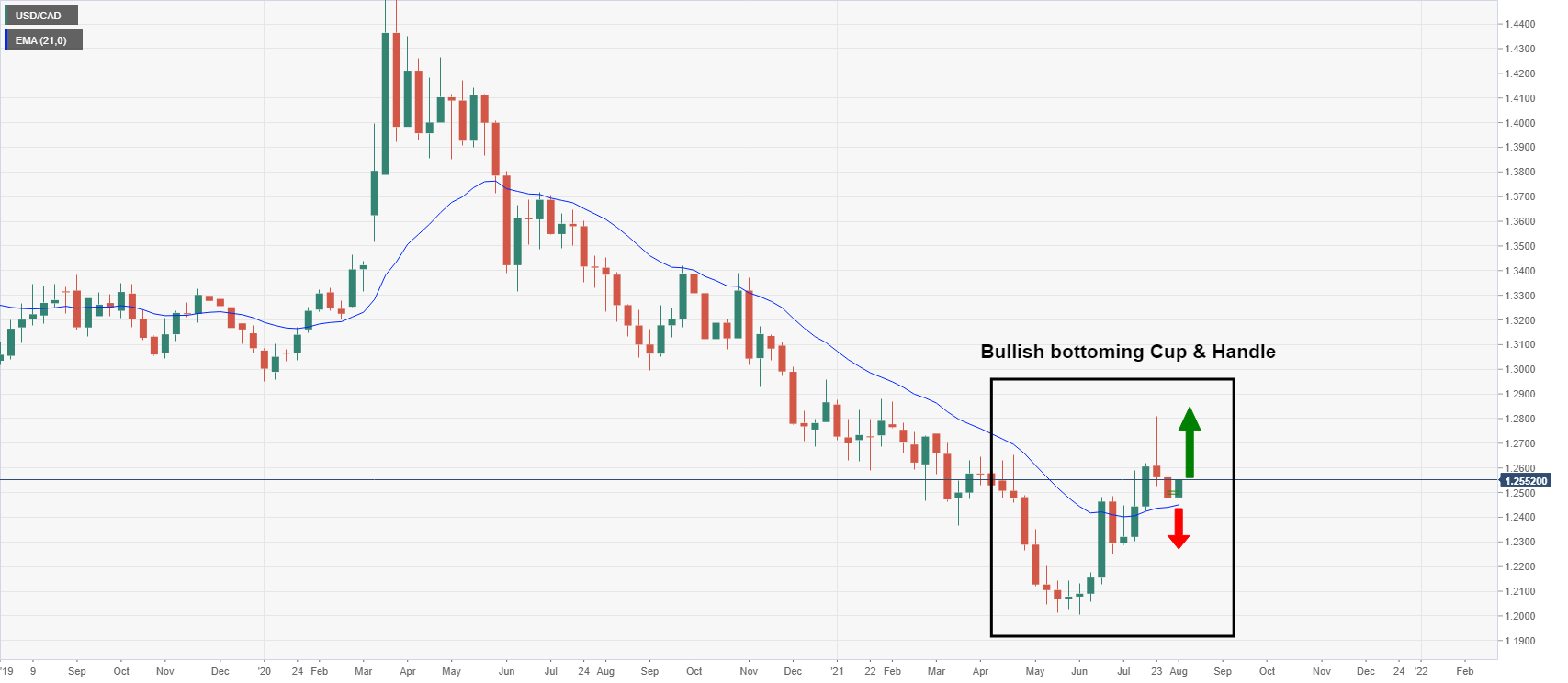
Bearish on daily chart from resistance
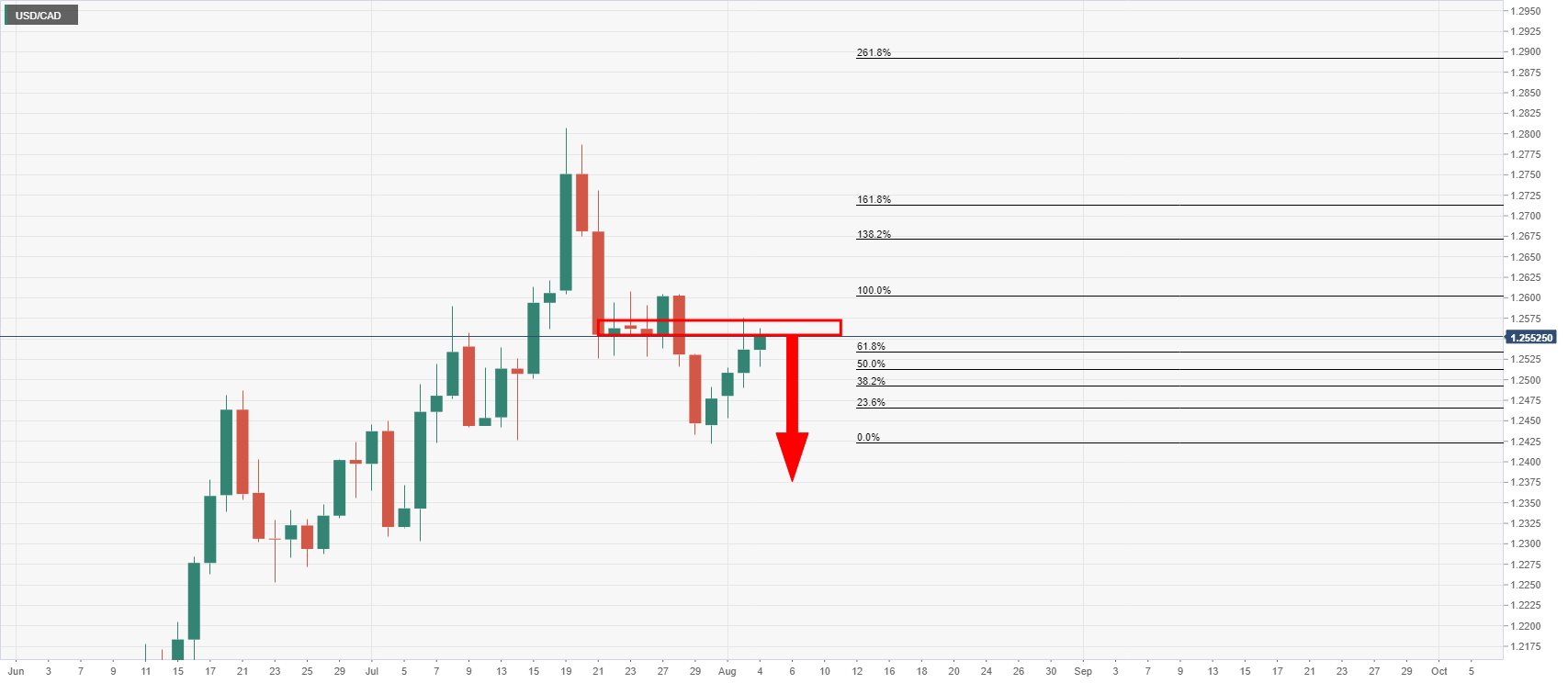
With that being said, failures at resistance open the case for a downside extension of the prior daily bearish impulse.
A break of the lower layer of 4-hour support will seal the deal for the bears.
Author
Ross J Burland
FXStreet
Ross J Burland, born in England, UK, is a sportsman at heart. He played Rugby and Judo for his county, Kent and the South East of England Rugby team.