US Dollar Index climbs to 107.00, claims eleven-month high as market sentiment extends risk-off flows
- US Dollar Index continues its climb, giving riskier assets little room to breathe.
- Risk-off market flows are thrusting the USD higher.
- This week sees US labor previews on Wednesday and Thursday, NFP Friday data drop.

The US Dollar Index (DXY) has climbed to a fresh eleven-month high above 107.00 on Monday, and the DXY is up nearly 7.5% from July's bottom just south of 99.70.
Forex Today: US Dollar shows its strength, RBA to keep rates unchanged
Climbing US Treasury yields on a hawkish Federal Reserve (Fed) rate outlook and US market jitters over political budget brinkmanship are rattling broad-market investor sentiment and sending risk-off flows piling into the USD.
10-year US Treasury yields peaked at 4.7% on Monday, the bond's highest yield since 2007. The Fed is set to see inflation higher than previously expected, and interest rate expectations looking forward are slowly rising, increasing the likelihood of the Fed being forced to increase the number of additional rate hikes heading into 2024.
The US government was able to avert an operational shutdown after the US Senate approved a last-minute, stopgap funding measure, but the temporary funding allotment will only keep the US government funded and operational through November 17th, at which point the US government is expected to again face partisan budget brinkmanship.
Republican Speaker of the House Kevin McCarthy faces a challenge to his position as head of the GOP on Capitol Hill, and investors are getting rattled by the ongoing political dramatization of operating the world's largest and most powerful economy.
ISM Manufacturing PMI improves to 49.0 vs. 47.7 forecast
US Purchasing Manager Index (PMI) figures on Monday provided additional support on Monday for the USD, with the US Manufacturing PMI jumping to 49.0 against the previous reading of 47.6.
Tuesday, Wednesday, and Thursday all bring a slew of employment data previews:
Tuesday's JOLTS Jobs Openings for August is seen ticking up from 8.827M to 8.83M;
Wednesday's ADP Employment Change for September is forecast to dip from 177K to 160K;
Thursday's Initial Jobless Claims are likewise expected to move from 204K to 210K.
Elsewhere on the economic calendar, Wednesday will also be bringing Services PMI figures, expected to decline from 54.5 to 53.6, and investors will no doubt be buckling down for Friday's Non-Farm Payrolls, where non-NFP payroll starts are expected to dip from 187K to 163K.
Read More:
DXY: Break above 106.80 to open up a return towards 108 – SocGen
DXY to stay bid in the 106-107 range this week – ING
DXY technical outlook
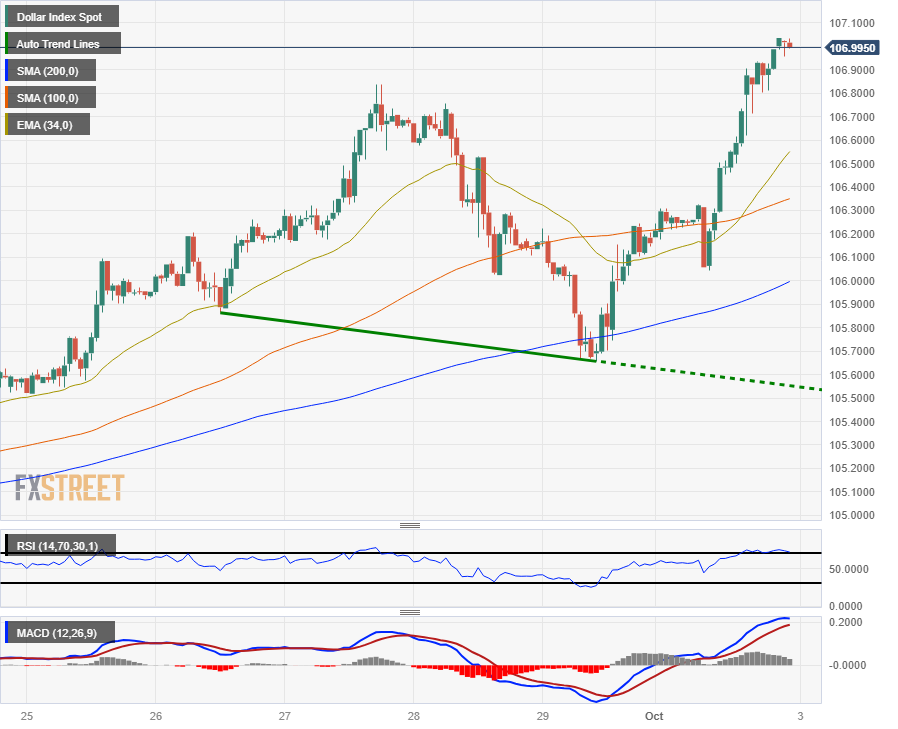
Hourly candlesticks sees the US Dollar Index trading into the top side after rebounding off of the 200-hour Simple Moving Average (SMA) last week, bouncing from 105.70 to soar into its highest values in almost a year.
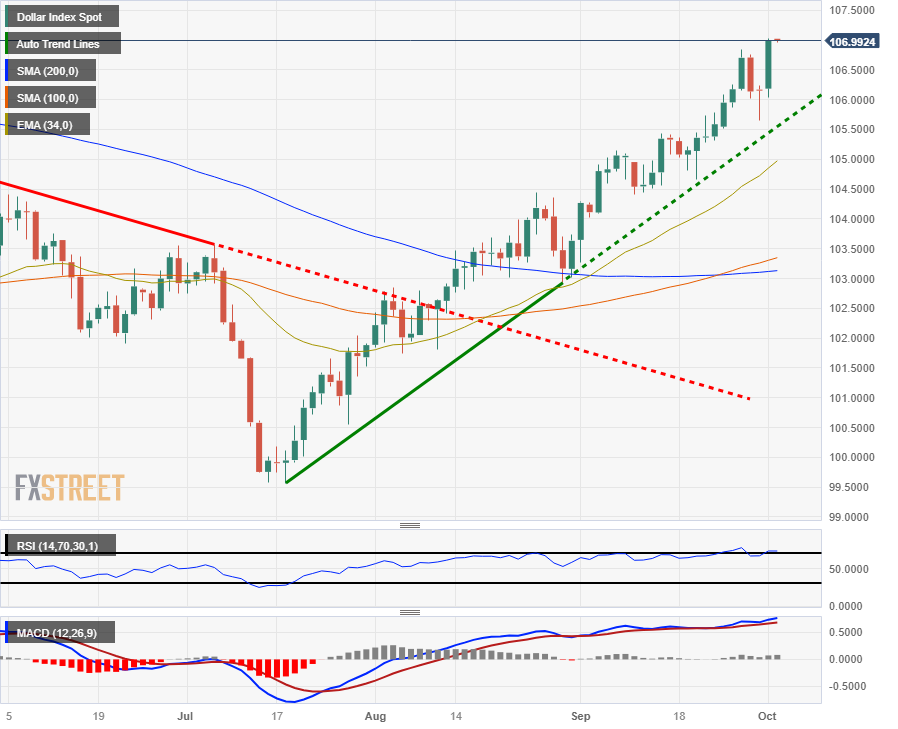
The US Dollar has climbed steadily since July's bottom near 99.50, and the DXY is on pace to close in the green for the twelfth straight week, climbing over 7% inside three months.
Daily candlesticks have the US Dollar index chalking in a notably strong rising trendline from July's lows, and price action has pulled well away from meaningful technical support at the 200-day SMA currently turning bullish from above 103.00.
DXY hourly chart
DXY daily chart
DXY technical levels
Author

Joshua Gibson
FXStreet
Joshua joins the FXStreet team as an Economics and Finance double major from Vancouver Island University with twelve years' experience as an independent trader focusing on technical analysis.
















