US Dollar fragile with Powell's rate decision just around the corner
- The US Dollar turns red with the US session underway.
- Traders are on edge to hear from US Fed chairman Jerome Powell.
- The US Dollar Index sees pressure building on 105 with a break to the downside.
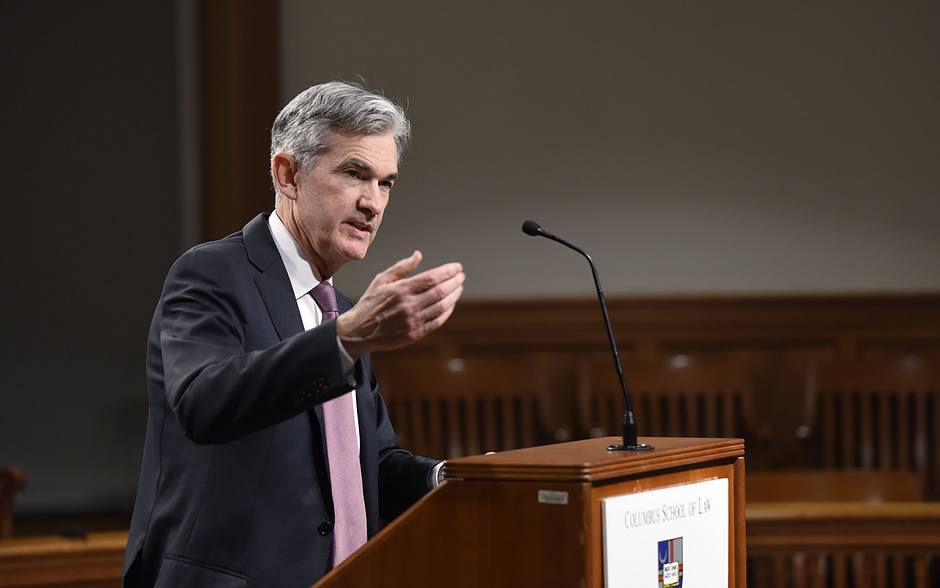

The US Dollar (USD) is expected to have a very binary outcome with US Federal Reserve (Fed) Chairman Jerome Powell taking the stage this Wednesday. Although no hikes are expected, the stakes are very high. Not only did recent data show an uptick in economic activity with the labor market still holding strong in the US, inflationary pressures are starting to gain momentum yet again.
As if Powell does not have a challenging enough job, the current inflationary pressure is coming from the energy market. The energy sector is a corner of the inflation basket where the Fed has no control, except by triggering a recession that would kill any additional demand for energy from a business perspective. A hawkish pause needs to be delivered as markets will want to see if the Fed is in a better position to deliver it, following the appalling performance from European Central Bank (ECB) Chairman Christine Lagarde last week.
Daily digest: US Dollar to lose rate advantage
- US Mortgage Application Index rose by 5.4% since last week.
- Thai Baht drops 1% against the Greenback in Asian trading.
- Expect to hear a needle drop in the markets during the European session and up until 18:00 GMT. The Fed will communicate first its interest rate decision, which is expected to remain unchanged at 5.5%. A joint statement will be available as well at the time of the rate communication.
- In the brief, the dot-plot (Phillips curve) will be communicated as well. Every Fed member who was a voter at this September meeting gets his chance to pencil in where rates will be in the coming months and years. This way a consensus view can be made on how high the Fed thinks it will need to go and for how long rates will remain unchanged.
- Thirty minutes later, at 18:30 GMT, Jerome Powell will take the stage and give his insights on why the Fed hiked or paused. Here will be the crucial moment if Powell is able to deliver that expected hawkish message to the markets that the Fed will not relent on controlling inflation.
- Equities are in the red again this Wednesday as there is no escaping the negative mood stock markets are in this week. At the moment the Hang Seng Index and the Shanghai CSI 300 index are both negative on their year-to-date performance, erasing any gains for the whole of 2023. US equity futures are turning green with the US Fed rate decision just around the corner.
- The CME Group FedWatch Tool shows that markets are pricing in a 99% chance that the Federal Reserve will keep interest rates unchanged at its meeting in September. Traders though will need to watch out for any hawkish rhetoric from Powell as inflation has been ticking up recently.
- The benchmark 10-year US Treasury yield trades at 4.33% and peaked on Tuesday. Yields are ticking up again after earlier a flight to safety triggered the opposite with bond prices rising.
US Dollar Index technical analysis: Powell tonight
THe US Dollar is facing selling pressure this week with market participants unwinding some of their US Dollar long positions and others trying to pre-position for the main event this Wednesday. The fact that the US Dollar Index (DXY) was able to stay above 105, even with a brief breakdown, points to the importance of the level.
Expect a binary outcome with possibly the DXY making new yearly highs if Powell succeeds in delivering a hawkish message. If markets perceive the message as dovish, the summer rally of the Greenback could come to an end by going into Thursday.
The US Dollar Index (DXY) has edged up, reaching 105.41. This is just a sigh away from the 2023 high near 105.88. Should the DXY be able to close above there for the week, expect the US Dollar to go even stronger in the medium turn.
On the downside, the 104.44 level seen on August 25 kept the Index supported on Monday, halting the DXY from selling off any further. Should the uptick that started on September 12 reverse and 104.44 gives way, a substantial downturn could take place to 103.04, where the 200-day Simple Moving Average (SMA) comes into play for support.
Inflation FAQs
What is inflation?
Inflation measures the rise in the price of a representative basket of goods and services. Headline inflation is usually expressed as a percentage change on a month-on-month (MoM) and year-on-year (YoY) basis. Core inflation excludes more volatile elements such as food and fuel which can fluctuate because of geopolitical and seasonal factors. Core inflation is the figure economists focus on and is the level targeted by central banks, which are mandated to keep inflation at a manageable level, usually around 2%.
What is the Consumer Price Index (CPI)?
The Consumer Price Index (CPI) measures the change in prices of a basket of goods and services over a period of time. It is usually expressed as a percentage change on a month-on-month (MoM) and year-on-year (YoY) basis. Core CPI is the figure targeted by central banks as it excludes volatile food and fuel inputs. When Core CPI rises above 2% it usually results in higher interest rates and vice versa when it falls below 2%. Since higher interest rates are positive for a currency, higher inflation usually results in a stronger currency. The opposite is true when inflation falls.
What is the impact of inflation on foreign exchange?
Although it may seem counter-intuitive, high inflation in a country pushes up the value of its currency and vice versa for lower inflation. This is because the central bank will normally raise interest rates to combat the higher inflation, which attract more global capital inflows from investors looking for a lucrative place to park their money.
How does inflation influence the price of Gold?
Formerly, Gold was the asset investors turned to in times of high inflation because it preserved its value, and whilst investors will often still buy Gold for its safe-haven properties in times of extreme market turmoil, this is not the case most of the time. This is because when inflation is high, central banks will put up interest rates to combat it.
Higher interest rates are negative for Gold because they increase the opportunity-cost of holding Gold vis-a-vis an interest-bearing asset or placing the money in a cash deposit account. On the flipside, lower inflation tends to be positive for Gold as it brings interest rates down, making the bright metal a more viable investment alternative.
Author
Filip Lagaart
FXStreet
Filip Lagaart is a former sales/trader with over 15 years of financial markets expertise under its belt.

















