Tesla Stock News and Forecast: TSLA dumps on Twitter stock takeover fears
- TSLA stock falls 14% on Tuesday as worries mount over Twitter deal.
- TWTR stock remains well short of the proposed $54.20 takeover price.
- Tesla stock also breaks the 200-day moving average at $900.
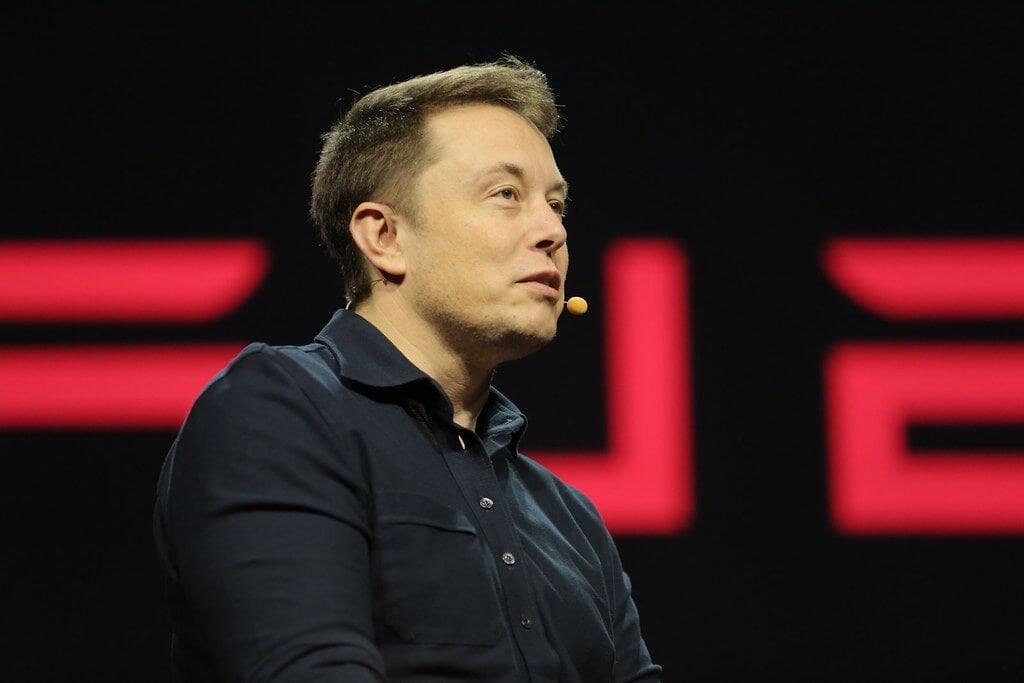
Tesla (TSLA) stock suffered a huge fall on Tuesday as details emerged about the stock pledged by Elon Musk to press ahead with his deal for Twitter. The move was also technical however and cannot solely be put down to the Twitter deal. Especially as the strike price for a margin call on Elon Musk's Tesla stock is some 40% below the price on the acquisition date. So in fact Tuesday's sell-off makes it less likely to be triggered when the deal or if the Twitter deal finally goes through.
Tesla stock news: $60B in TSLA shares used as collateral?
Details emerged on the proposed Twitter takeover via an SEC filing. Elon Musk has pledged TSLA stock as security with a 40% margin call price. This is based on the Tesla stock price on the day the Twitter deal goes through. So a lower price reduces the likelihood of it being triggered.
According to the SEC filing below Elon Musk borrowed $12.5 billion for the Twitter takeover but various sources have him pledging over $60 billion in Tesla stock as collateral for the loans. Another interesting feature to note is the spread of banks loaning Elon Musk the cash. In total 12 banks are on the hook. Is this because none wanted too much risk or simply because they all wanted a slice of the deal?
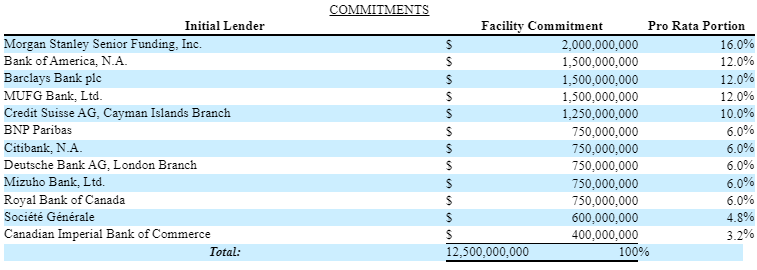
Source: SEC
Either way, Tesla (TSLA) shareholders appear to have taken the news badly and the shares slumped. While 40% may seem quite a distance away Tesla stock is notoriously volatile and also trades on an exceptionally high multiple. Only last May Tesla traded in the high $500s. The closer Tesla stock gets to the level the more likely traders and investors will begin to focus on it and many sharp traders may look to trigger it and see if that triggers a fresh wave of selling. However, the level will not be known until or if the Twitter takeover gets across the finish line.
Tesla stock forecast: TSLA targeting $700 low
This move merely confirms our bearish thesis based on the longer-term series of lower highs and lower lows. Despite strong earnings, this has remained in place and your author's stop loss on his short position has remained safe. I thought the earnings might target it but failure is another bearish factor to add in. Now the last significant low at $700 is the obvious target. $945 and more importantly $975 now are the key resistance levels.
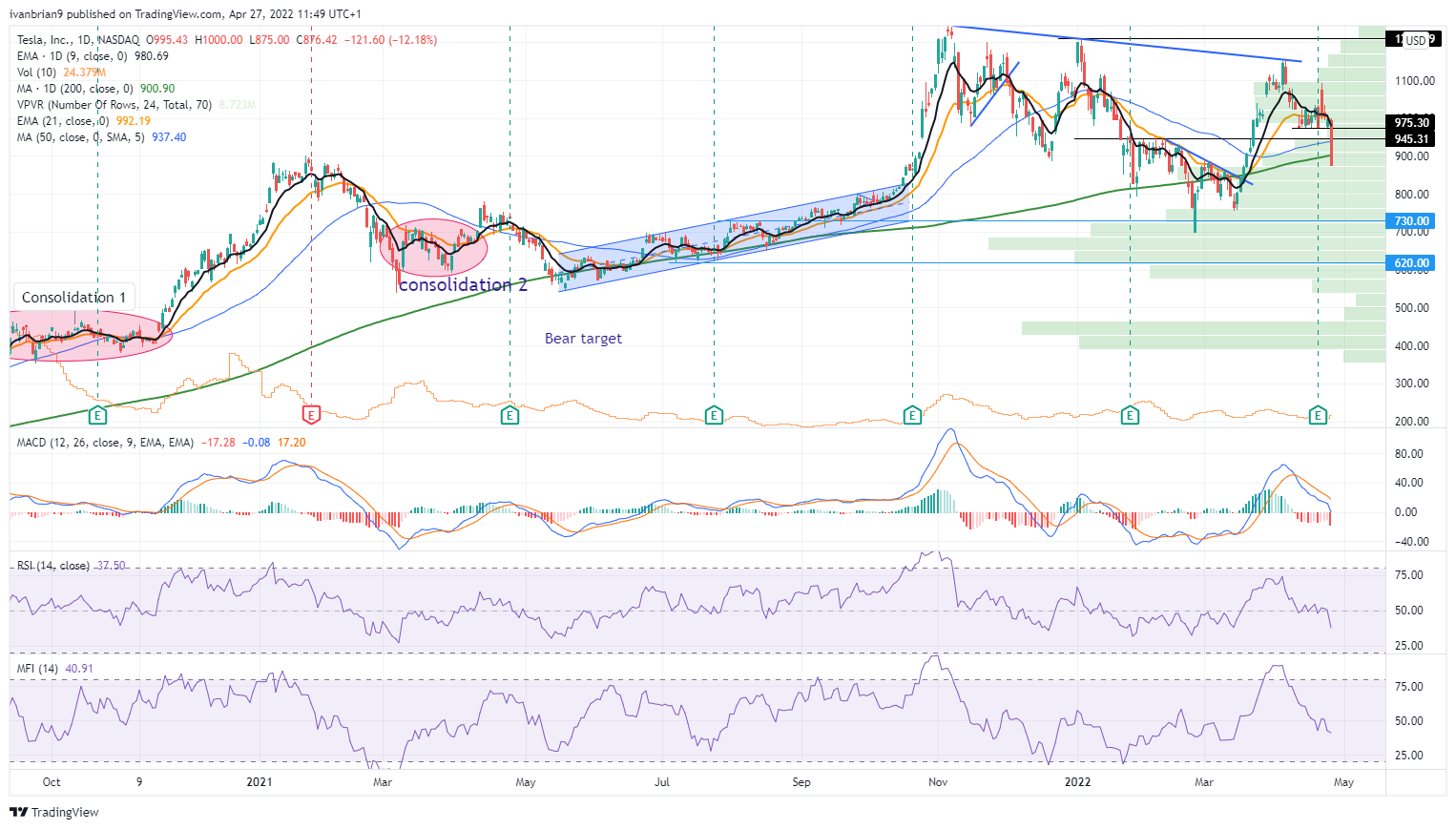
Tesla stock chart, daily
Twitter stock news: Risk of deal failure keeps TWTR capped
Twitter meanwhile has also underperformed. TWTR stock closed down 4% on Tuesday at $49.68. This is quite a discount to the proposed $54.20 takeout price but so far merger arb buyers do not seem interested. This has to do with the risk of the deal falling through. Merger arb players will have done their homework and a discount of 10% would usually be enough to tempt them in.
However, rising yields mean the comparison of returns of 10% versus 3% for the US 10 Year. This time last year the comparison would have been nearer to 10% versus 1% so we can see how rising rates affect M&A activity.
Twitter (TWTR) stock forecast: 15% price discount likely
Now that funding has been secured it does make the acquisition more likely. But a price discount of nearer 15% is probably likely before merger arb players will look at this deal.
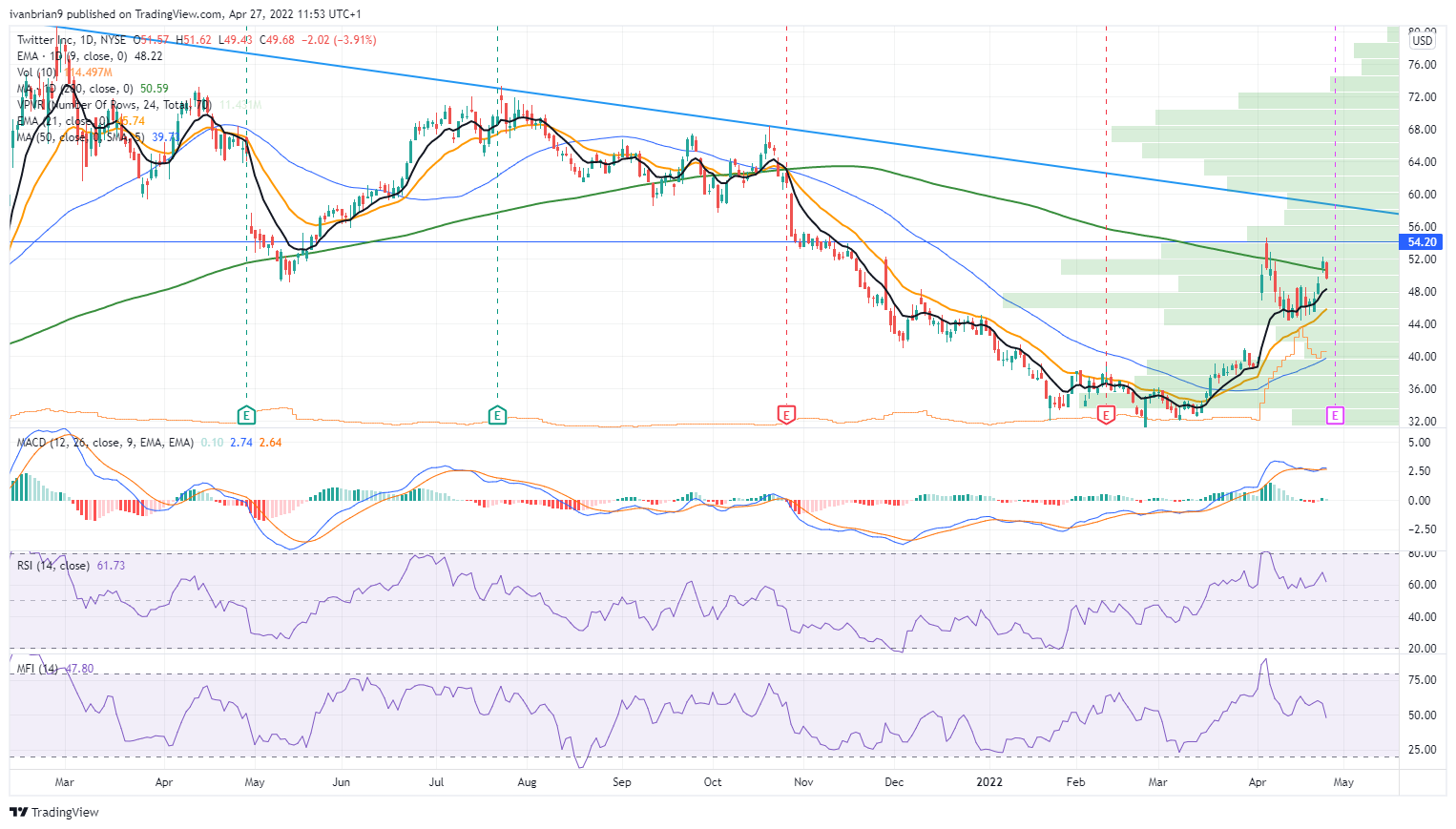
TWTR stock chart, daily
*The author is short Tesla.
Author

Ivan Brian
FXStreet
Ivan Brian started his career with AIB Bank in corporate finance and then worked for seven years at Baxter. He started as a macro analyst before becoming Head of Research and then CFO.
















