|

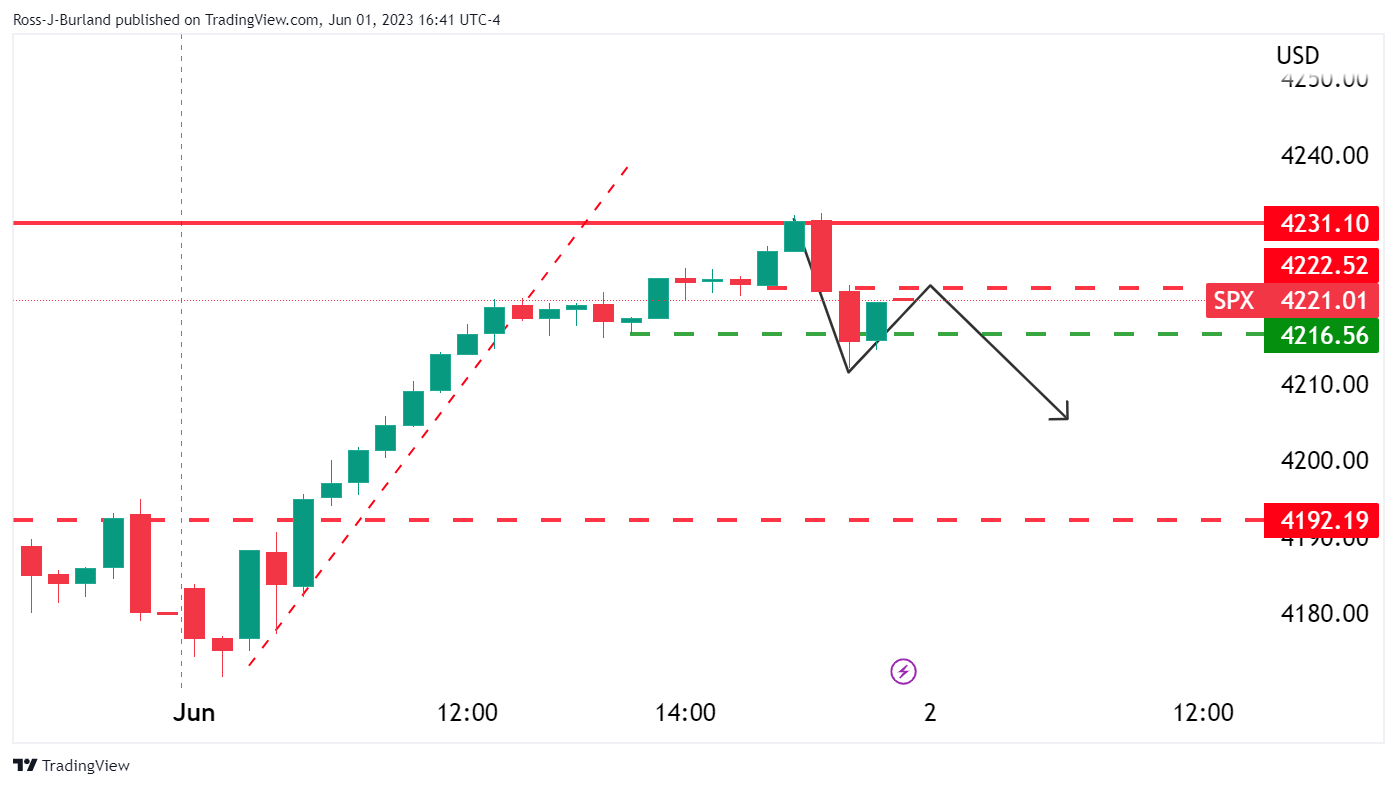
S&P 500 traders await the key NFP data

  • The Dow Jones Industrial Average rose 154.09 points, or 0.47%, to 33,062.36.
  • The S&P 500 gained 41.26 points, or 0.99%, to 4,221.09.
  • The Nasdaq Composite added 165.70 points, or 1.28%, to 13,100.98.
The S&P 500 rallied to a nine-month closing high on Thursday. the sentiment was boosted on Wall Street as the slowing wage pressure raised hopes the Federal Reserve will pause hiking interest rates. Additionally, investors cheered a vote in Congress to suspend the US debt ceiling.

A slump in productivity was revised lower, while the ISM PMI showed the manufacturing sector contracted for a 7th month. Initial jobless claims and the ADP report beat forecasts but the data indicates a less tight labour market. Meanwhile, Fed´s Governor Philip Jefferson and Philadelphia Fed President Patrick Harker suggested the central bank would skip a rate hike in the next meeting. Stocks were supported by the expectations that the Federal Reserve might not hike interest rates when its policy committee meets later this month. The CME Fedwatch Tool shows a 75% probability the central bank will keep rates unchanged.

Focus now shifts to the Labor Department's closely watched Nonfarm Payrolls report. ´´US payrolls likely slowed modestly in May, advancing at a still strong 200k+ pace for a second consecutive month. We also look for the Unemployment Rate to stay unchanged at a historical low of 3.4%, and for wage growth to print 0.3% MoM (4.4% YoY),´´ analysts at TD Securities said.

S&P 500 technical analysis
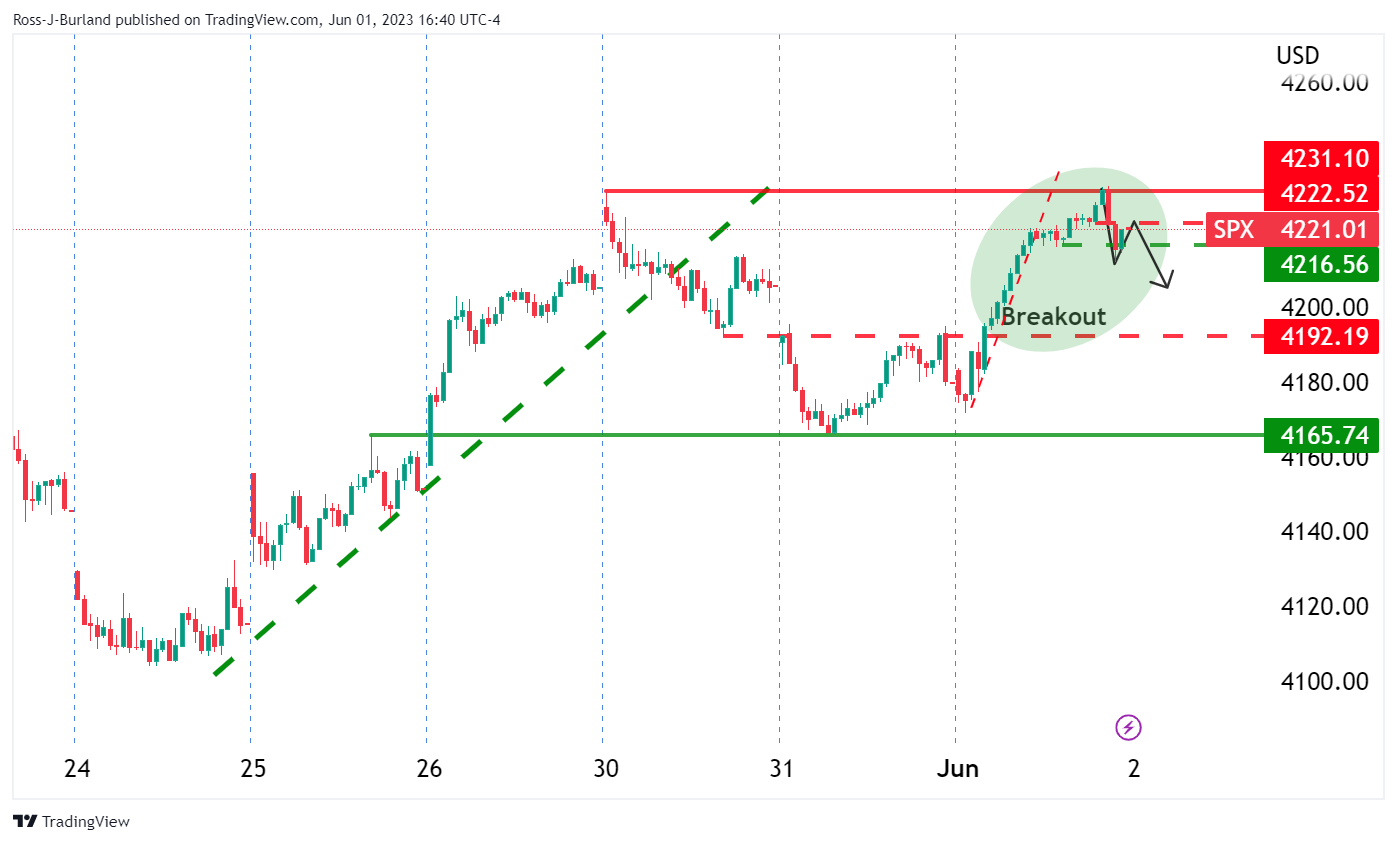
Following the breakout, there could be a move back into longs but alñl will depend on NFP.

Author

Ross J Burland

Ross J Burland, born in England, UK, is a sportsman at heart. He played Rugby and Judo for his county, Kent and the South East of England Rugby team.


More from Ross J Burland
Share:

Editor's Picks

AUD/USD remains depressed near 0.6950 after RBA minutes

AUD/USD attracts follow-through selling during Tuesday’s Asian session, looking to extend the overnight rejection slide from 0.7000, or a two-week top, following the release of RBA meeting Minutes. The US Dollar retains a bullish undertone near its highest level since April 2025 as energy-driven inflation risks keep December Fed rate hike bets firmly on the table. Adding to this, geopolitical risks further underpin the safe-haven USD.

USD/JPY extends retreat below 158.50 as intervention risks loom

USD/JPY is dropping below 158.50 in the Asian session on Tuesday, snapping a two-day winning streak and pulling back from an over two-week top touched the previous day, despite Japan's soft PPI inflation print. Bulls turn cautious amid speculation that authorities will step in to prop up the Japanese Yen, which, in turn, weighs on the pair.

Gold clings to gains just below $4,200

Gold fades Monday’s small pullback and picks up renewed pace, briefly flirting with the key $4,200 mark per troy ounce. The precious metal’s recovery comes in line with the fresh downward trend in the Greenback in combination with shrinking US Treasury yields across the board and easing tensions on the geopolitical front.

Bitcoin rebounds despite cautious sentiment

Bitcoin rebounds over 2%, trading above $83,500 on Tuesday, recovering the previous day’s losses. Persistent geopolitical tensions and mixed signals continue to weigh on risk appetite, keeping investors cautious despite BTC’s recovery.

US – Midterm update: Democratic lead holds three weeks before election

With three weeks until the US midterm election on 3 November, prediction markets are more or less unchanged. Polymarket continues to put the probability of a Democratic sweep at 60-65%. The House is seen as a fairly safe Democratic win, with a probability of around 90%.

Has Bitcoin really escaped the macro forces it was built to fight?
Over 17 years ago, Satoshi Nakamoto designed Bitcoin (BTC) on the back of a global financial crisis as an alternative to the global monetary system outside the control of central banks, governments and traditional intermediaries. This raises a key question: has Bitcoin really become independent of the macroeconomic forces it was built to challenge?