USD/JPY stalls as Yentervention risk weighs
- USD/JPY pared last Friday’s gains on Monday, scrubbing a late reversal to wrap up the trading year.
- Market momentum remains tepid but wary as year-end trading volumes evaporate.
- Yen traders have one eye on the Fed’s latest Meeting Minutes, and the other on Yentervention risks.

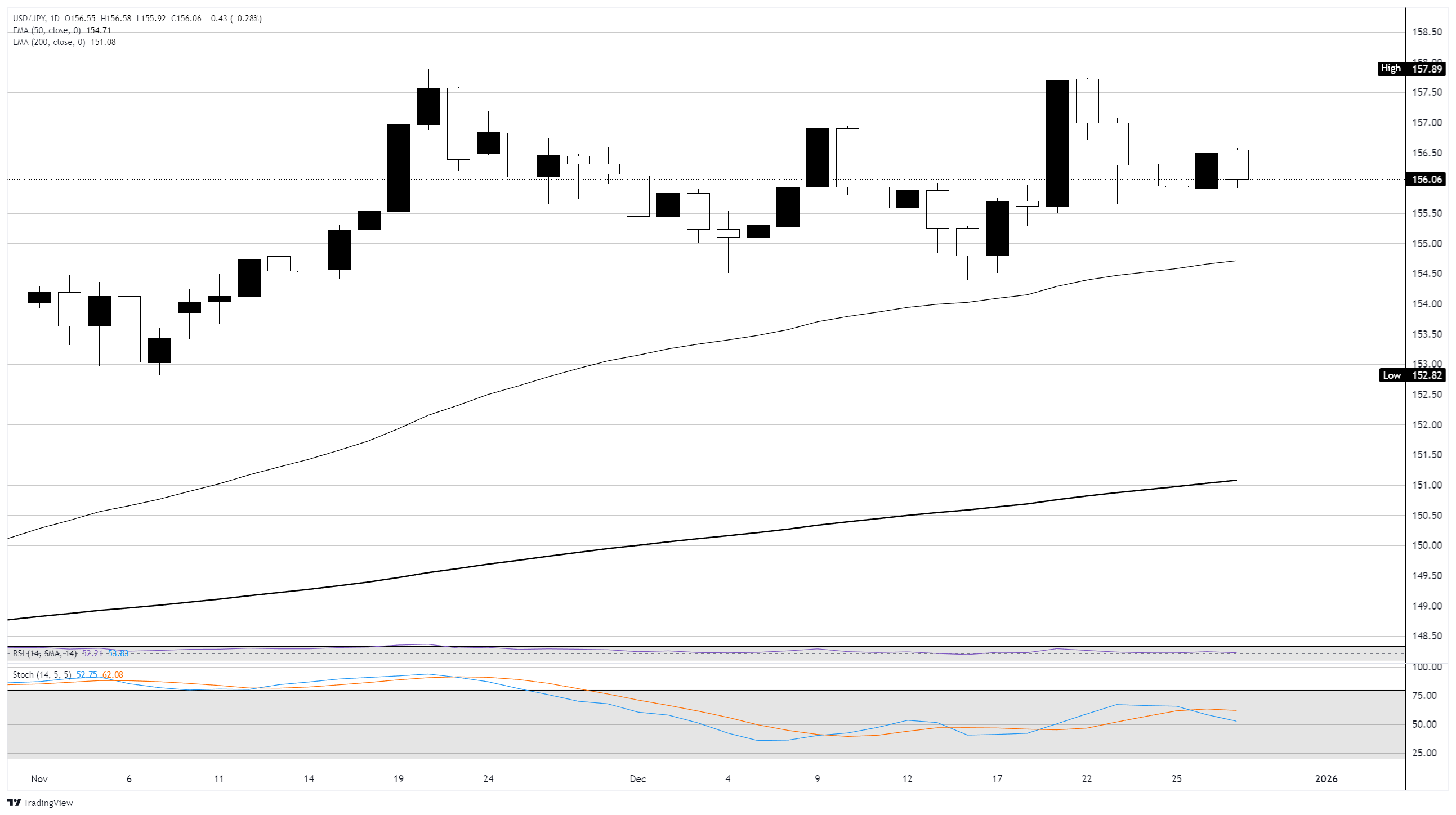
USD/JPY reversed course to open the final week of the trading year, falling back to the 156.00 region and paring off last week’s late burst of bullish momentum. General volatility is expected to widen during the last trading week of 2025, and follow into early 2026 as holiday-thinned market volumes wreak havoc on general market trends.
Yen markets still aren’t in drastic-enough shape to warrant a direct intervention yet, but the risk of the Bank of Japan stepping directly into markets to bolster the Yen yet again remains nearby. Japanese Finance Minister Satsuki Katayama reiterated last week that the BoJ has “free hands” to deal with any “excessive moves” in Yen markets.
The latest interest rate decision from the Fed has sparked some exciting discussions, as they’ve implemented a third consecutive rate cut. According to their latest dot plot, policymakers anticipate a gradual easing in rates, with projections suggesting two additional cuts over the next two years.
Looking ahead, the CME’s FedWatch Tool is showing a growing expectation among traders for an accelerated rate-cutting schedule. Many are predicting at least two more cuts before September arrives, with the potential for even more easing down the line.
USD/JPY daily chart
Japanese Yen FAQs
The Japanese Yen (JPY) is one of the world’s most traded currencies. Its value is broadly determined by the performance of the Japanese economy, but more specifically by the Bank of Japan’s policy, the differential between Japanese and US bond yields, or risk sentiment among traders, among other factors.
One of the Bank of Japan’s mandates is currency control, so its moves are key for the Yen. The BoJ has directly intervened in currency markets sometimes, generally to lower the value of the Yen, although it refrains from doing it often due to political concerns of its main trading partners. The BoJ ultra-loose monetary policy between 2013 and 2024 caused the Yen to depreciate against its main currency peers due to an increasing policy divergence between the Bank of Japan and other main central banks. More recently, the gradually unwinding of this ultra-loose policy has given some support to the Yen.
Over the last decade, the BoJ’s stance of sticking to ultra-loose monetary policy has led to a widening policy divergence with other central banks, particularly with the US Federal Reserve. This supported a widening of the differential between the 10-year US and Japanese bonds, which favored the US Dollar against the Japanese Yen. The BoJ decision in 2024 to gradually abandon the ultra-loose policy, coupled with interest-rate cuts in other major central banks, is narrowing this differential.
The Japanese Yen is often seen as a safe-haven investment. This means that in times of market stress, investors are more likely to put their money in the Japanese currency due to its supposed reliability and stability. Turbulent times are likely to strengthen the Yen’s value against other currencies seen as more risky to invest in.
Author

Joshua Gibson
FXStreet
Joshua joins the FXStreet team as an Economics and Finance double major from Vancouver Island University with twelve years' experience as an independent trader focusing on technical analysis.

















