RBA's SoMP: No strong case for a near-term rate change, inflation forecasts revised up a little
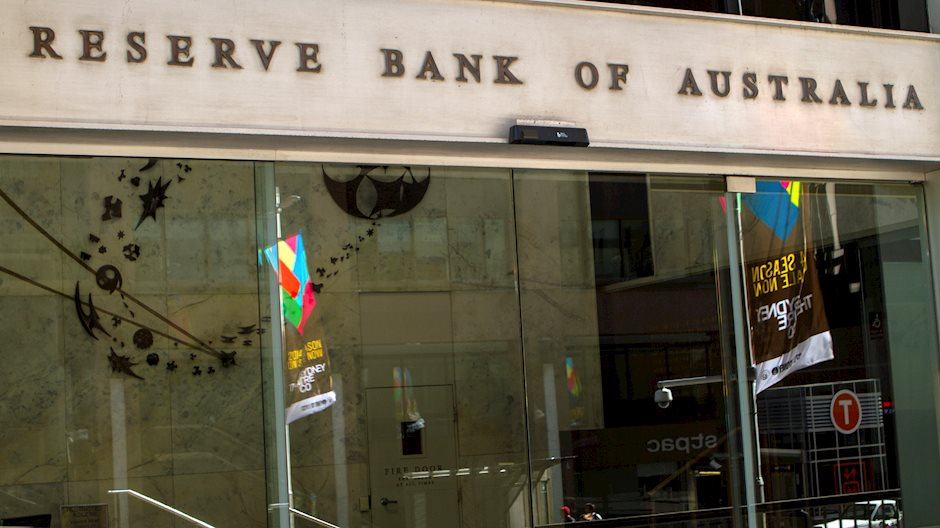

The Reserve Bank of Australia's (RBA) quarterly Statement On Monetary Policy (SoMP) released a few minutes before press time is offering a more optimistic view on the economy than three months ago, although policymakers are still seeing no strong case for a near-term change in the interest rate.
Key points (Source: RBA)
The inflation forecasts have been revised up a little... underlying inflation is expected to increase in the December quarter, and then pick up to 2¼ percent by late 2019, a little earlier than expected at the time of the August Statement, courtesy of faster-than-expected decline in spare capacity in the economy.
Forecasts year-average GDP growth at 3.5 percent for 2018, 3.25 percent for 2019, 3.25 percent for 2020.
Forecasts underlying inflation at 1.75 percent Dec 2018, 2 percent June 2019, and 2.25 percent from Dec 2019 to Dec 2020.
Rising capacity constraints could result in a faster pick-up in global inflation.
Headline inflation is expected to be boosted a little in the December quarter by an increase in fuel prices.
The September quarter inflation outcomes were broadly in line with the forecasts in the August Statement.
Household consumption depends on the outlook for income growth, particularly in the context of high debt and may also be affected by declines in housing prices
Wages growth is expected to be boosted a little in the September quarter as a result of the 3.5 percent increase in the award and minimum wages from 1 July.
Domestic GDP growth is expected to remain above trend over the forecast period.
The current rate of consumption growth is forecast to continue, but there are downside risks.
Growth in non-mining business investment is expected to become more broadly based.
The terms of trade are still forecast to moderate, export growth will be supported by services.
The unemployment rate is expected to decline gradually over the forecast period to 4¾ percent. However, there continues to be considerable uncertainty around how much spare capacity there is in the labour market.
The risks to global growth from trade protectionism have intensified.
Chinese authorities continue to balance the need to address financial risks while maintaining growth.
Any depreciation of the Australian dollar at a time of stronger-than-expected global inflation and/or demand would be positive for the outlook for domestic growth and inflation.
A sharp rise in inflation or inflation expectations could lead to a reassessment of the speed and extent of monetary policy tightening and prompt a significant adjustment in many asset prices, including exchange rates.
Author
Omkar Godbole
FXStreet Contributor
Omkar Godbole, editor and analyst, joined FXStreet after four years as a research analyst at several Indian brokerage companies.