Powell speech: Stagflation not the base case
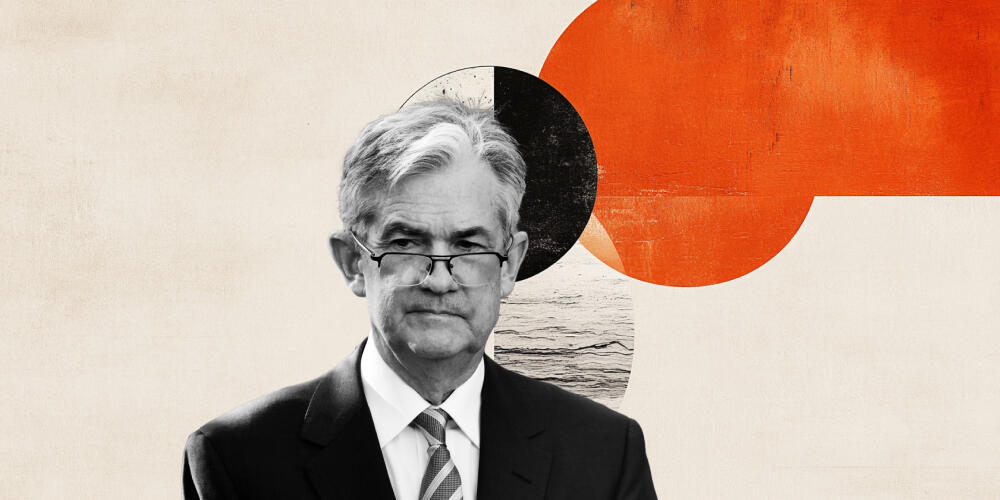
"Federal financial policy, debt, doesn't affect our month-to-month policy decisions," Federal Reserve (Fed) Chairman Jerome Powell said while testifying about the Semi-Annual Monetary Policy Report before the Senate Banking Committee on Wednesday.
Key takeaways
"Ample reserves enable banks to keep lending through stress."
"Return to scarce reserves would not save money."
"Unwinding ample reserves would take years."
"Enormous benefits of having the Dollar as the global reserve currency."
"Dollar remains reserve currency, it's a durable equilibrium, expect it to last for a long time to come."
"Bond market is functioning well."
"Inflation expectations have come down a bit from April."
"On USD weakness, markets have been digesting an unusually challenging set of circumstance."
"Open to the possibility that tariffs translating to inflation will be more or less than we think."
"Watching to see what shows up in measured inflation."
"Direction of travel on government data collection is concerning."
"Tariffs might well be one-time event for inflation, but not a law of nature."
"Will approach the question carefully."
"Not deciding what to do yet."
"One-time could be the base case, want to approach it carefully when inflation isn't back to 2%
"If we make a mistake, people will pay the cost for a long time."
"Uncertainty on tariffs peaked in April."
"Businesses feeling a little better now."
"Stagflation not the base case."
"If there were stagflation, would put Fed in a hard place."
Market reaction
These comments don't seem to be having a noticeable impact on the US Dollar's (USD) valuation. At the time of press, the USD Index was virtually unchanged on the day at 98.00.
Fed FAQs
Monetary policy in the US is shaped by the Federal Reserve (Fed). The Fed has two mandates: to achieve price stability and foster full employment. Its primary tool to achieve these goals is by adjusting interest rates. When prices are rising too quickly and inflation is above the Fed’s 2% target, it raises interest rates, increasing borrowing costs throughout the economy. This results in a stronger US Dollar (USD) as it makes the US a more attractive place for international investors to park their money. When inflation falls below 2% or the Unemployment Rate is too high, the Fed may lower interest rates to encourage borrowing, which weighs on the Greenback.
The Federal Reserve (Fed) holds eight policy meetings a year, where the Federal Open Market Committee (FOMC) assesses economic conditions and makes monetary policy decisions. The FOMC is attended by twelve Fed officials – the seven members of the Board of Governors, the president of the Federal Reserve Bank of New York, and four of the remaining eleven regional Reserve Bank presidents, who serve one-year terms on a rotating basis.
In extreme situations, the Federal Reserve may resort to a policy named Quantitative Easing (QE). QE is the process by which the Fed substantially increases the flow of credit in a stuck financial system. It is a non-standard policy measure used during crises or when inflation is extremely low. It was the Fed’s weapon of choice during the Great Financial Crisis in 2008. It involves the Fed printing more Dollars and using them to buy high grade bonds from financial institutions. QE usually weakens the US Dollar.
Quantitative tightening (QT) is the reverse process of QE, whereby the Federal Reserve stops buying bonds from financial institutions and does not reinvest the principal from the bonds it holds maturing, to purchase new bonds. It is usually positive for the value of the US Dollar.
Author

Eren Sengezer
FXStreet
As an economist at heart, Eren Sengezer specializes in the assessment of the short-term and long-term impacts of macroeconomic data, central bank policies and political developments on financial assets.