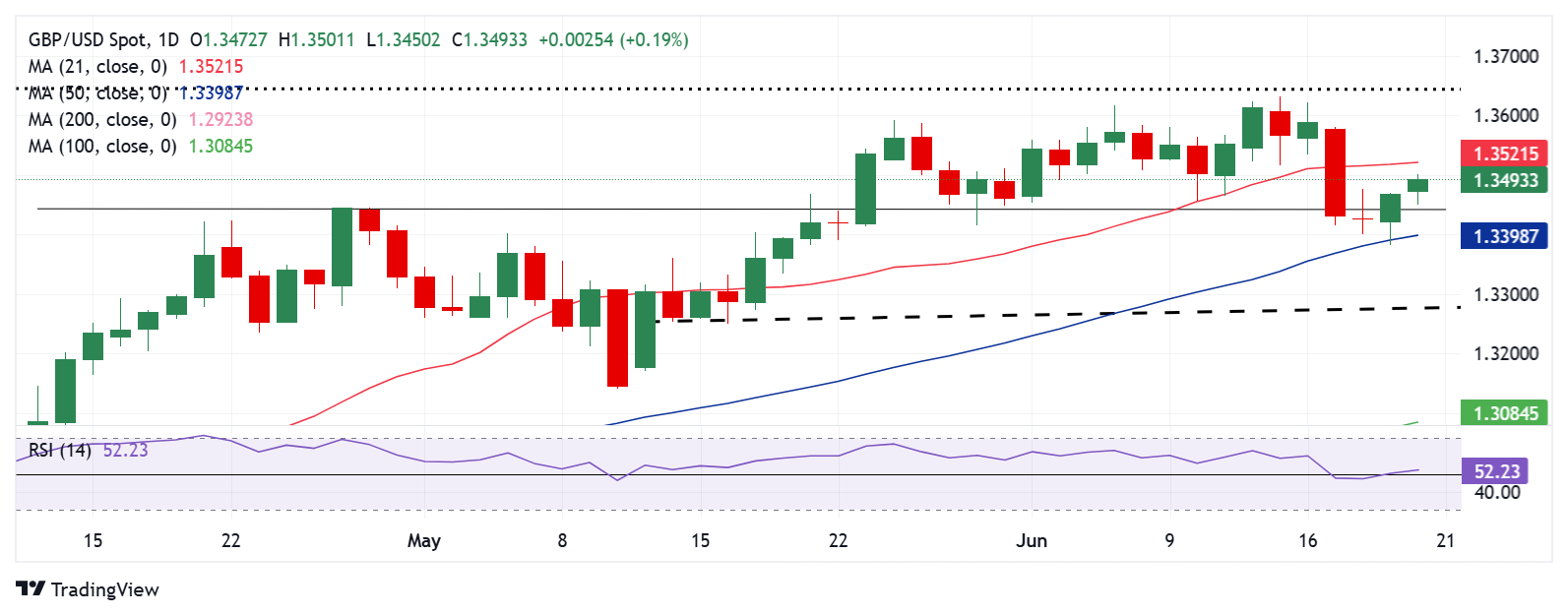
Pound Sterling Price News and Forecast: GBP/USD trades in negative territory for the day near 1.3405

GBP/USD extends downside to near 1.3400 as US enters Israel-Iran war
The GBP/USD pair extends the decline to around 1.3405 during the Asian trading hours on Monday. The fears that Iran would retaliate against US attacks on its nuclear sites boost the safe-haven flows, supporting the US Dollar (USD). Investors await the preliminary reading of the Purchasing Managers Index (PMI) for June from the UK and the US, which are due later on Monday.
The United States carried out airstrikes on three nuclear sites in Iran early Sunday despite US President Donald Trump’s longtime promises to avoid new foreign conflicts, per Bloomberg. Trump said Iran’s key nuclear enrichment facilities had been “totally obliterated” and warned of “far greater” attacks unless Iran agreed to make peace. Iran has vowed to respond, saying it “reserves all options.” The escalating tension in the Middle East and fears of wider conflict boost the demand for safe-haven assets, which lift the Greenback against the Cable. Read more...
GBP/USD Weekly Outlook: Powell, Bailey comments to drive Pound Sterling moves after rollercoaster week
The Pound Sterling (GBP) staged a late recovery against the US Dollar (USD) after the GBP/USD pair corrected sharply to monthly lows below 1.3400. The price action around the GBP/USD pair in the past week was mainly dictated by the ongoing developments surrounding the Israel-Iran geopolitical escalation even as trade uncertainties continued to linger.
The US Dollar received a double booster shot amid reviving safe-haven demand, courtesy of the Middle East conflict, and the hawkish hold decision by the US Federal Reserve (Fed). This USD resurgence weighed heavily on the Pound Sterling, fuelling steep declines in the pair until mid-Thursday’s trading as markets digested the Bank of England’s (BoE) dovish policy outcome. Read more...
Author

FXStreet Team
FXStreet
Composed of a group of economic journalists and FX experts, the FXStreet content team produces and oversees all content published on FXStreet. It provides a purely journalistic approach to the Forex market.