|

Pound Sterling Price News and Forecast: GBP/USD tests a yearly high of 1.3044 level

GBP/USD Price Forecast: Holds position above 1.3000 with testing yearly highs

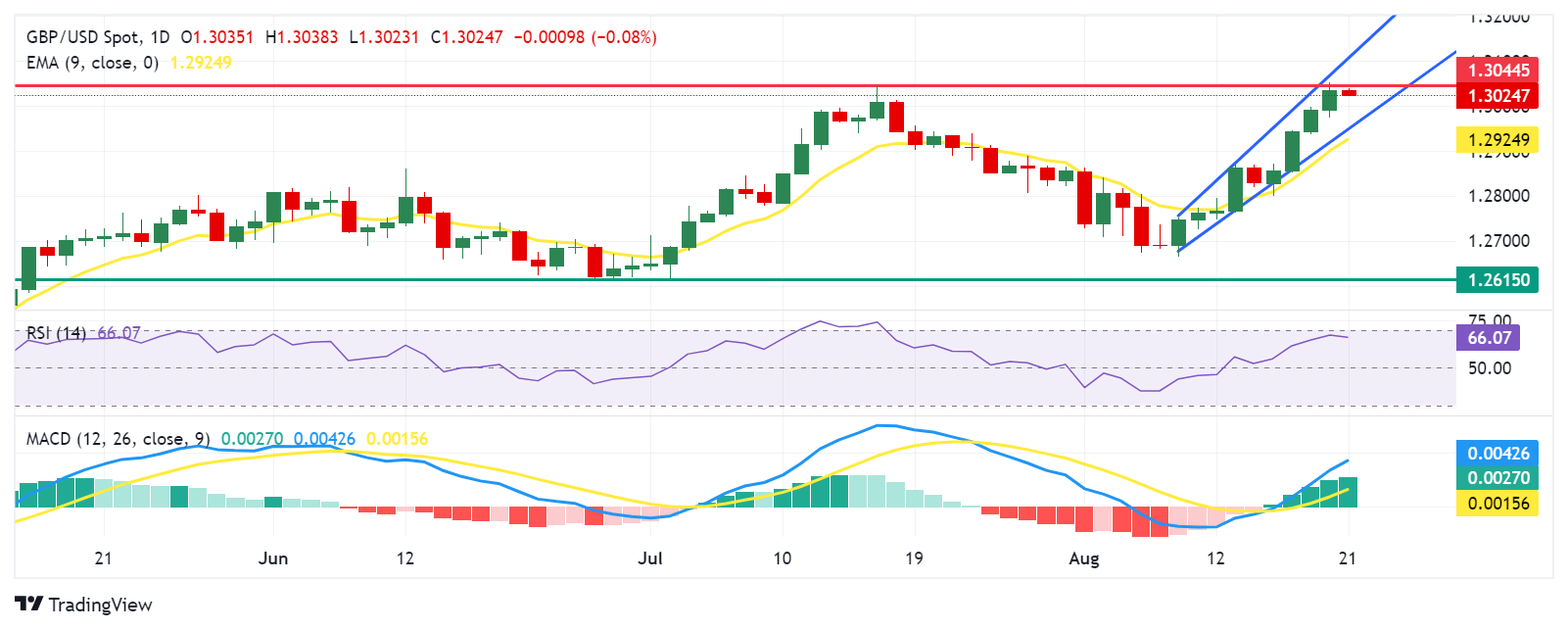
GBP/USD halts its four-day winning streak, trading around 1.3020 during Wednesday’s Asian session. The daily chart analysis shows the pair is trending upwards within an ascending channel pattern, suggesting a bullish bias.

The Moving Average Convergence Divergence (MACD) indicator suggests bullish momentum, as the MACD line is above the centreline and shows divergence above the signal line. Additionally, the 14-day Relative Strength Index (RSI) consolidates slightly below 70 level, suggesting a potential correction in the short term. Read more...
GBP/USD rallies on Tuesday, taps fresh yearly high

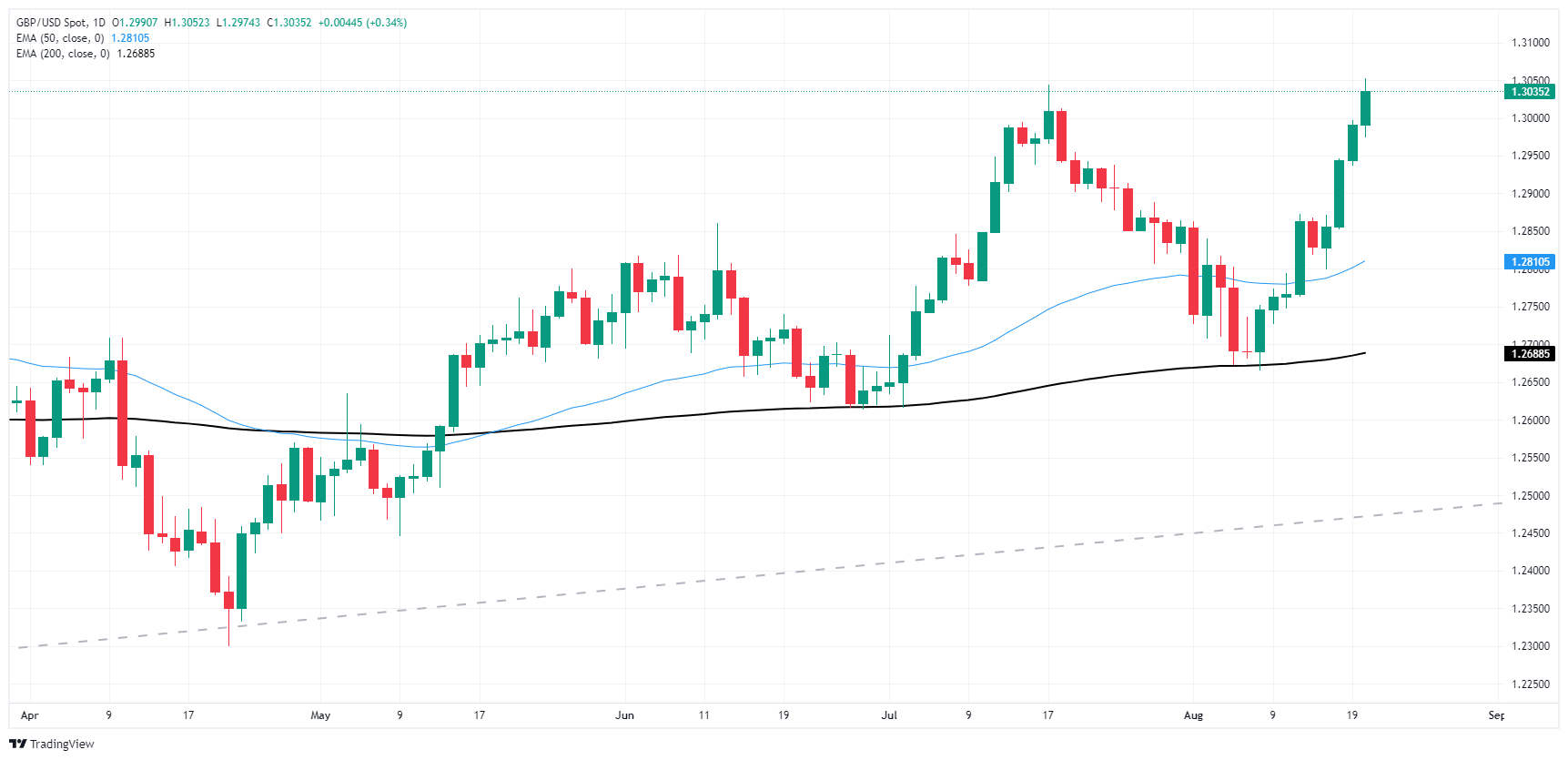
GBP/USD chalked in another third of a percent gain on Tuesday, squeezing out a fresh 13-month high and closing in the green for a third straight day as the Pound Sterling capitalizes on broad-market Greenback weakness. Market sentiment is holding on the high end ahead of key business activity survey results, and the upcoming kickoff of the Jackson Hole Economic Symposium.

Wednesday will give markets another opportunity to take a breather before high impact data gets underway in the back half of the trading week. UK Purchasing Managers Index (PMI) figures for August are expected to drift upwards slightly, with the UK Services PMI component forecast to tick up to 52.8 from 52.5. The Manufacturing section is expected to hold steady at 52.1. Read more...
Author

FXStreet Team

Composed of a group of economic journalists and FX experts, the FXStreet content team produces and oversees all content published on FXStreet. It provides a purely journalistic approach to the Forex market.


More from FXStreet Team
Share:

Editor's Picks

AUD/USD flirts with 0.7000, lowest since early August amid bullish USD

AUD/USD hits a fresh low since early August during the Asian session on Friday and looks vulnerable near 0.7000 after breaking below the 200-day SMA overnight. Against the backdrop of the hawkish Fed, a two-day rally in oil prices revives inflation fears and continues to push US bond yields to multi-year highs. Adding to this, geopolitical risks lift the US Dollar to a two-month high, overshadowing RBA rate hike bets and weighing on the pair.

USD/JPY pulls back from three-week high after failing near 159.00

USD/JPY edges lower during the Asian session on Friday, stalling its recent strong move to a three-week high of 159.00 as Japanese Yen bears turn cautious amid intervention fears. Meanwhile, the US Dollar retains a strong bullish undertone as the Fed's hawkish outlook and oil-driven inflation fears continue to push US bond yields to multi-year peaks. Furthermore, the BoJ's dovish rate hike last week might cap JPY and support spot prices.

Gold treads water below $4,300

Gold grabs some buying attention and advances marginally at the end of the week, partially retracing the weekly decline, although it is still navigating below the key $4,300 mark per troy ounce. The fresh selling bias on the Greenback and the modest decline in US Treasury yields appear to support the humble advance in the precious metal.

Crypto Today: Bitcoin and Ethereum edge lower, XRP extends recovery as macro headwinds weigh

The broader cryptocurrency market is consolidating on Friday, with Bitcoin paring losses slightly above $84,000. Ethereum declines in tandem with BTC. Ripple (XRP), meanwhile, paints a different picture.


Fed vs BoJ: Both hiked. The market only believes one of them – and the chart shows which
The Federal Reserve (Fed) and the Bank of Japan (BoJ) have just done something remarkably similar. Both central banks raised interest rates by 25 basis points (bps) last week, both are confronting inflation risks, and both signal that future decisions will depend on incoming economic data.
Fed vs BoJ: Both hiked. The market only believes one of them – and the chart shows which

The Fed and the BoJ have just done something remarkably similar. Both central banks raised interest rates by 25 bps last week, both are confronting inflation risks, and both signal that future decisions will depend on incoming economic data.













