Pound Sterling Price News and Forecast: GBP/USD slightly oversold RSI warrants caution

GBP/USD Price Forecast: Slightly oversold RSI warrants caution for bearish traders
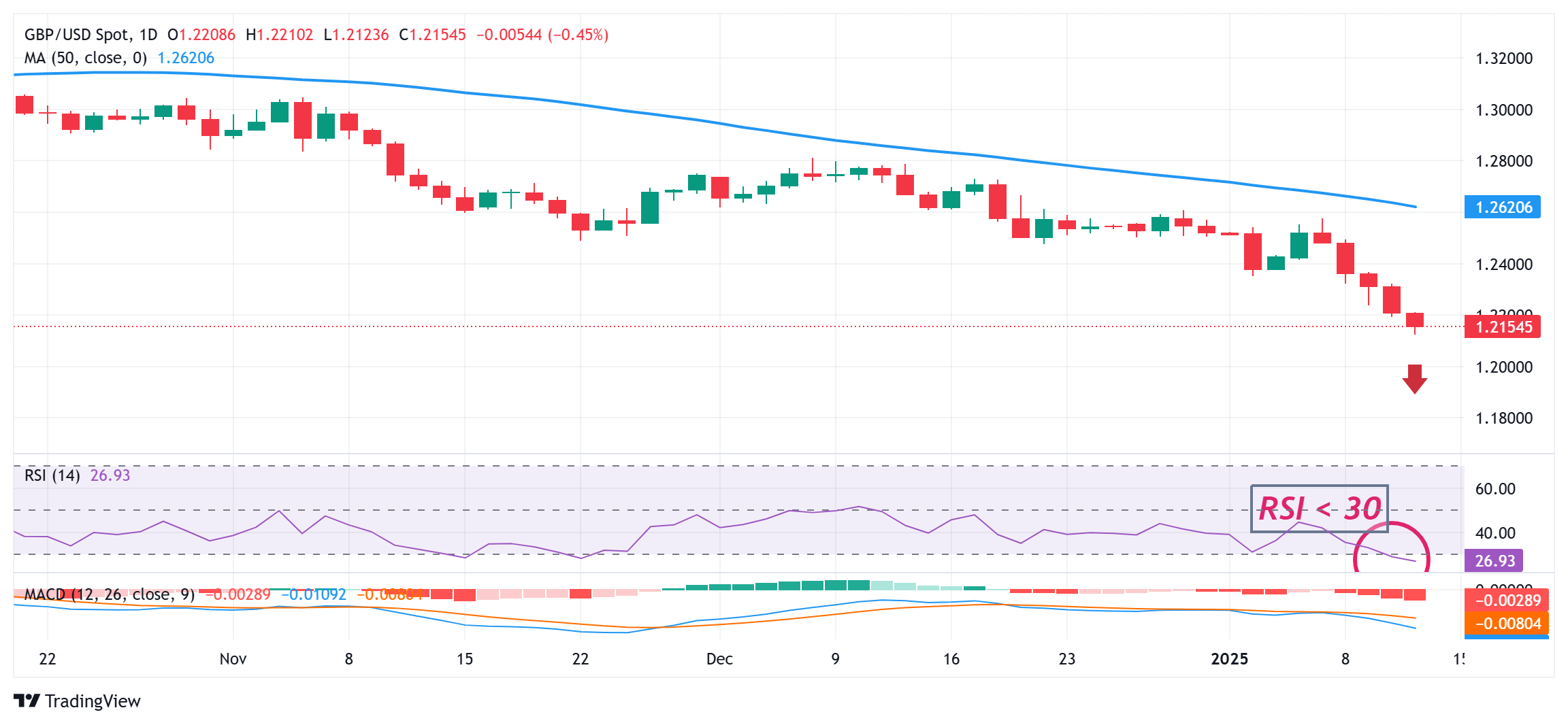
The GBP/USD pair attracts heavy selling for the fifth successive day and drops to its lowest level since November 2023, around the 1.2120 area at the start of a new trading week. The British Pound (GBP) has been underperforming in the wake of the risk of stagflation – a combination of high inflation and weak economic growth. Adding to this, a spike in the UK government bond yields since the launch of the Labour government’s debut budget plan in October has sparked widespread concern that the government could miss its own borrowing targets. This further contributes to denting sentiment surrounding the GBP, which, along with a bullish US Dollar (USD), continues to exert downward pressure on the currency pair.
In fact, the USD Index (DXY), which tracks the Greenback against a basket of currencies, stands firm near its highest level in over two years amid hawkish Federal Reserve (Fed) expectations. Investors now seem convinced that the US central bank will pause its rate-cutting cycle later this month and the bets were reaffirmed by the upbeat US monthly employment details released on Friday. Read more...
GBP/USD Weekly Outlook: Pound Sterling slides to multi-month lows amid inflation concerns
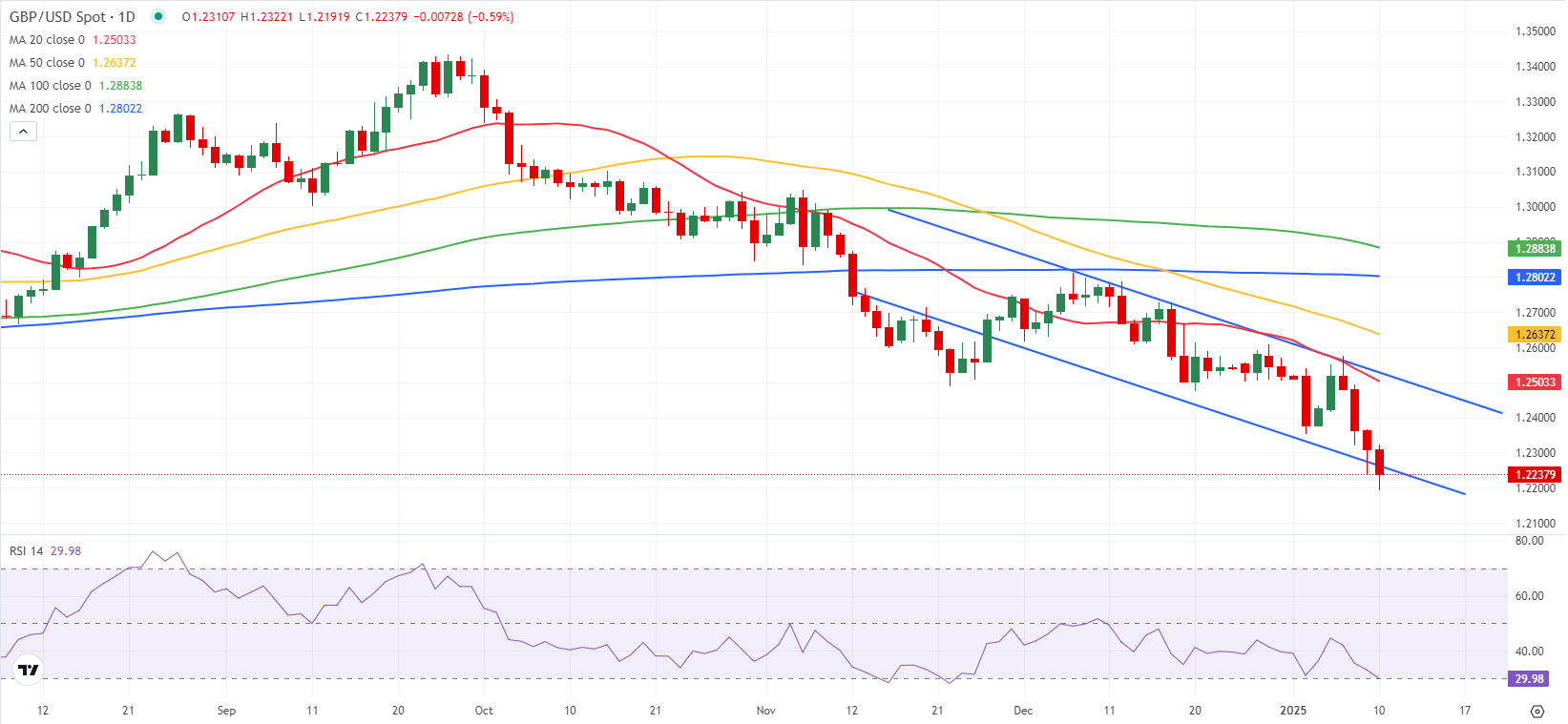
The Pound Sterling (GBP) resumed its bearish momentum against the US Dollar (USD), pushing GBP/USD to the lowest level in 14 months below 1.2200.
Nothing could stop Pound Sterling sellers as the GBP/USD pair faced a double whammy in the first full week of 2025. The week began on an upbeat note as risk appetite returned on China’s stimulus optimism and strong Caixin Services PMI data. The People’s Bank of China (PBOC) pledged over the weekend that it will step up financial support for technology innovation and consumption stimulation as part of a continued effort to boost economic growth, per Bloomberg. Read more...
Author

FXStreet Team
FXStreet
Composed of a group of economic journalists and FX experts, the FXStreet content team produces and oversees all content published on FXStreet. It provides a purely journalistic approach to the Forex market.