|

Pound Sterling Price News and Forecast: GBP/USD sinks 1% as UK Gilt yields hit 1998 highs

Pound sinks 1% as UK Gilt yields hit 1998 highs

The Pound Sterling (GBP) tumbles 1% on Tuesday as UK 30-year Gilts rose to 5.697%, its highest level since May 1998, due to fiscal concerns linked to the Autumn Budget. In the meantime, US economic data was mixed, following the release of Purchasing Managers’ Index (PMIs) reports from S&P Global and the ISM. GBP/USD trades at 1.3399 after hitting a high of 1.3549. Read More...
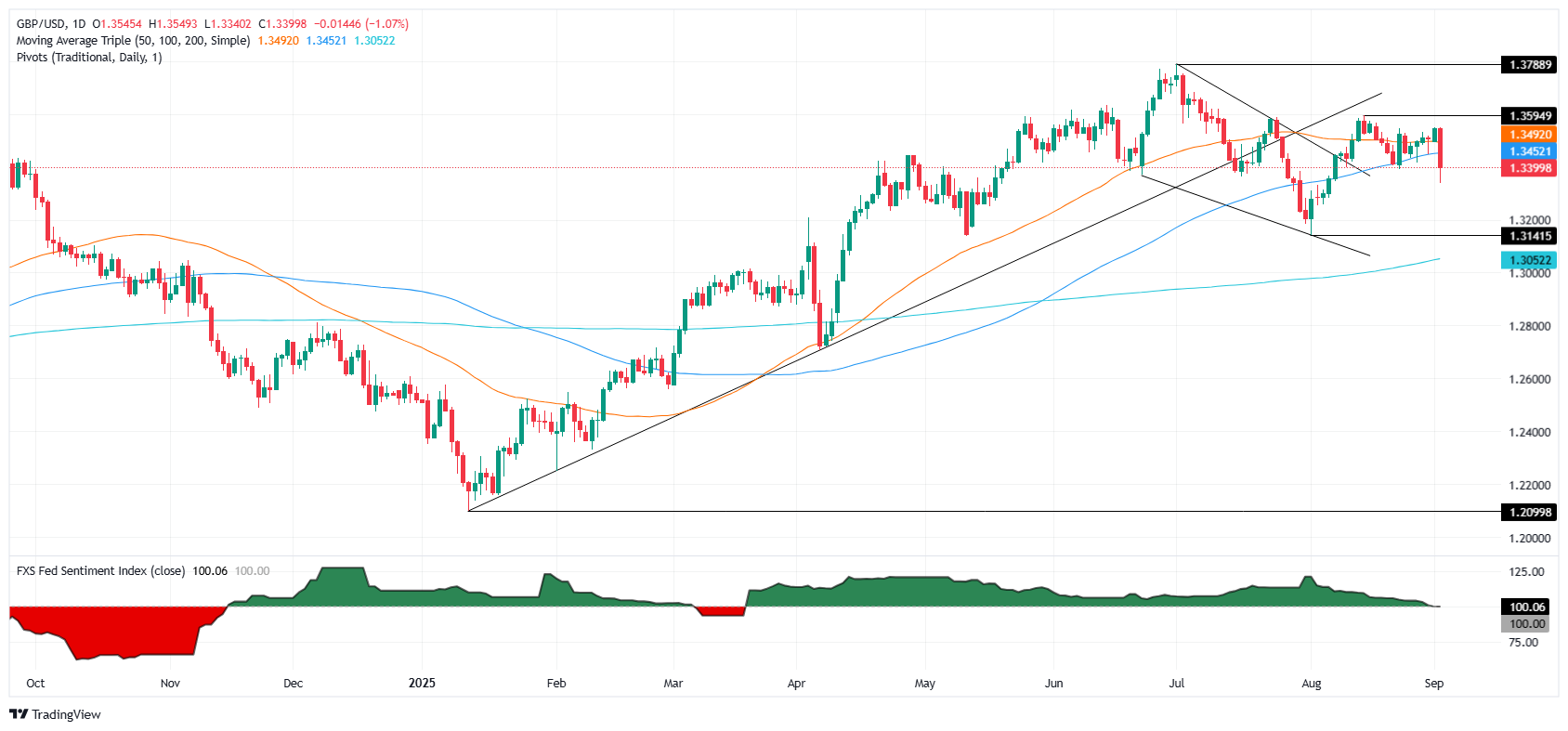
Pound Sterling plummets as soaring UK gilt yields raise fiscal concerns

The Pound Sterling (GBP) underperforms its major peers in a light United Kingdom (UK) economic calendar week. The British currency has tumbled as soaring UK long-term gilt yeilds have raised fiscal concerns. 30-year UK gilt yields surge to near 5.68%, the highest level seen since 1998. Read More...
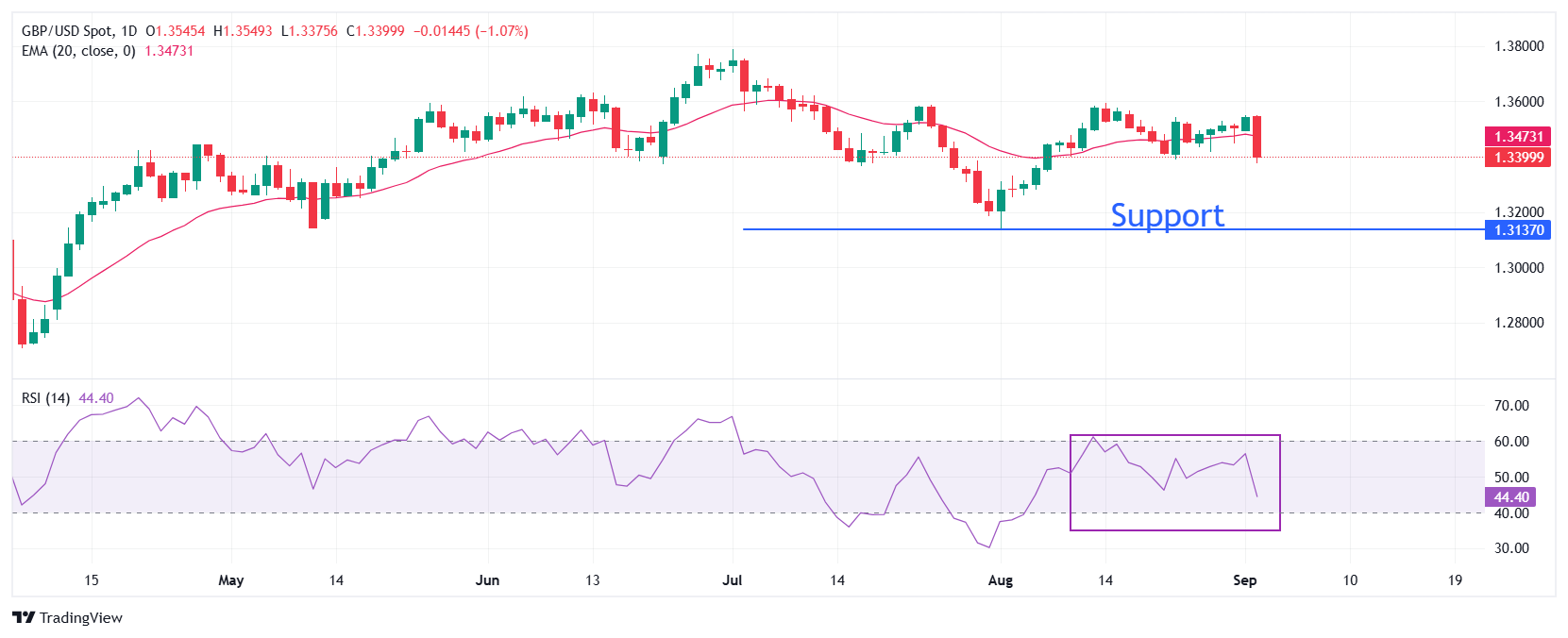
GBP/USD falls toward 1.3500 amid uncertain Fed policy outlook

GBP/USD retraces its recent gains from the previous session, trading around 1.3520 during the Asian hours on Tuesday. The pair depreciates as the US Dollar (USD) gains ground, driven by persistent inflationary pressures in the United States (US), which heightened uncertainty over potential Federal Reserve (Fed) rate cuts. Traders will likely observe the August ISM Manufacturing Purchasing Managers Index (PMI) later in the day. Read More...

Author

FXStreet Team

Composed of a group of economic journalists and FX experts, the FXStreet content team produces and oversees all content published on FXStreet. It provides a purely journalistic approach to the Forex market.


More from FXStreet Team
Share:

Editor's Picks

GBP/USD keeps the firm tone above 1.3600

GBP/USD clings to its daily gains, although it gives back some of them and recedes toward the 1.3630-1.3620 band on Thursday. Cable’s uptick comes despite the modest bounce in the Greenback, while investors gear up for key data releases on the UK calendar on Friday.

EUR/USD treads water near 1.1670

EUR/USD gives away all its initial gains and receded to the sub-1.1700 region. The US Dollar’s late recovery has dragged the pair lower, leaving it practically unchanged following the NA session on Thursday. In the meantime, investors gear up for the release of preliminary S&P Global Manufacturing and Services PMIs on both sides of the Atlantic on Friday.

Gold holds above $4,500 as rising bond yields offset reduced Fed hike bets

Gold holds steady above $4,500 during the Asian session on Friday amid a combination of diverging forces. Reduced Fed rate-hike bets keep US Dollar bulls on the back foot and support the non-yielding bullion. However, higher US bond yields, bolstered by inflation risks stemming from volatile oil prices due to the US-Iran standoff, could limit USD losses and cap the commodity. Nevertheless, XAU/USD remains on track to register gains for the third straight week.

Bulls in control with Bitcoin heading toward $80,000, Ethereum $2,500, XRP $1.50
Bitcoin (BTC), Ethereum (ETH) and Ripple (XRP) are extending their rallies as bullish momentum strengthens and continue to cheer the US Treasury’s decision to double its debt buyback operations. BTC has climbed nearly 20%, ETH over 25% and XRP nearly 30% so far this week.
$40 trillion debt black hole: Is a financial crisis coming?

The United States is closing in on a milestone that would have been almost unimaginable not long ago: $40 trillion in national debt. That staggering figure framed the latest episode of the Money Metals Midweek Memo, as host Mike Maharrey examined what he calls the economy’s “debt black hole” and zeroed in on a relatively obscure corner of the financial system that could become a much bigger problem: the $1.4 trillion private credit market.


$20 billion offered, $2 billion taken: Why Treasury doubled its buyback cap

The US Treasury moved off its own calendar on Wednesday, and that is the part worth sitting with. At 12:32 GMT, the department said it would at least double the size of liquidity support buyback operations in the 10-year to 20-year and 20-year to 30-year sectors, lifting the maximum from $2 billion per operation to at least $4 billion, effective September 9 and running to November 4.