|

Pound Sterling Price News and Forecast: GBP/USD remains indecisive as the BoE monetary policy decision looms

GBP/USD aptly portrays pre-BoE anxiety near 1.2630 immediate hurdle on “Super Thursday”

GBP/USD retreats from intraday high while slipping back to 1.2620 as it inks the market’s cautious mood ahead of the all-important Bank of England (BoE) monetary policy meeting. With this, the Pound Sterling pair remains unchanged on a day, printing three-day indecision of traders, heading into the London open on “Super Thursday”.

The Cable pair rose to a fresh high since April 2022 the previous day following downbeat US inflation data. However, the pre-BoE consolidation joined the US Dollar’s corrective bounce to prod the GBP/USD pair’s latest moves. Read more...

GBP/USD Price Analysis: Cable turns defensive above 1.2600 on BoE “Super Thursday”

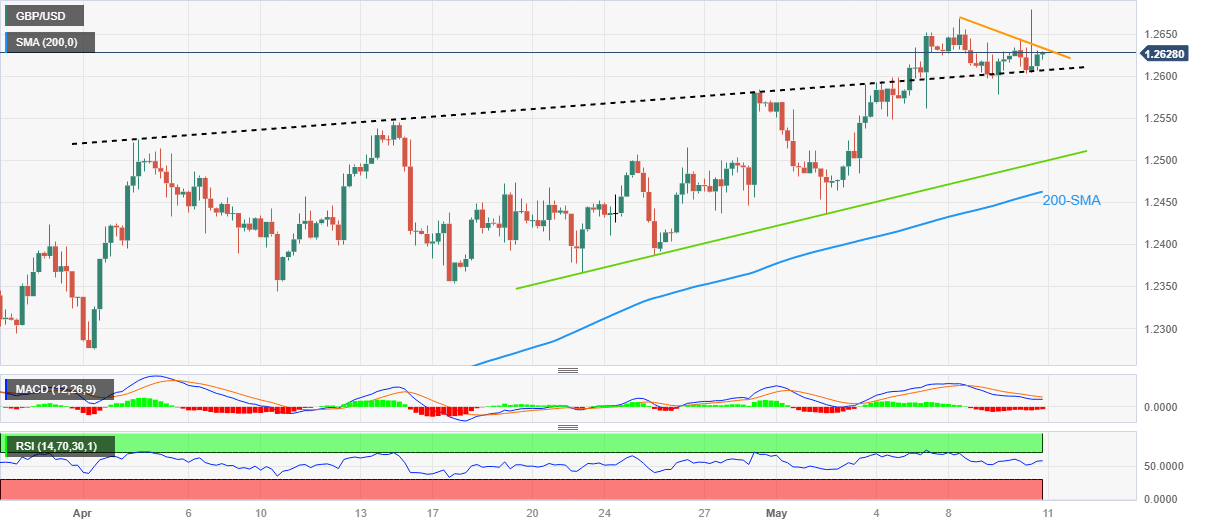
GBP/USD bulls take a breather around 1.2630 amid the early hours of the Bank of England (BoE) inspired “Super Thursday”. That said, the Cable pair rose to a 13-month high the previous day while bouncing off the resistance-turned-support line stretched from early April.

The Pound Sterling’s recovery from the previous resistance line also gained support from the firmer RSI (14) line, not overbought. However, the bearish MACD signals and a downward-sloping resistance line from Monday, close to 1.2635 by the press time, prod the Cable buyers. Read more...
Author

FXStreet Team

Composed of a group of economic journalists and FX experts, the FXStreet content team produces and oversees all content published on FXStreet. It provides a purely journalistic approach to the Forex market.


More from FXStreet Team
Share:

Editor's Picks

AUD/USD flatlines near 0.6965 as less hawkish RBA counters USD weakness

AUD/USD holds steady above a two-week low, trading near 0.6965 in the Asian session on Wednesday as early midterm election results heighten political uncertainty and weigh heavily on the US Dollar. Moreover, reviving safe-haven demand triggers a fresh leg down in US bond yields, offsetting Fed hike bets and exerting additional pressure on the buck. However, a less hawkish RBA caps the Aussie.

USD/JPY declines below 158.00 as USD weakens on midterm election results

USD/JPY comes under heavy selling pressure on Wednesday, dropping below 158.00 during the Asian session as the US Dollar slumps to a one-month low amid heightened political uncertainty after early US midterm vote counts. Moreover, the prospect of gridlock in Washington drives safe-haven flows, triggering a fresh leg down in US bond yields and further weighing on the buck.

Gold ticks lower while early trend points to Democrats victory in House

Gold trades with caution at around $3,930 in the Asian trading session on Wednesday. The precious metal struggles to gain direction as investors shift their focus to United States Midterm elections where early trend shows that Democrats would have a clear majority in House of Representatives.

Bitcoin tests critical support, Ethereum struggles below resistance, XRP extends losses
Bitcoin (BTC), Ethereum (ETH) and Ripple (XRP) remain under pressure on Wednesday as bearish momentum continues to weigh on prices. BTC approaches key support around $76,466, and a decisive close below could open the door to deeper losses. Meanwhile, ETH struggles below key resistance while XRP faces rejection at the upper trendline of a falling channel pattern, all hinting at deeper losses.
US Dollar falls below 101.50 as early midterm results point to Democratic gains

US Dollar Index faces some selling pressure near 101.30 during the early Asian session on Wednesday. Traders will closely monitor the US midterm election outcomes later in the day for fresh impetus. Yields fell across the curve, with the 2-year treasury yields dropped five basis points to 4.566%. Benchmark 10-year yields were down six bps to 4.90%.

The 2% inflation target came from a throwaway remark. It now moves trillions
The Federal Reserve's 2% inflation goal grew out of an off-the-cuff remark by a New Zealand politician in 1988. Bond investors still price long-term US debt as if 2% holds, so a change in how the Fed measures inflation would move markets.