|

Pound Sterling Price News and Forecast GBP/USD: Rate laurels go the the US Federal Reserve

GBP/USD Weekly Forecast: Rate laurels go the the US Federal Reserve

BOE leaves rates, asset purchases unchanged, warns on inflation. Federal Reserve and Chair Powell set the stage for bond taper. US Treasury rates move sharply higher after FOMC meeting. GBP/USD drops below 1.3700 in Friday trading. FXStreet Forecast Poll predicts stronger sterling. The Bank of England and the Federal Reserve are on the same rate page in the central bank policy book, but the US institution appears to be a few paragraphs ahead. Read more...
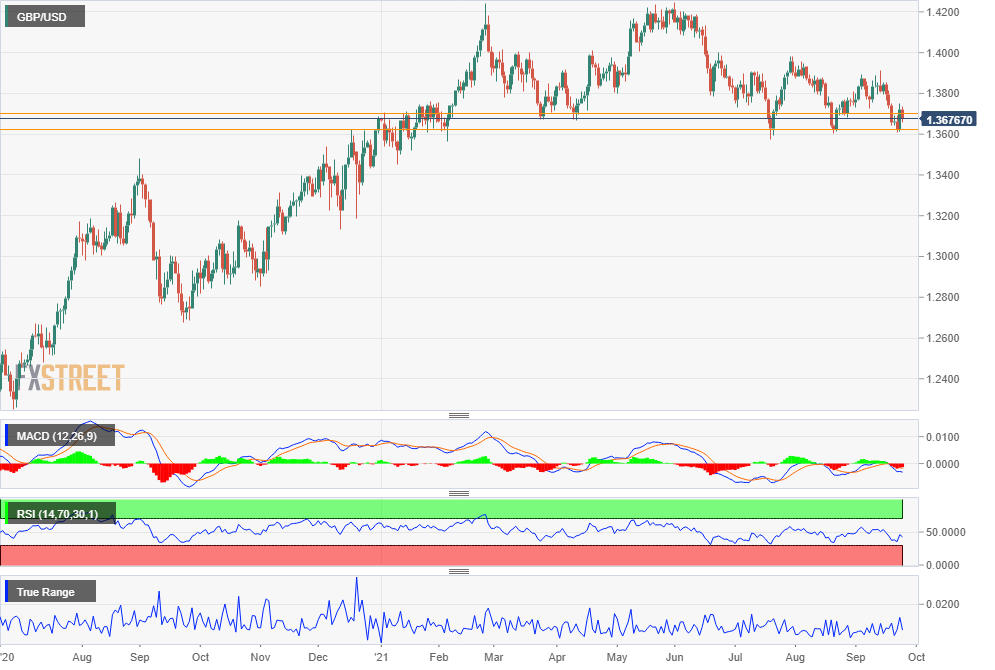
Here is why GBP/USD might reach 1.32

The British Pound might have received a shot in the arm following the September Bank of England rate meeting. Yet, the chart says that there is still a high risk of a lower GBPUSD in the weeks ahead. Read more...

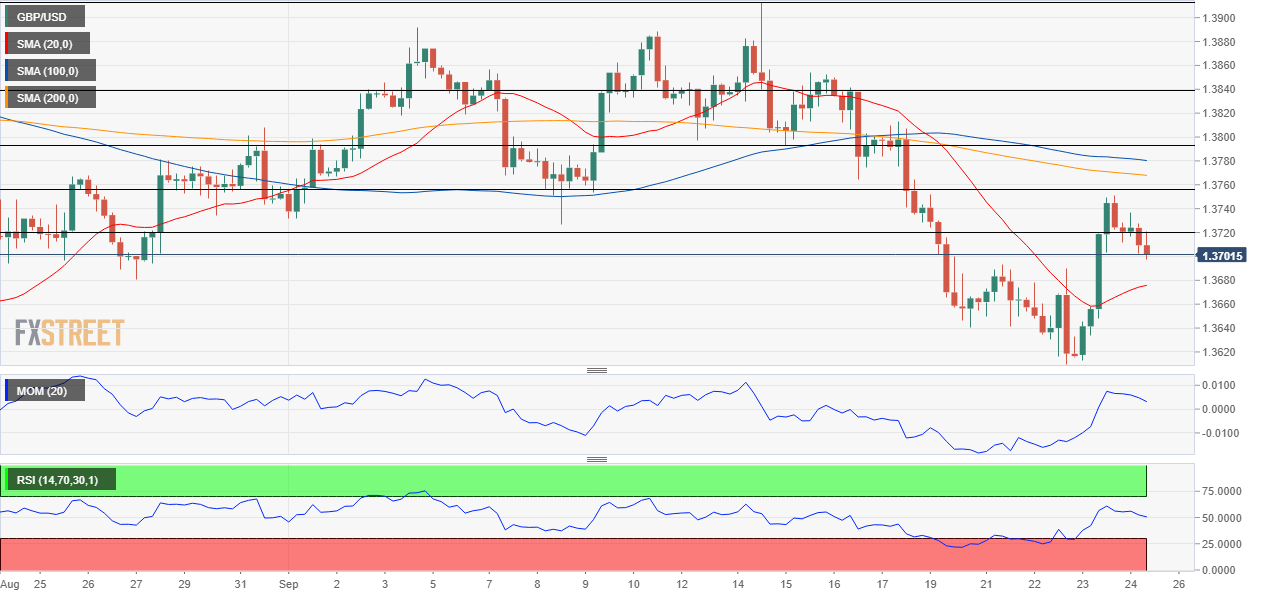
GBP/USD Forecast: Holding around 1.3700, bears cautious

The greenback pared losses as the market’s optimism receded on the back of the poor performance of Chinese equities. The GBP/USD pair retreated from a weekly high at 1.3750, currently trading around the 13700 figure. The dollar strengthens particularly against commodity-linked currencies, while European rivals seem to be baring better with the downbeat mood. At the time being, European indexes post modest intraday losses, while US government bond yields retain gains at multi-month highs. Read more...
Author

FXStreet Team

Composed of a group of economic journalists and FX experts, the FXStreet content team produces and oversees all content published on FXStreet. It provides a purely journalistic approach to the Forex market.


More from FXStreet Team
Share:

Editor's Picks

AUD/USD struggles below mid-0.7000s ahead of Aussie jobs data, Trump-Xi summit

AUD/USD consolidates near its lowest level since August 7, trading below mid-0.7000s during the Asian session on Thursday ahead of Australian jobs data and the Trump-Xi meeting. Meanwhile, Fed rate hike bets keep US bond yields elevated near multi-year highs. This, along with geopolitical risks, helps the US Dollar preserve overnight gains to a nearly two-month peak and caps the currency pair.

USD/JPY eyes breakout above 200-SMA, near mid-158.00s amid bullish USD

USD/JPY sits near a three-week high, around the 158.35 zone during the Asian session on Thursday. The BoJ's dovish rate hike last week undermined the Japanese Yen, while the US Dollar preserves overnight gains to a two-month high amid hawkish Fed bets and elevated US bond yields. This favors bulls, though intervention fears could cap the upside.

Gold consolidates below $4,300 as bears await Trump-Xi meeting

Gold struggles below $4,300 during the Asian session on Thursday and seems vulnerable amid a bearish fundamental backdrop. US bond yields rallied to fresh multi-year highs amid rising Fed rate-hike bets, helping the US Dollar preserve Wednesday’s strong gains to a nearly two-month high and undermining the non-yielding bullion. Bears, however, seem hesitant ahead of the Trump-Xi meeting.

Australia unemployment rate expected to remain unchanged at 4.5% in August
Australia will release the August monthly employment report on Thursday at 01:30 GMT. Ahead of the announcement, analysts expect the country to have added 20K new jobs in the month, while the Unemployment Rate is expected to remain steady at 4.5%. The Australian Bureau of Statistics (ABS) report is also expected to show that the Participation Rate stood at 66.9%, unchanged from the previous month.
Ethereum takes a breather at $2,700 as activity, leverage stays calm

Ethereum declines 3% below $2,700 on Wednesday, as the crypto market takes a breather from recent price surges. Open interest, which measures the total worth of unsettled contracts in a derivatives market, has remained calm in ETH terms since the late August short squeeze that pushed prices above $2,000.

BoJ Recap: Not as hawkish as expected

The Bank of Japan (BoJ) raised its short-term interest-rate target to 1.25% from 1.00% in a 7-2 vote, marking another step in the normalisation of monetary policy and widely matching what everyone has been expecting for weeks.