|

Pound Sterling Price News and Forecast: GBP/USD fails to stabilize above 1.2500

GBP/USD Forecast: Pound Sterling fails to stabilize above 1.2500

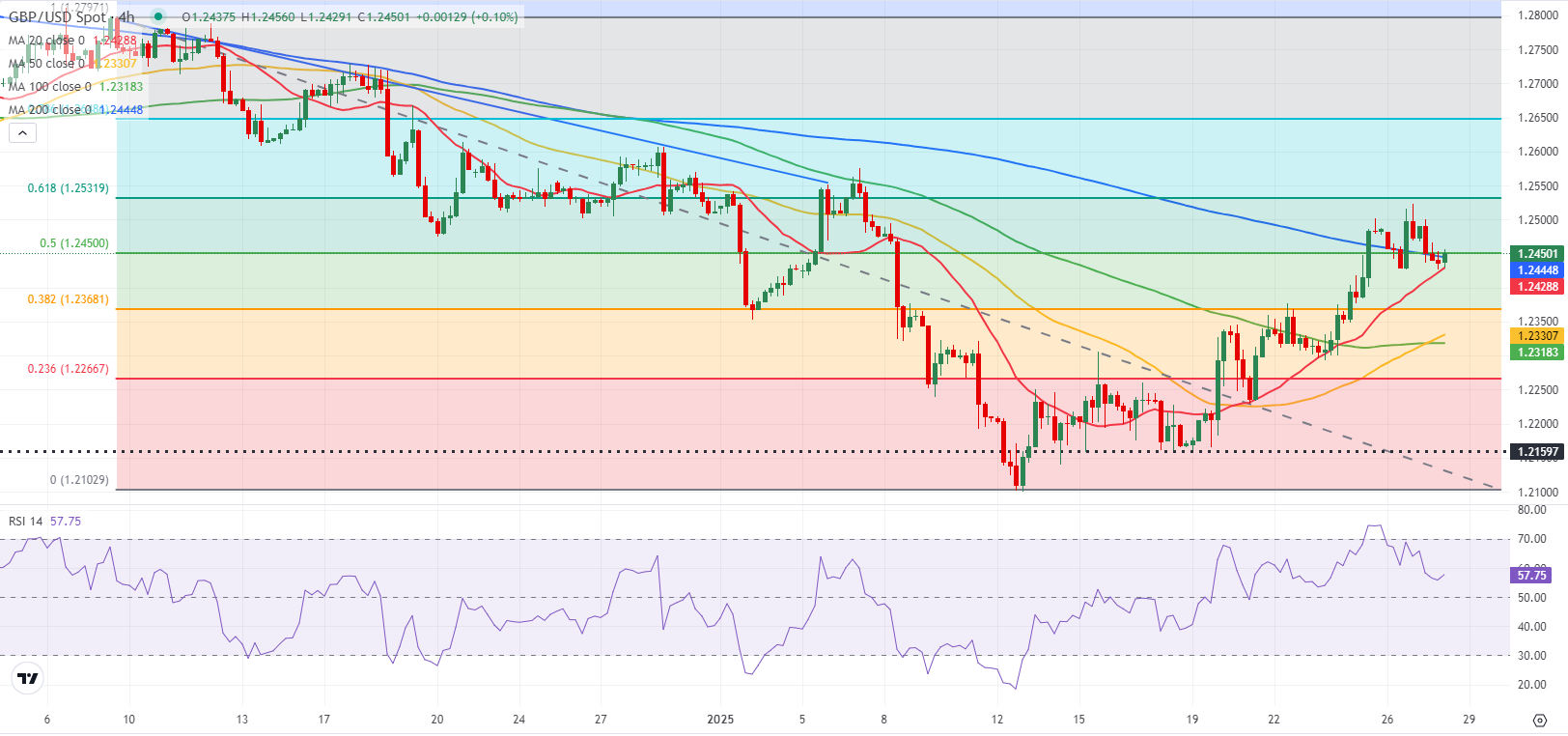
GBP/USD climbed to its highest level in three weeks above 1.2500 on Monday and posted gains for the third consecutive day. Early Tuesday, however, the pair reversed its direction and declined below 1.2450.

In the absence of high-tier data releases, investors continue to react to headlines surrounding US President Donald Trump's trade policy. US Treasury Secretary Scott Bessent said late Monday that he is pushing for universal tariffs on imports to start at 2.5% and rise gradually, per the Financial Times. While speaking to reporters in the early Asian session on Tuesday, President Trump responded to these remarks, saying that he wants tariffs “much bigger than 2.5%.” Moreover, Trump noted they are going to be placing tariffs on foreign production of computer chips, semiconductors and pharmaceuticals “in the very near future," to return production of these essential goods to the US. Read more...
GBPUSD

GBP/USD: A false bullish breakout?

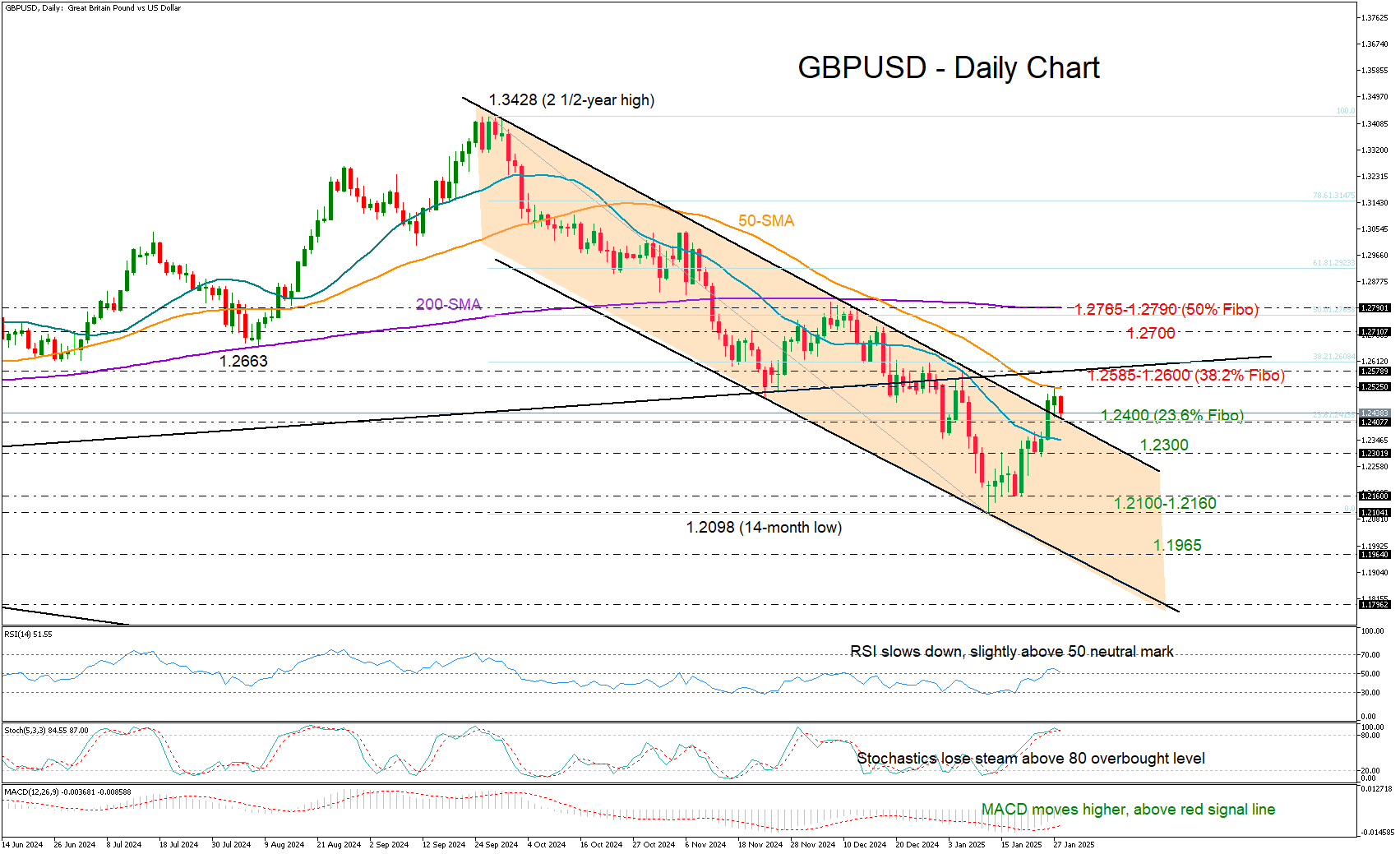
GBP/USD stalled around the falling 50-day simple moving average (SMA) at 1.2525 soon after exiting the bearish channel on the upside. 

Was this a false bullish breakout? No, not as long as the price continues to trade above the channel’s upper boundary seen near 1.2400. The area is currently under examination along with the 23.6% Fibonacci retracement of the latest downtrend. Hence, failure to pivot there could disappoint traders, bringing the 1.2300 round level next into view, while a deeper fall might aim for a bearish extension below the crucial support area of 1.2100-1.2160. Read more...
GBPUSD

Author

FXStreet Team

Composed of a group of economic journalists and FX experts, the FXStreet content team produces and oversees all content published on FXStreet. It provides a purely journalistic approach to the Forex market.


More from FXStreet Team
Share:

Editor's Picks

GBP/USD defends 1.3300 after strong UK PMI data

Following Thursday's sharp decline, GBP/USD clings to small gains above 1.3300 in the American session on Friday, supported by the upbeat UK Retail Sales and July PMI data. Nevertheless, the pair's upside remains capped as investors cling to a cautious stance amid a further escalation of tensions in the Middle East. The US July PMI data failed to trigger relevant price action.

EUR/USD remains below 1.1400 after mixed US PMIs

EUR/USD pressures daily lows below the 1.1400 mark in the American session on Friday. Mixed S&P Global PMIs, as manufacturing output contracted while services activity expanded in July, triggered no relevant market reaction. The focus remains in Middle East developments and inflation-related concerns.

Gold holds above $4,050 but momentum still missing

Gold builds on its modest intraday bounce and climbs above the $4,050 level on Friday, hitting a fresh daily high amid a modest US Dollar pullback. The fundamental backdrop, however, warrants some caution before confirming that the pullback from an over two-week high, touched on Wednesday, has run its course and positioning for any meaningful upside.

Ethereum: Derivatives interest in ETH improves, but signs of caution remain

Ethereum is hovering slightly below the $1,900 level, down 3% on Thursday following a slight expansion in derivatives interest. The top altcoin's open interest has increased to 14.60 million ETH, marking a 600K ETH increase over the past two days and its highest level since June 7.

XRP retreats as ETF interest cools
Ripple (XRP) slides toward the short-term $1.10 support on Friday, as broader crypto market sentiment weighs on crypto assets. The sell-off mainly stems from fears of inflation in the United States (US) amid the ongoing war in the Middle East and rising Oil prices.
US Dollar mid-year outlook: Exceptional currency, exceptional risks?
The US Dollar enters the second half of 2026 in a markedly different position from a year ago. The King currency has recovered, reflecting persistent US inflation, changing expectations for Fed policy, geopolitical tensions and renewed demand for defensive assets.















