|

Pound Sterling Price News and Forecast: GBP/USD depreciated as Trump expanded tariffs

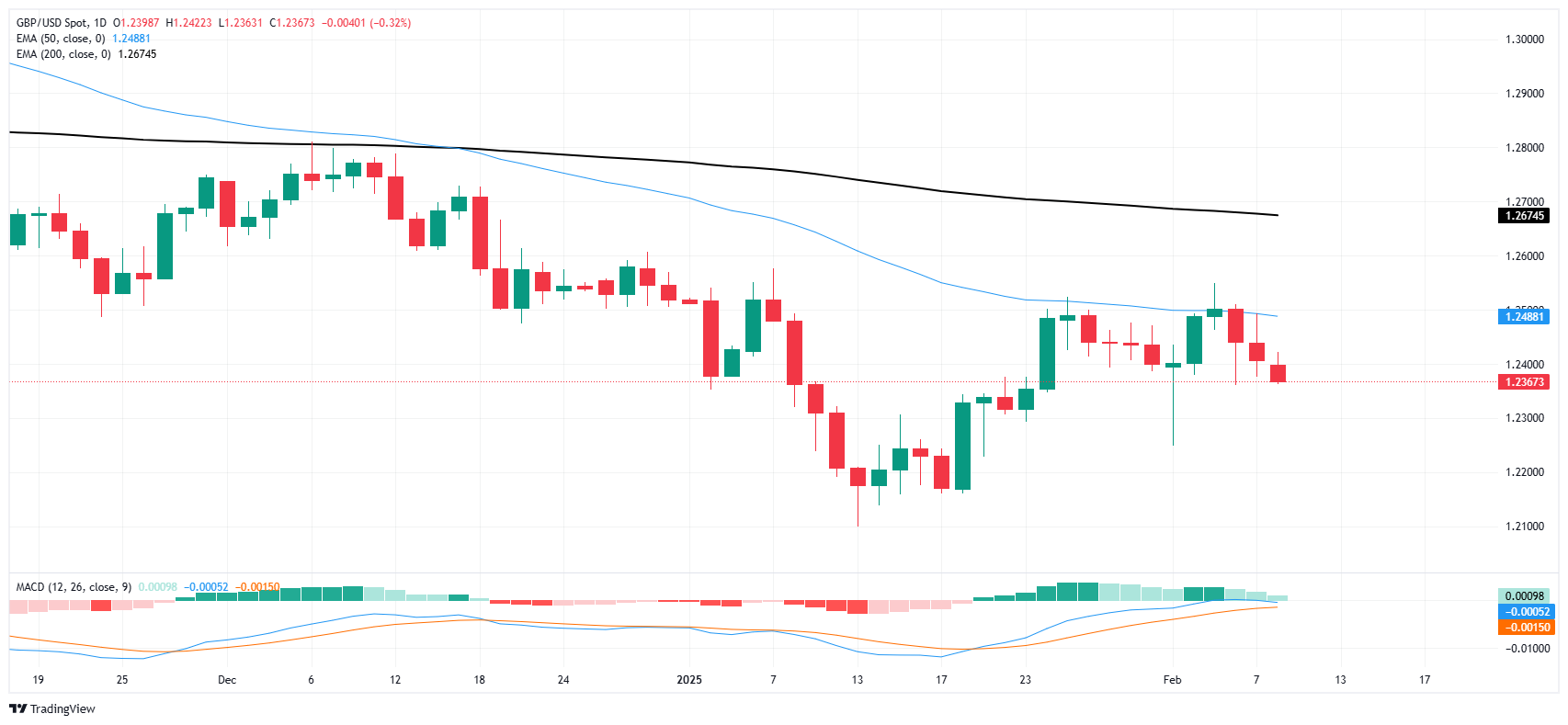
GBP/USD extends losses to near 1.2350 amid risk-off mood following Trump’s tariffs

GBP/USD continues its downward trend for the fourth consecutive day, trading near 1.2350 during Asian hours on Tuesday. The pair weakens amid escalating trade tensions after US President Donald Trump imposed a flat 25% tariff on steel and aluminum imports on Monday, removing all exemptions and nullifying previous trade agreements with key United States’ (US) allies. The move is intended to support struggling domestic industries but increases the risk of a broader trade conflict.

Trump’s proclamations raised the US aluminum tariff from 10% to 25%, eliminating country-specific exemptions, quota deals, and numerous product-specific exclusions for both metals. A White House official confirmed the new tariffs will take effect on March 4, with potential further measures targeting microchips and vehicles in the coming weeks. Read more...

GBP/USD sheds weight for a third straight day, central bank heads up next

GBP/USD sunk for a third straight trading day on Monday, kicking off the new trading week on the backfoot and slipping back below the 1.2400 handle, shedding one-third of one percent in the process. US President Donald Trump renewed his vigor to kick off a US vs everybody else trade war late Monday, slapping a 25% tariff on all imported steel and aluminum into the US.

Bank of England (BoE) Governor Andrew Bailey is due to give a keynote speech on Tuesday. Cable traders will be keeping an eye on the BoE head following the UK central bank’s rate cut last week, looking to nail down any hints of forward guidance on where the BoE could be heading next. Federal Reserve (Fed) Chair Jerome Powell follows up with an appearance of his own, testifying before the US Senate Banking Committee on Tuesday. Read more...
Author

FXStreet Team

Composed of a group of economic journalists and FX experts, the FXStreet content team produces and oversees all content published on FXStreet. It provides a purely journalistic approach to the Forex market.


More from FXStreet Team
Share:

Editor's Picks

AUD/USD falls to near 0.7100 after slipping below 50-day EMA

AUD/USD depreciates after registering minor gains in the previous day, trading around 0.7120 during the Asian hours. The technical analysis of the daily chart shows the pair consolidating sideways within a rectangle pattern, as neither bulls nor bears gain control. The AUD/USD pair is holding a slight bearish tone however as it sits beneath both the nine-day and 50-day EMAs.

160.00: USD/JPY back near intervention territory after upbeat US jobs report

US Nonfarm Payrolls beat expectations by a wide margin in May, with 172K jobs added. The US Dollar rebounds after the release, helping USD/JPY recover from its intraday lows. Warnings from Japanese authorities continue to limit upside potential near the 160.00 threshold.

Gold targets $4,300 amid stronger Dollar

Gold faces increasing selling interest and navigates the area of three-month lows near the $4,300 mark per troy ounce on Friday. The precious metal’s decline comes as traders assess the stronger-than-expected NFP, while the bid bias in the Greenback and higher US Treasury yields also collaborate with the retracement.

Cardano hits five-year low even as Hoskinson clarifies "break" isn't an exit

Cardano (ADA) price is down 10% at press time on Friday, extending losses over 30% so far this week amid Charles Hoskinson's clarification that "break" isn't an exit.

Week ahead – Fed countdown begins amid US inflation data and geopolitical risks

Fed Chair Warsh’s first meeting approaches as key US inflation data could reshape expectations. Oil prices remain elevated as US-Iran talks continue; tariffs also return to the spotlight. ECB is expected to hike; will it be a one-off move or is July live?

The US economy defies the rules: 100 days into the Oil shock and the recession signal is still missing

More than three months after the start of the Iran war and the resulting disruption to global energy markets, the US economy continues to display remarkable resilience. The conflict has triggered a sharp rise in Oil prices, reignited inflationary pressures and fueled widespread concerns about a potential economic slowdown.