|

Pound Sterling Price News and Forecast: GBP trades cautiously as BoE dovish bets tick higher [Video]

Pound Sterling trades cautiously as BoE dovish bets tick higher

The Pound Sterling (GBP) trades with caution against its major peers on Friday, faces pressure from weak United Kingdom (UK) S&P Global/CIPS Manufacturing PMI data for December. On Thursday, the final PMI report showed that activity in the manufacturing sector contracted at a faster pace to 47.0 compared to the preliminary reading of 47.3. The report showed that the downturn was widespread in nature, with similarly sharp rates of decline across the consumer, intermediate, and investment goods industries.

Rob Dobson, Director at S&P Global Market Intelligence said, "Business sentiment is now at its lowest for two years, as the new Government's rhetoric and announced policy changes dampen confidence and raise costs at UK factories and their clients alike. SMEs are being especially hard hit during the latest downturn." Read more...
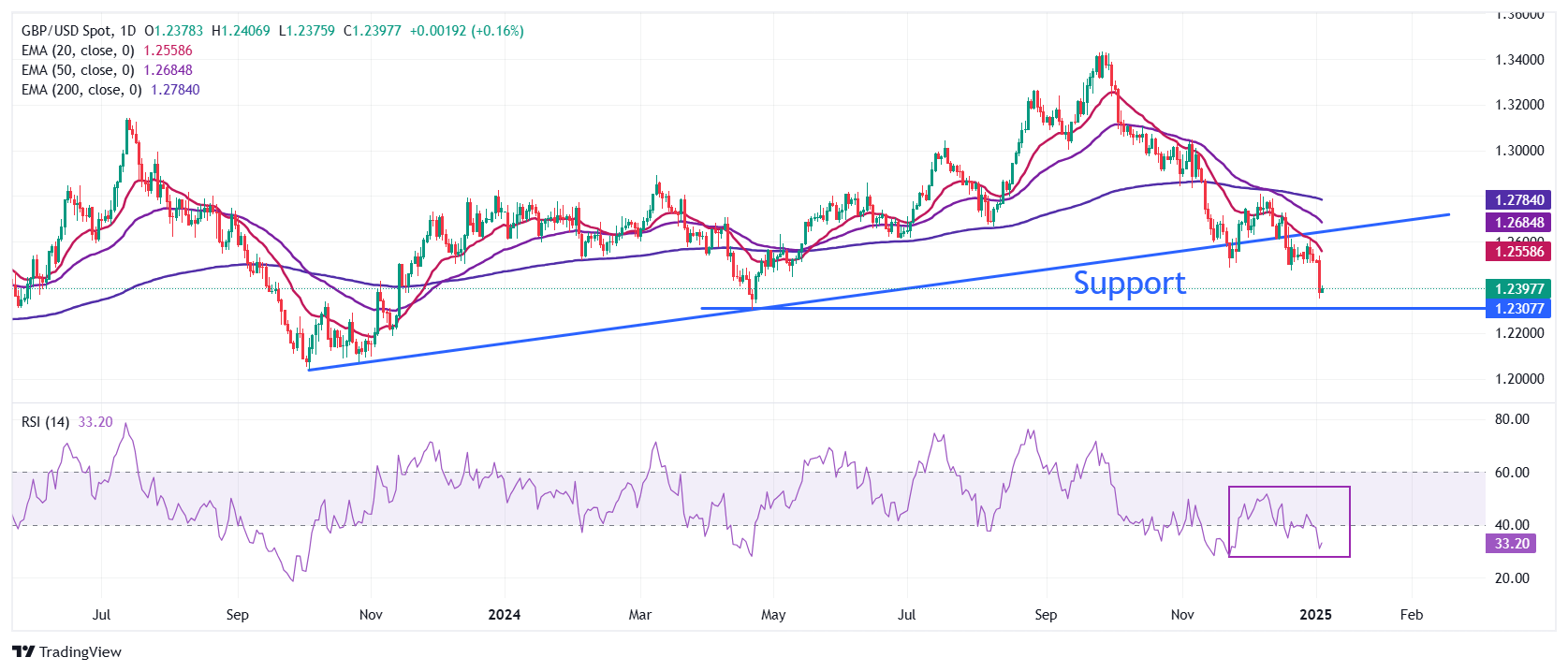
GBPUSD

Elliott Wave view: GBP/USD short term remains bearish [Video]

Short Term Elliott Wave view in GBPUSD suggests decline from 12.6.2024 high is in progress as a 5 waves impulse. Down from 12.6.2024 high, wave ((i)) ended at 1.247 and wave ((ii)) rally ended at 1.261 as the 45 minutes chart below shows. Pair has turned lower in wave ((iii)) with internal subdivision as another impulse. Down from wave ((ii)), wave i ended at 1.2548 and rally in wave ii ended at 1.2588. Pair resumed lower in wave iii towards 1.2507. Wave iv rally ended at 1.2548 and wave v lower ended at 1.2498 which completed wave (i) in higher degree. Rally in wave (ii) ended at 1.2607 with internal subdivision as a zigzag.

Author

FXStreet Team

Composed of a group of economic journalists and FX experts, the FXStreet content team produces and oversees all content published on FXStreet. It provides a purely journalistic approach to the Forex market.


More from FXStreet Team
Share:

Editor's Picks

AUD/USD bulls seem hesitant below 0.7050 ahead of RBA on Tuesday

AUD/USD reverses an Asian session dip on Monday as renewed optimism over Iran diplomacy boosts investor confidence, keeping a lid on the safe-haven US Dollar and supporting the risk-sensitive Aussie. Spot prices, however, remain below the one-month high, touched last Thursday, as bulls wait for the crucial RBA decision before taking fresh positions.


USD/JPY climbs to 158.00 neighborhood as BoJ uncertainty weighs on the JPY

The USD/JPY pair gains some positive traction at the start of a new week, recovering further from Friday's post-Bank of Japan (BoJ) swing low to sub-157.00 levels. The momentum lifts spot prices to the 158.00 neighborhood during the Asian session and seems unaffected by fresh intervention warning from Japan's Finance Minister Satsuki Katayama.

Gold finds relief from Oil’s decline as traders await key US economic data

Gold retains a positive bias during American trading hours on Monday after sliding to a fresh yearly low of $3,870 on Friday and ending October down 6.87%. A pullback in Oil prices amid diplomatic efforts between the US and Iran supports the precious metal. However, the rebound lacks conviction as the fundamental backdrop continues to raise doubts over a sustained recovery.

Dogecoin risks deeper slide as whales diverge

Dogecoin hovers around $0.075 on Monday after falling for the fifth consecutive week since the end of September. Santiment data shows diverging whale activity, as large holders reduce their positions while smaller whale wallets accumulate tokens. Meanwhile, weakening on-chain metrics and a deteriorating technical outlook suggest that DOGE could remain vulnerable to further losses.

Why strong US growth could not stop the bond rally and AI selloff

The US economy grew at a 3.4% annual rate, yet Treasury yields fell and the Nasdaq ended October with its worst monthly performance since March 2025. The market is no longer rewarding capital expenditure simply because it supports growth. Investors are testing whether that expenditure can produce cash flow and returns above the cost of capital.


The 2% inflation target came from a throwaway remark. It now moves trillions
The Federal Reserve's 2% inflation goal grew out of an off-the-cuff remark by a New Zealand politician in 1988. Bond investors still price long-term US debt as if 2% holds, so a change in how the Fed measures inflation would move markets.















