Nvidia’s gravity-defying quarter and the market’s search for the next policy north star

Nvidia’s gravity-defying quarter
Nvidia didn’t just beat—its numbers detonated like a voltage surge ripping across a grid already humming at maximum load. This was not an earnings print; it was a reminder that the most consequential company in global markets is still running laps around expectations even after perfection was fully priced-in. The entire tape had spent days bracing for the possibility that the AI locomotive might finally be slowing. Instead, Jensen Huang walked in, pulled the tarp off Blackwell, and told the world the engine is accelerating while every hyperscaler on earth is still fumbling for more coal.
The pre-bell action told you everything about nervous positioning. Stocks clawed higher into the close, snapping their losing streak on nothing more than a whisper that Nvidia might stabilize the mood. But the real fireworks hit after hours: Nvidia soared, dragging the AI complex and half the Nasdaq with it.
The print itself? A clinic.
EPS at $1.30 vs. $1.24.
Revenue at $57B vs. $55B.
Data center revenue at an almost otherworldly $51B—up 66% and blowing through estimates by nearly $2B.
It’s the sequential jump that tells the story: data center sales rose $10 billion quarter-over-quarter. That’s not growth; that’s someone hitting the NOS button in a straight line. Gaming and auto missed, but at this point those segments are decorative—the AI datacenter is the sovereign engine of Nvidia’s empire.
Margins were the only soft patch, but even that feels like a temporary bruise—Blackwell’s ramp is expensive at first bite, but higher-margin volume comes later in the cycle. And then came the forward guide, which felt less like guidance and more like a victory lap: $65B in revenue vs. Street at $62B. Whispers as high as $75B suggest Huang is sandbagging again, a habit he’s perfected.
The CEO’s comment captured the mood: GPUs sold out everywhere, demand compounding in real time, AI diffusing across every industry and nation simultaneously. This is what a supply-constrained, monopoly-adjacent flywheel looks like when it reaches escape velocity.
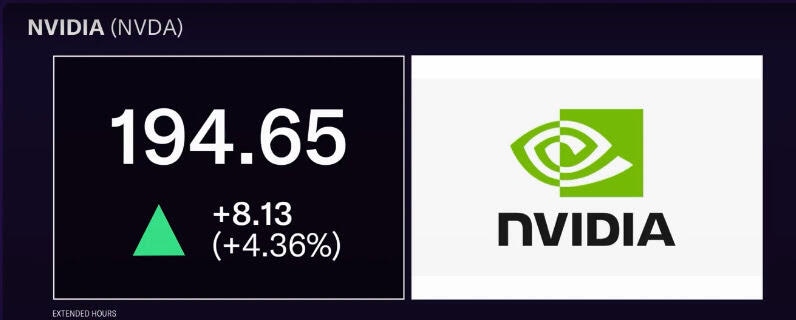
Post-market, shares jumped 5%—not enough to reclaim the October highs, but enough to shock the AI ecosystem back to life. CoreWeave, Nebius, AMD, Micron, Broadcom—everything touched by AI compute flickered green.
And here’s the kicker: this print didn’t just rescue Nvidia. It rescued the entire possibility of a December melt-up. Nvidia is the largest weight in the S&P 500 and the spiritual anchor of the AI boom. Without a solid print, the broader market was about to sink into a winter of doubt.
Instead, Nvidia bought the market time.
But time is not policy clarity.
The Fed is now the sole arbiter of whether this relief morphs into a full-blown Santa rally or stalls at the first sign of policy confusion. The market wants a 25bp cut. Futures have nearly priced out the possibility. And with the BLS unable to publish the October payrolls report—forcing its inclusion into November’s set after the last Fed meeting of 2025—the Fed is flying blind.
Minutes from the October meeting leaned hawkish. Officials openly floated keeping rates steady through the end of 2025. Inflation remains sticky. Data is compromised. And policymakers remain split between those willing to trust lagging indicators and those terrified of repeating the 1970s.
That ambiguity alone can eventually stop any Santa rally cold in its sleigh tracks.
The psychology here is delicate. Investor belief in the AI capex boom had been wobbling all month, with surveys citing an “AI bubble” as the top tail risk. Nvidia’s results were the antidote—but they aren’t immunity. The concern isn’t earnings today; it’s whether this is the high-water mark for growth and share dominance. Nvidia’s numbers are still god-tier, but investors are now trying to decipher whether peak velocity has been reached in this part of the cycle..
This is the paradox:
Nvidia delivered a print strong enough to turn off the fire alarms.
But the Fed holds the market’s fuse box.
In after-hours trade, the Nasdaq 100 ETF rallied nearly 1%. Bitcoin slumped below $90,000. The dollar firmed. Rates traders pared back December cut odds. And equity investors were forced to confront a world where Nvidia can do everything right—and the Fed can still snuff the rally through inaction.
For now, Nvidia has bought the market hope.
What it cannot buy is consensus inside the Eccles Building.
The next move belongs to the Fed.
Author
Stephen Innes
SPI Asset Management
With more than 25 years of experience, Stephen has a deep-seated knowledge of G10 and Asian currency markets as well as precious metal and oil markets.