|premium|

NIO Stock Forecast: Nio hits 2-year low as EV stocks tumble to close the week

  • NYSE: NIO fell by 8.1% during Friday’s trading session. 
  • Further economic data sent growth stocks tumbling lower on Friday.
  • Nio and ZF Group sign a supplier deal in Germany.

Nio (NIO) sank lower yet again on Friday as the Chinese EV maker saw its stock fall to a fresh two-year low price. Shares of NIO dropped by 8.1% and closed the trading session at a price of $11.75. Stocks erased most of their gains made during Thursday’s post-CPI rally as new economic data from the University of Michigan pointed toward inflation still being out of control in the US economy. Overall, Dow Jones lost 1.3%, the S&P 500 dropped by 2.4%, and the Nasdaq plummeted by 3.1% during the session. 

Nio stock price

The report from the University of Michigan suggested that inflation expectations are still on the rise. The Fed often uses this report as a key point of economic data to determine interest rate hikes. Unsurprisingly, along with the negative news cycle, growth stocks were the first to sell off. Tesla (TSLA) dropped by 7.6% despite some positive notes from a couple of Wall Street analysts. Other EV stocks on the decline included Rivian (RIVN), Lucid (LCID), Mullen Automotive (MULN) and Ford (F)

Nio officially signed a new partnership with the German auto supplier ZF Group. The new deal will see ZF Group provide Nio with auto parts like steering products, as the EV maker continues to expand its operations in Europe. Earlier this month, Nio officially launched three of its vehicles in Germany and the Netherlands, as it continues to work toward its target of being in 25 global markets by 2025. 
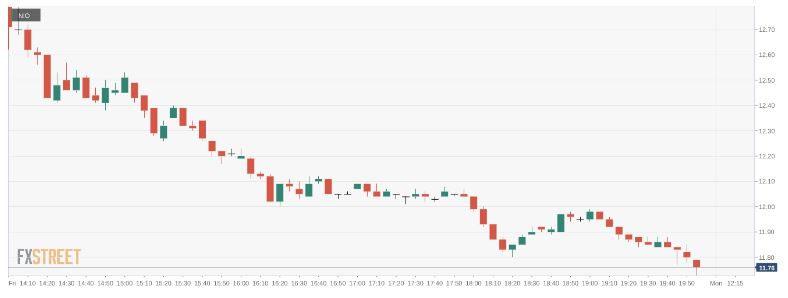
NIO stock chart shows a short-term downtrend

NIO 5-minute chart 10/14/22

Premium

You have reached your limit of 3 free articles for this month.

Start your subscription and get access to all our original articles.

Subscribe to PremiumSign In

Author

More from Stocks Reporter
Share:

Editor's Picks

EUR/USD remains heavy near 1.1600 after hot EU inflation data

EUR/USD remains heavily offered near 1.1600, six-week lows, in the European session on Tuesday. The pair fails to find any inspiration from a surprise pick up in Eurozone inflation for February, as the US Dollar continues to attract safe haven flows amid escalating geopolitical tensions in the Middle East. 

GBP/USD attacks 1.3300, refreshing three-month lows

GBP/USD is deep in the red near 1.3300, accelerating its downside to renew three-month lows in European trading on Tuesday. The ongoing escalation in the Iran war, combined with rising Oil prices, weighs negatively on the higher-yielding Pound Sterling as the US Dollar capitalizes on increased haven demand.

Gold falls below $5,300 as stronger USD counter Middle East woes

Gold attracts some intraday selling and falls below $5,300 on Tuesday. The US Dollar climbs to a fresh high since January 20 and turns out to be a key factor exerting downward pressure on the commodity. However, concerns about a broader regional conflict in the Middle East continue to weigh on investors' sentiment and underpin demand for the traditional safe-haven bullion.

Stellar risks deeper losses as derivatives metrics turn negative

Stellar is trading red below $0.16 at the time of writing on Tuesday, after a slight recovery the previous day. Weakening derivatives data caps the recovery, while an unfavorable technical outlook projects a deeper correction for the XLM token in the upcoming days.

Middle East conflict ramps up a gear as energy price spike rips through markets

It’s another risk off day as geopolitical headwinds continue to batter financial markets. Although markets calmed during the US session and US stocks managed to post gains on Monday, this has not fed through to the European session, and stocks and bonds are sharply lower for a second day.

Hyperliquid Price Forecast: HYPE rises on commodities demand amid US-Iran war

Hyperliquid (HYPE) steadies above $33 at press time on Tuesday, marking its fourth consecutive day of recovery in a broadly volatile market due to the ongoing US-Israel strikes on Iran.