|

New Zealand sees three quarters of negative GDP growth in CY23

In the Half Year Economic and Fiscal Update, the New Zealand Treasury has forecasted three-quarters of a shrinking economy starting in the second quarter of 2023.

Key notes

  • Lifts planned bond issuance by nz$18bln over 4 years.
  • Forecasts return to budget surplus in 2024-25.
  • Fiscal policy will help RBNZ battle inflation.
  • Government will run contractionary fiscal policy.
  • To end cut in gasoline tax by March 31.
  • Actual and expected inflation is too high and needs to be reduced.
  • Expect spending to slow and unemployment levels to increase as more people join the workforce over the coming year.
  • It is anticipated that the level of employment will remain high.
  • Even with the expected slowdown in the period ahead, it is anticipated that the level of employment will remain high.

NZD/USD update
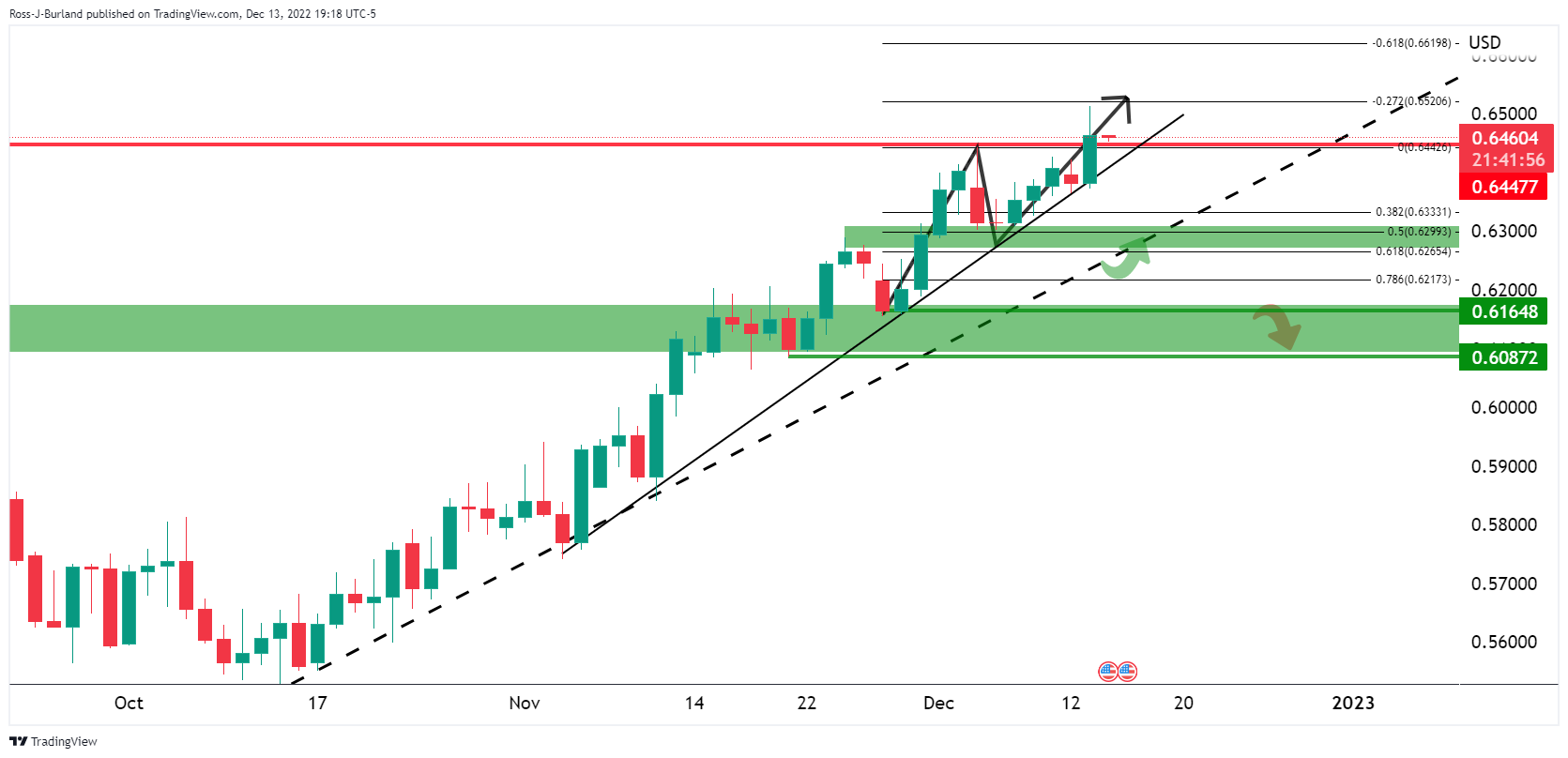
Fuelled by a softer US dollar, the Kiwi has managed a score into the 0.6500s through 0.6450 resistance ahead of today's Federal Open Market committee. 

Author

Ross J Burland

Ross J Burland, born in England, UK, is a sportsman at heart. He played Rugby and Judo for his county, Kent and the South East of England Rugby team.

More from Ross J Burland

Share:

Editor's Picks

GBP/USD off highs, back to 1.3620

GBP/USD remains slightly on the defensive at the end of the week, receding to the low 1.3600s after hitting fresh tops past 1.3670 earlier in the day. Cable’s correction comes after two daily gains in a row and amid a tepid advance in the Greenback, while poor UK data also accompany the downside.

EUR/USD treads water below 1.1700

EUR/USD now trades with modest losses around 1.1670 following another unsuccessful atempt to advance past 1.1700 the figure in a convincing fashion. The pair’s decline follows a maginal rebound in the US Dollar as market participants continue to assess recent US data as well as developments from the US bond market.

Gold eases from mid-May highs; holds above $4,600 amid bearish USD

Gold pulls back slightly from its highest level since mid-May, touched during the Asian session on Monday, though it manages to hold above $4,600. Diminishing odds of an immediate Fed rate hike continue to undermine the US Dollar despite further escalation of US-Iran tension and inflation risks stemming from higher oil prices. This continues to underpin the non-yielding bullion, though bulls seem hesitant ahead of key US inflation data and Fed Chair Kevin Warsh's speech at the Jackson Hole Symposium later this week.

Week ahead: Fed’s Jackson Hole and Nvidia earnings to dictate markets
The new Fed chair, Kevin Warsh, has made few public appearances since taking the central bank helm in May, yet he’s found it difficult to steer off controversy. Question marks about his relations with the President, Donald Trump, continue to swirl, while markets are still trying to make sense of his approach to monetary policy.
CFTC Report: Oil positioning rebounds; VIX and Yen exposure turn more bearish
The week in one sentence: Speculative positioning turned more constructive in the week to August 18. WTI recorded the largest increase, followed by a sharp narrowing in CAD net shorts. VIX and JPY positioning moved the other way, while Gold remained the clearest crowded long despite a softer spot price.
$20 billion offered, $2 billion taken: Why Treasury doubled its buyback cap

The US Treasury moved off its own calendar on Wednesday, and that is the part worth sitting with. At 12:32 GMT, the department said it would at least double the size of liquidity support buyback operations in the 10-year to 20-year and 20-year to 30-year sectors, lifting the maximum from $2 billion per operation to at least $4 billion, effective September 9 and running to November 4.