Netflix (NFLX) buys Warner Bros (WBD), stock in major trouble

Shares of Netflix (NFLX) are under pressure, dropping over 3% following the announcement that it has reached a deal to acquire Warner Bros. Discovery (WBD). The acquisition is priced at $30 per share, valuing the total deal at $82 billion.
The negative reaction from investors isn't necessarily about the quality of the WBD asset, but rather what the purchase signals about Netflix itself. This move effectively admits that the company's organic growth engine has stalled; to expand now, they are forced to buy revenue rather than build it. Netflix has historically commanded a premium valuation over its competitors because it possessed a "special sauce" that others didn't. This deal signals that the sauce has finally run out.
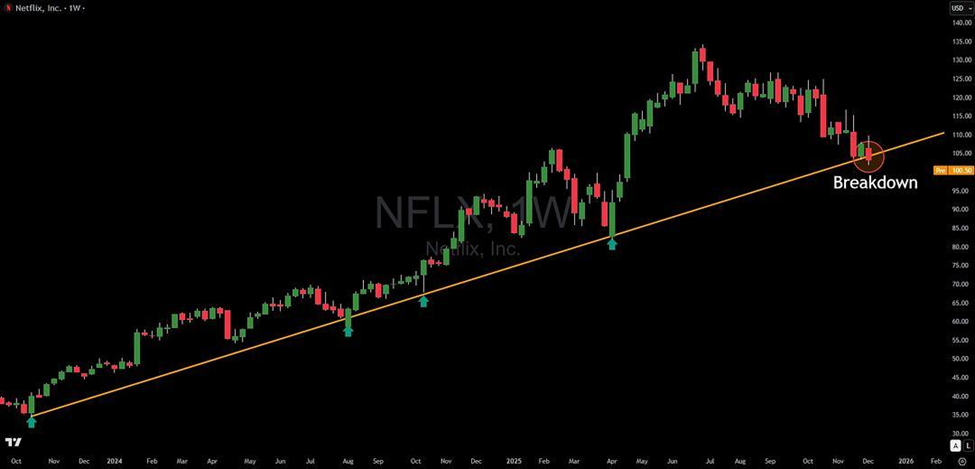
From a technical analysis standpoint, the picture is looking increasingly grim. NFLX is currently breaking a critical trendline that dates back to October 2023, a line that has supported every major pivot low since then. This violation signals a significant, longer-term breakdown in the stock structure.
Based on this technical damage, the charts point to a continued decline through 2026, with a downside target of $70 per share. A fall to this level would finally strip away the "Netflix premium," bringing its valuation in line with the rest of the streaming sector—exactly where it belongs now that the growth narrative has changed.
Author

Gareth Soloway
Verified Investing
A renowned trader and financial expert specializing in chart analysis and market insights.