Mexican Peso slips, USD/MXN rebounds from weekly lows, surpassing 18.20
- Mexican Peso slumps against the US Dollar, losing more than 0.60%
- Mexico’s CPI for October’s first half eases as Banxico has held rates unchanged since March 2023.
- US business activity improves, exiting contractionary territory per S&P Global PMIs.
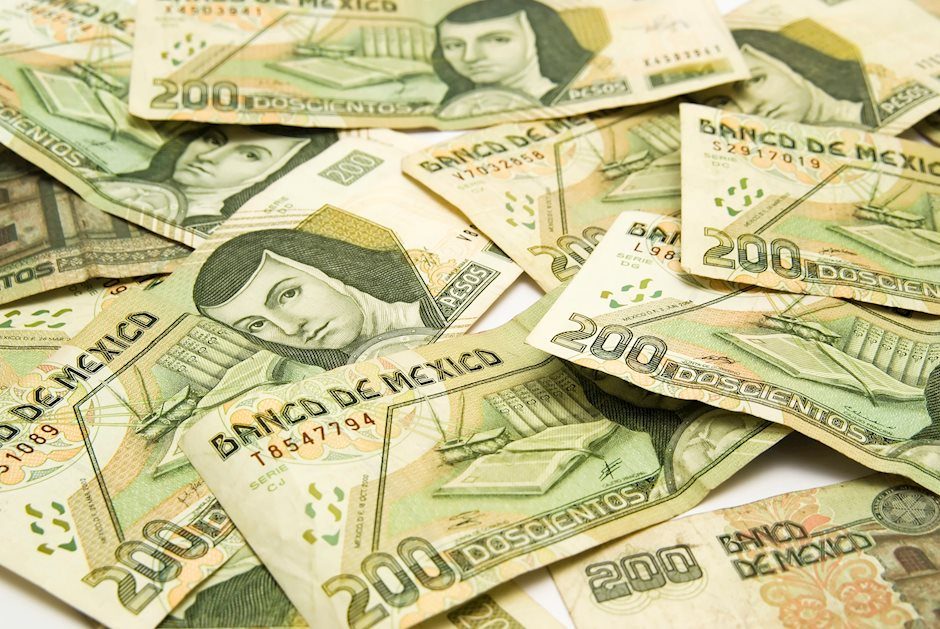

Mexican Peso (MXN) experienced a decline against the US Dollar (USD) due to robust data from the United States (US), which bolstered the Greenback (USD). Furthermore, US Treasury bond yields increased despite the growing consensus among investors that the US Federal Reserve (Fed) will maintain its current interest rates when it meets on November 1. Consequently, the USD/MXN exchange rate trades at 18.25, marking a 0.63% increase for the day.
Mexico released its inflation data before Wall Street opened, indicating that the Consumer Price Index (CPI) rate for the first half of October continued to decline. This is positive news, especially since the Bank of Mexico (Banxico) has maintained interest rates at 11.25% since March 2023, although market participants anticipate the first rate cut in 2024.
Furthermore, data from the United States indicated that business activity, as measured by S&P Global PMIs, rebounded from contractionary levels, with most indicators expanding above the critical 50 threshold that separates contraction from expansion.
Meanwhile, the USD/MXN would remain at the mercy of geopolitical risks, as the conflict between Israel and Hamas threatens to spread among countries within the Middle East, which could involve Western countries, if the flight escalates. That would be positive for the US Dollar and harmful for the Mexican Peso.
Daily Digest Market Movers: Mexican Peso remains on the defensive, with USD/MXN hovering around 18.25
- Mexico's National Statistics Agency INEGI reported annual headline inflation hit 4.27%, down from 4.45% at the end of September, below forecasts of 4.38%.
- Mexico’s core inflation rate YoY was 5.54%, beneath forecasts of 5.6%.
- US S&P Global Manufacturing PMI for October jumped to 50, exceeding forecasts of 49.5, while the Services PMI exceeded the contractionary consensus of 49.9, reaching 50.9.
- US S&P Global Composite PMI was 51, above the prior 50.2.
- The Overall Index of Economic Activity in Mexico grew by 0.4% in August, exceeding the estimated 0.3%, data showed on Monday.
- Annually based, the Mexican economic activity expanded by 3.7%, smashing forecasts of 3.4%.
- The Bank of Mexico (Banxico) held rates at 11.25% in September and revised its inflation projections from 3.50% to 3.87% for 2024, above the central bank’s 3.00% target (plus or minus 1%).
Technical Analysis: Mexican Peso loses steam as USD/MXN buyers re-enter the market
The USD/MXN is upward biased, and the price action of the last couple of days could form a ‘bullish-harami’ candlestick pattern on the daily chart. The USD/MXN pair's first resistance would be the October 23 high at 18.37 before buyers lift the spot price to last week’s high at 18.46, before challenging 18.48, October’s high. Once those levels are cleared, the 18.50 figure would be up for grabs. Conversely, the USD/MXN must drop below the 18.00 psychological figure for sellers to reclaim the 200-day Simple Moving Average (SMA) at 17.73.
Risk sentiment FAQs
What do the terms"risk-on" and "risk-off" mean when referring to sentiment in financial markets?
In the world of financial jargon the two widely used terms “risk-on” and “risk off'' refer to the level of risk that investors are willing to stomach during the period referenced. In a “risk-on” market, investors are optimistic about the future and more willing to buy risky assets. In a “risk-off” market investors start to ‘play it safe’ because they are worried about the future, and therefore buy less risky assets that are more certain of bringing a return, even if it is relatively modest.
What are the key assets to track to understand risk sentiment dynamics?
Typically, during periods of “risk-on”, stock markets will rise, most commodities – except Gold – will also gain in value, since they benefit from a positive growth outlook. The currencies of nations that are heavy commodity exporters strengthen because of increased demand, and Cryptocurrencies rise. In a “risk-off” market, Bonds go up – especially major government Bonds – Gold shines, and safe-haven currencies such as the Japanese Yen, Swiss Franc and US Dollar all benefit.
Which currencies strengthen when sentiment is "risk-on"?
The Australian Dollar (AUD), the Canadian Dollar (CAD), the New Zealand Dollar (NZD) and minor FX like the Ruble (RUB) and the South African Rand (ZAR), all tend to rise in markets that are “risk-on”. This is because the economies of these currencies are heavily reliant on commodity exports for growth, and commodities tend to rise in price during risk-on periods. This is because investors foresee greater demand for raw materials in the future due to heightened economic activity.
Which currencies strengthen when sentiment is "risk-off"?
The major currencies that tend to rise during periods of “risk-off” are the US Dollar (USD), the Japanese Yen (JPY) and the Swiss Franc (CHF). The US Dollar, because it is the world’s reserve currency, and because in times of crisis investors buy US government debt, which is seen as safe because the largest economy in the world is unlikely to default. The Yen, from increased demand for Japanese government bonds, because a high proportion are held by domestic investors who are unlikely to dump them – even in a crisis. The Swiss Franc, because strict Swiss banking laws offer investors enhanced capital protection.
Author
Christian Borjon Valencia
FXStreet
Christian Borjon began his career as a retail trader in 2010, mainly focused on technical analysis and strategies around it. He started as a swing trader, as he used to work in another industry unrelated to the financial markets.