Lagarde speech: Stronger Euro could bring inflation down more than expected
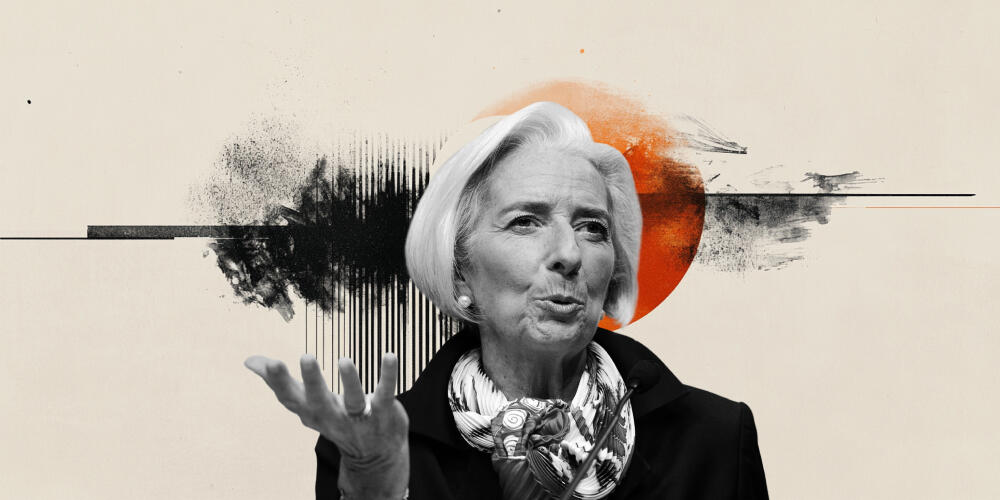
Christine Lagarde, President of the European Central Bank (ECB), explains the ECB's decision to leave key rates unchanged at the September policy meeting and responds to questions from the press.
Join our ECB Live Coverage here
Key quotes
"Growth shows resilience of domestic demand."
"GDP data reflects Q1 front-loading."
"Investment should be underpinned by government spending."
"Higher tariffs, stronger Euro, competition to hold growth back."
"Headwinds on growth should fade next year."
"Indicators of underlying inflation consistent with our 2% target."
"Forward-looking indicators suggest that wage growth will moderate further."
"Moderating wage growth to keep lid on domestic price pressures."
"Core inflation to drop on declining labour cost pressures, stronger Euro."
"Risks to economic growth more balanced."
"Outlook for inflation is more uncertain than usual."
"Stronger Euro could bring inflation down more than expected."
ECB FAQs
The European Central Bank (ECB) in Frankfurt, Germany, is the reserve bank for the Eurozone. The ECB sets interest rates and manages monetary policy for the region. The ECB primary mandate is to maintain price stability, which means keeping inflation at around 2%. Its primary tool for achieving this is by raising or lowering interest rates. Relatively high interest rates will usually result in a stronger Euro and vice versa. The ECB Governing Council makes monetary policy decisions at meetings held eight times a year. Decisions are made by heads of the Eurozone national banks and six permanent members, including the President of the ECB, Christine Lagarde.
In extreme situations, the European Central Bank can enact a policy tool called Quantitative Easing. QE is the process by which the ECB prints Euros and uses them to buy assets – usually government or corporate bonds – from banks and other financial institutions. QE usually results in a weaker Euro. QE is a last resort when simply lowering interest rates is unlikely to achieve the objective of price stability. The ECB used it during the Great Financial Crisis in 2009-11, in 2015 when inflation remained stubbornly low, as well as during the covid pandemic.
Quantitative tightening (QT) is the reverse of QE. It is undertaken after QE when an economic recovery is underway and inflation starts rising. Whilst in QE the European Central Bank (ECB) purchases government and corporate bonds from financial institutions to provide them with liquidity, in QT the ECB stops buying more bonds, and stops reinvesting the principal maturing on the bonds it already holds. It is usually positive (or bullish) for the Euro.
Author

Eren Sengezer
FXStreet
As an economist at heart, Eren Sengezer specializes in the assessment of the short-term and long-term impacts of macroeconomic data, central bank policies and political developments on financial assets.