Gold prices extend losses due to light trading volumes, traders anticipate hawkish Fed
- Gold prices are set to close the year with an impressive 27% gain, marking the strongest annual performance since 2010.
- The non-yielding metal receives downward pressure from the outlook of fewer Fed rate cuts in 2025.
- The safe-haven Gold remains backed by the prolonged Russia-Ukraine and Middle East conflicts.
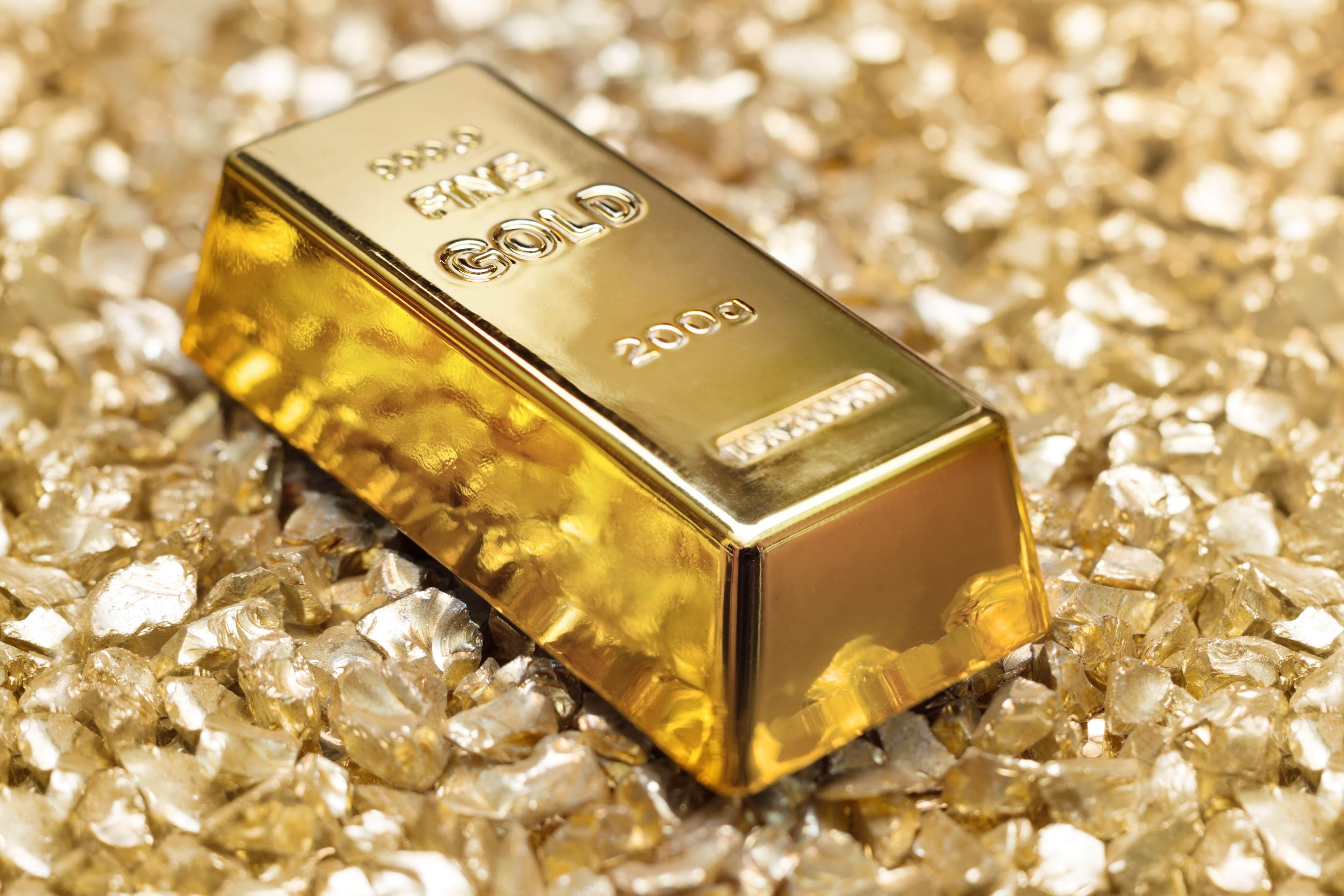
Gold price (XAU/USD) holds losses for the third consecutive day amid thin trading volume on the last trading day of the year. Gold prices are set to finish the year with an impressive 27% gain, representing their strongest annual performance since 2010. This rally has been driven by central bank purchases, rising geopolitical tensions, and monetary easing policies implemented by major central banks.
The yellow bullion, Gold, remained subdued as investors reacted to indications of a hawkish Federal Reserve (Fed). Robust labor market data, reflected in payroll counts, and persistent inflation prompted FOMC members to project fewer rate cuts by the Fed in 2025. This outlook led to a slight decline in non-yielding Gold prices during Q4.
However, the safe-haven Gold may gain some support as markets anticipate signals regarding the United States (US) economy under the incoming Trump administration and the Federal Reserve’s (Fed) interest rate outlook for 2025. The demand for the yellow metal could increase as potential tariffs and trade policies by the incoming Trump administration could trigger trade conflicts, increasing the risk aversion sentiment.
Gold price remains tepid as US Treasury yields depreciate
- The US Dollar Index (DXY), which measures the value of the US Dollar (USD) against its six major peers, remains subdued around 108.00 as traders continue to digest the US Federal Reserve’s (Fed) hawkish pivot.
- The non-interest-bearing Gold might have received support as US Treasury bond yields depreciated by around 2% on Monday. 2-year and 10-year yields stood at 4.24% and 4.53%, respectively.
- The heightened geopolitical risks stemming from the prolonged Russia-Ukraine conflict and ongoing tensions in the Middle East are continuously providing support for safe-haven assets including Gold.
- Israel's ambassador to the United Nations, Danny Danon, issued a stern warning on Monday to Yemen's Iran-backed Houthi militants, urging them to cease their missile attacks on Israel. Danon cautioned that they risk facing the same "miserable fate" as Hamas, Hezbollah, and Syria's Bashar al-Assad if they continue their aggression, per Reuters.
- On Thursday, Russia's Federal Security Service announced that it had thwarted multiple assassination plots by Ukrainian intelligence targeting high-ranking Russian officers and their families in Moscow. The agency stated that the attacks were planned using bombs disguised as power banks or document folders, according to Reuters.
- The Federal Reserve signaled a more cautious outlook for additional rate cuts in 2025, marking a shift in its monetary policy stance. This development highlights uncertainties surrounding future policy adjustments amid the anticipated economic strategies of the incoming Trump administration.
Technical Analysis: Gold price remains below nine-day EMA near $2,600
Gold price trades near $2,610.00 per troy ounce on Tuesday, with the daily chart indicating a consolidation phase as the metal moves sideways near the nine- and 14-day Exponential Moving Averages (EMAs). The 14-day Relative Strength Index (RSI) hovers just below the 50 mark, reflecting a neutral sentiment.
On the downside, the XAU/USD pair may find its immediate support around its monthly low of $2,583.39, recorded on December 19.
Regarding its resistances, the XAU/USD pair may target the nine- and 14-day EMAs at $2,618.00 and $2,624.00, respectively. A break above these levels could support the pair to approach the psychological level of $2,700.00, with the next barrier at its monthly high of $2,726.34, reached on December 12.
XAU/USD: Daily Chart

Gold FAQs
Gold has played a key role in human’s history as it has been widely used as a store of value and medium of exchange. Currently, apart from its shine and usage for jewelry, the precious metal is widely seen as a safe-haven asset, meaning that it is considered a good investment during turbulent times. Gold is also widely seen as a hedge against inflation and against depreciating currencies as it doesn’t rely on any specific issuer or government.
Central banks are the biggest Gold holders. In their aim to support their currencies in turbulent times, central banks tend to diversify their reserves and buy Gold to improve the perceived strength of the economy and the currency. High Gold reserves can be a source of trust for a country’s solvency. Central banks added 1,136 tonnes of Gold worth around $70 billion to their reserves in 2022, according to data from the World Gold Council. This is the highest yearly purchase since records began. Central banks from emerging economies such as China, India and Turkey are quickly increasing their Gold reserves.
Gold has an inverse correlation with the US Dollar and US Treasuries, which are both major reserve and safe-haven assets. When the Dollar depreciates, Gold tends to rise, enabling investors and central banks to diversify their assets in turbulent times. Gold is also inversely correlated with risk assets. A rally in the stock market tends to weaken Gold price, while sell-offs in riskier markets tend to favor the precious metal.
The price can move due to a wide range of factors. Geopolitical instability or fears of a deep recession can quickly make Gold price escalate due to its safe-haven status. As a yield-less asset, Gold tends to rise with lower interest rates, while higher cost of money usually weighs down on the yellow metal. Still, most moves depend on how the US Dollar (USD) behaves as the asset is priced in dollars (XAU/USD). A strong Dollar tends to keep the price of Gold controlled, whereas a weaker Dollar is likely to push Gold prices up.
Author

Akhtar Faruqui
FXStreet
Akhtar Faruqui is a Forex Analyst based in New Delhi, India. With a keen eye for market trends and a passion for dissecting complex financial dynamics, he is dedicated to delivering accurate and insightful Forex news and analysis.

















