Gold price recovers despite strong labor demand casts doubts over rate cuts in March
- Gold price recovers sharply as investors ignore outperformance from US labor market data.
- The Unemployment Rate remains steady at 3.7% and wage growth escalates.
- Robust US economic prospects have trimmed prospects of a Fed rate cut in March.
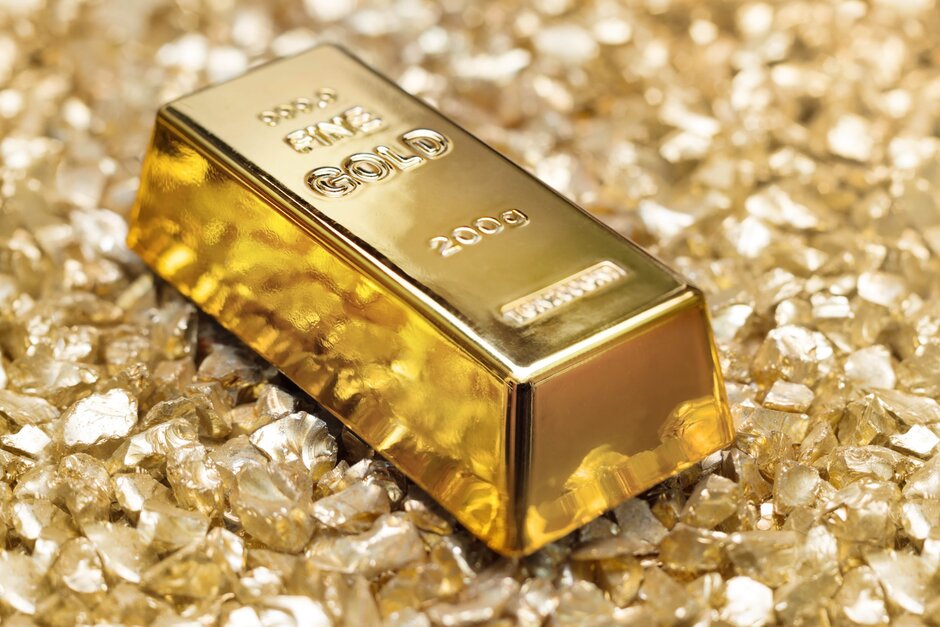

Gold price (XAU/USD) recovers swiftly despite the labor demand remains stronger-than-projected in December. As per the United States Nonfarm Payrolls (NFP) report, US employers hired 216K workers, which were higher than expectations of 170K and the prior reading of 173K. Market participants anticipated moderate job gains as the pace of frequent job change by individuals has slowed due to easing labor demand.The Unemployment Rate has remained steady at 3.7% while market participants projected a higher figure at 3.8%.
Other employment-related economic indicators such as ADP Employment Change and weekly jobless claims data, released on Thursday had already set a higher base for the official employment data.
Meanwhile, Average Hourly Earnings grew at a steady pace of 0.4% while investors projected wages rising at a slower pace of 0.3%. The annual wage data rose sharply by 4.1% against expectations of 3.9% and the prior reading of 4.0%.
The near-term demand for bullions has dwindled as prospects in favour of rate cuts by the Federal Reserve (Fed) from March are expected to drop further. Unlike other members of the Group of Seven economies that are struggling with high interest rates, the labor market in the US economy is performing well . This strength could allow the Fed to leave interest-rate cuts for the second quarter of this year.
Daily Digest Market Movers: Gold price rebounds as US Dollar surrenders gains
- Gold price bounces back despite the US Bureau of Labor Statistics (BLS) has reported a upbeat US labor market report for December.
- The economic data has outperformed on all parameters such as labor demand, jobless rate, and wage growth.
- The upbeat US labor market data is expected to support Fed policymakers to favour for keeping interest rates high for a longer period.
- As per the CME FedWatch tool, chances of an interest rate cut in March have dropped to 52% after the release of the stronger-than-projected official labor market report.
- Market participants are also reconsidering bets supporting a rate-cut campaign from March as robust economic prospects for the US economy could imbed inflationary pressures above 2%.
- This week, the US ISM reported a strong rebound in Manufacturing PMI as firms remain optimistic about lower borrowing costs this year.
- Going forward, investors will focus on the ISM Services PMI, which will be published at 15:00 GMT.
- The Services PMI represents the service sector, which accounts for two-third of the US economy. It is seen slightly down at 52.6 against November’s reading of 52.7.
- Meanwhile, the US Dollar Index falls sharply after printing a fresh three-week high near 103.00. 10-year US Treasury Bond yields cling to gains around 4.05% as Fed's rate cut bets for March have trimmed.
Technical Analysis: Gold price bounces back to near $2,040
Gold price recovers strongly after felling like a house of cards after the release of the upbeat US labor market data. The precious metal came out of Thursday’s trading range after breaking below $2,036 but has recovered again. The 20-day Exponential Moving Average (EMA) around $2,040 has acted as a major support for the Gold price bulls.
Gold FAQs
Why do people invest in Gold?
Gold has played a key role in human’s history as it has been widely used as a store of value and medium of exchange. Currently, apart from its shine and usage for jewelry, the precious metal is widely seen as a safe-haven asset, meaning that it is considered a good investment during turbulent times. Gold is also widely seen as a hedge against inflation and against depreciating currencies as it doesn’t rely on any specific issuer or government.
Who buys the most Gold?
Central banks are the biggest Gold holders. In their aim to support their currencies in turbulent times, central banks tend to diversify their reserves and buy Gold to improve the perceived strength of the economy and the currency. High Gold reserves can be a source of trust for a country’s solvency. Central banks added 1,136 tonnes of Gold worth around $70 billion to their reserves in 2022, according to data from the World Gold Council. This is the highest yearly purchase since records began. Central banks from emerging economies such as China, India and Turkey are quickly increasing their Gold reserves.
How is Gold correlated with other assets?
Gold has an inverse correlation with the US Dollar and US Treasuries, which are both major reserve and safe-haven assets. When the Dollar depreciates, Gold tends to rise, enabling investors and central banks to diversify their assets in turbulent times. Gold is also inversely correlated with risk assets. A rally in the stock market tends to weaken Gold price, while sell-offs in riskier markets tend to favor the precious metal.
What does the price of Gold depend on?
The price can move due to a wide range of factors. Geopolitical instability or fears of a deep recession can quickly make Gold price escalate due to its safe-haven status. As a yield-less asset, Gold tends to rise with lower interest rates, while higher cost of money usually weighs down on the yellow metal. Still, most moves depend on how the US Dollar (USD) behaves as the asset is priced in dollars (XAU/USD). A strong Dollar tends to keep the price of Gold controlled, whereas a weaker Dollar is likely to push Gold prices up.
Author
Sagar Dua
FXStreet
Sagar Dua is associated with the financial markets from his college days. Along with pursuing post-graduation in Commerce in 2014, he started his markets training with chart analysis.