Gold Price Forecast: XAU/USD remains pressured near $1,800 amid USD recovery
- Gold holds in a critical support structure on the daily chart.
- XAU/USD leans with a bullish bias with eyes on a break of $1,830.
- Lower US yields are supporting the bullish bias and are weighing on the greenback.

update: Gold prices surrender the previous session's gains and struggle to defend the $1,800 mark. The US 10-year Treasury yields rebound from the early lower levels to trade at 1.55%, following the upcoming Bank of Japan (BOJ) and the European Central Bank (ECB) policy meetings on the day.
The US dollar trades near 93.95, recovering from the early session’s lows. A higher USD valuation makes gold more expensive for the buyers holding other currencies. Investors are gearing up for the Bank of Japan (BoJ) and the European Central Bank (ECB) monetary policy , although neither of the central banks is likely to announce any change in the policy. Still, the forward guidance on growth and inflation will be a key to set the market tone. The Bank of Canada (BOC) ended its $2 billion per week quantitative easing (QE) program while holding its key interest rate steady at 0.25% on Wednesday.
Trading at $1,796, the price of gold is flat within bullish territory on Thursday and rides daily dynamic support near the 50-day EMA. Gold is holding in a tight range mid-week while global equity markets gave up recent gains on Wednesday.
It was a mixed session while US Treasury yields fell to a two-week low as traders weighed continued positive corporate results and a resurgence in US-China tensions that could compound supply-chain worries.
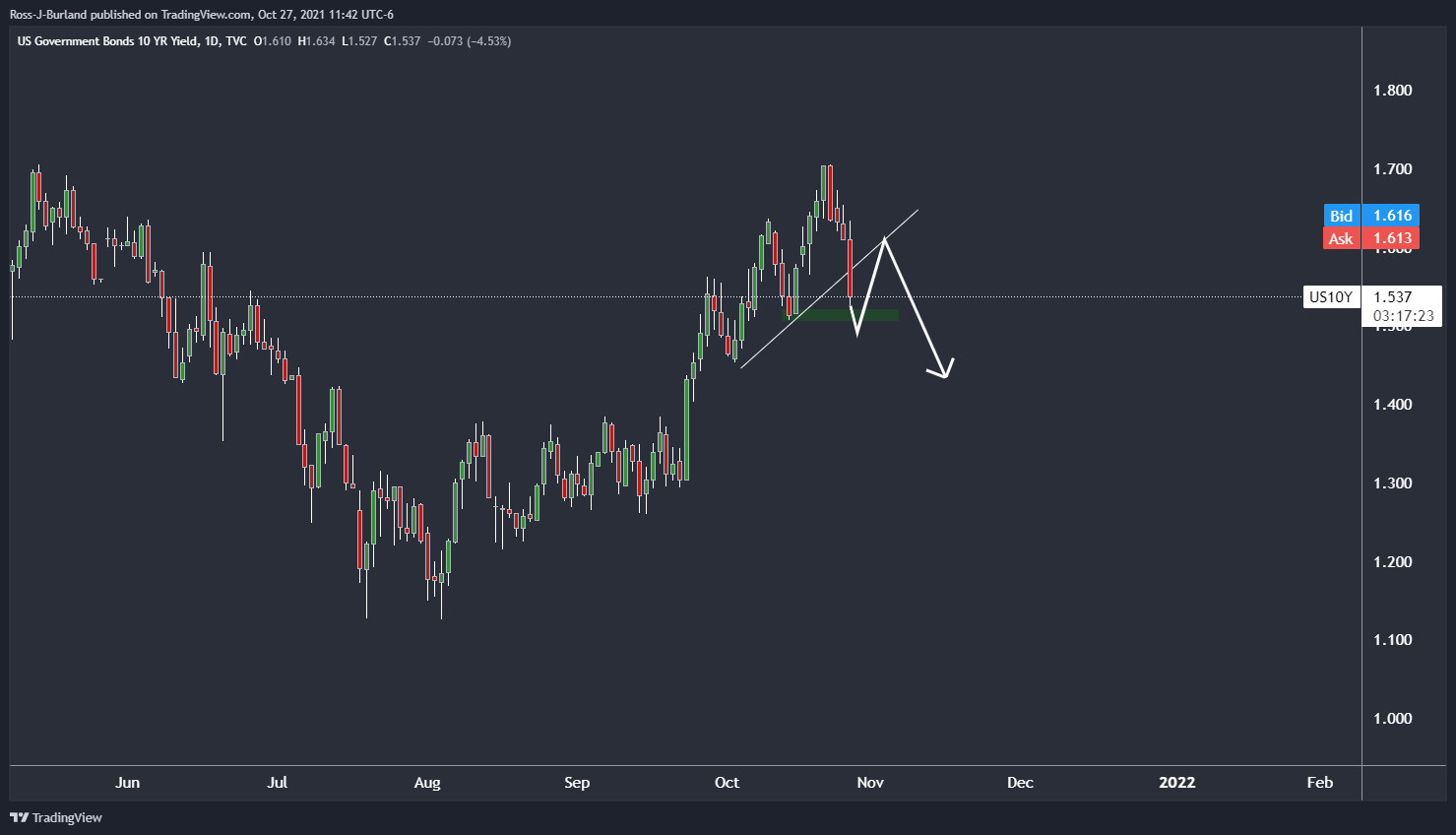
Bonds also rallied overnight on the back of a larger-than-expected reduction in UK bond issuance (a cut was expected due to the UK budget deficit coming in better than forecast).
Consequently, the US dollar lost value against major currencies as the Bank of Canada started off a series of awaited central bank policy comments with a hawkish tone. The outcome broke a calm that had settled over the forex space this week and the US dollar index met resistance in the daily chart. 93.70 was the low on the day.
The Bank of Canada signaled it could hike interest rates earlier than previously thought and became the first central bank from a G7 country to exit quantitative easing. The BoC maintained guidance to leave rates on hold until economic slack is absorbed, but it now expects that to happen sometime in the middle quarters of 2022 rather than in the second half of 2022. Markets will look to the ECB meets tonight. President Lagarde may have a difficult time convincing markets to reverse rising expectations of higher interest rates next year.
Meanwhile, the hunt for inflation protection continues to prop up interest in the yellow metal as real rates sink, analysts at TD Securities said.''Ten year breakeven yields continue to firm at their highest levels since 2012, as speculators brace for inflation. While the interest in inflation is supporting gold, global markets remain intensely focused on pricing the Fed's exit, with the recent surge in market-based inflation expectations also fueling bets for an earlier Fed hike.''
''The market is increasingly pricing in a policy mistake which is unlikely to take place, considering that central banks are likely to look past these disruptions as their reaction functions have been historically more correlated to growth than inflation. In this sense, reasons to own the yellow metal are growing more compelling as Fed pricing is likely to unwind in the coming months,'' the analysts explained.
''While this narrative has yet peaked, we expect a deceleration in US economic activity, as a result of a growing fiscal drag, to catalyze a repricing.''
Gold technical analysis
From a daily perspective, the price has been trying to move higher as illustrated in the following pre-market open analysis: Chart of the Week: Gold bears lurk at weekly trend line resistance
''$1,835 guards territory to $1,880 as follows:
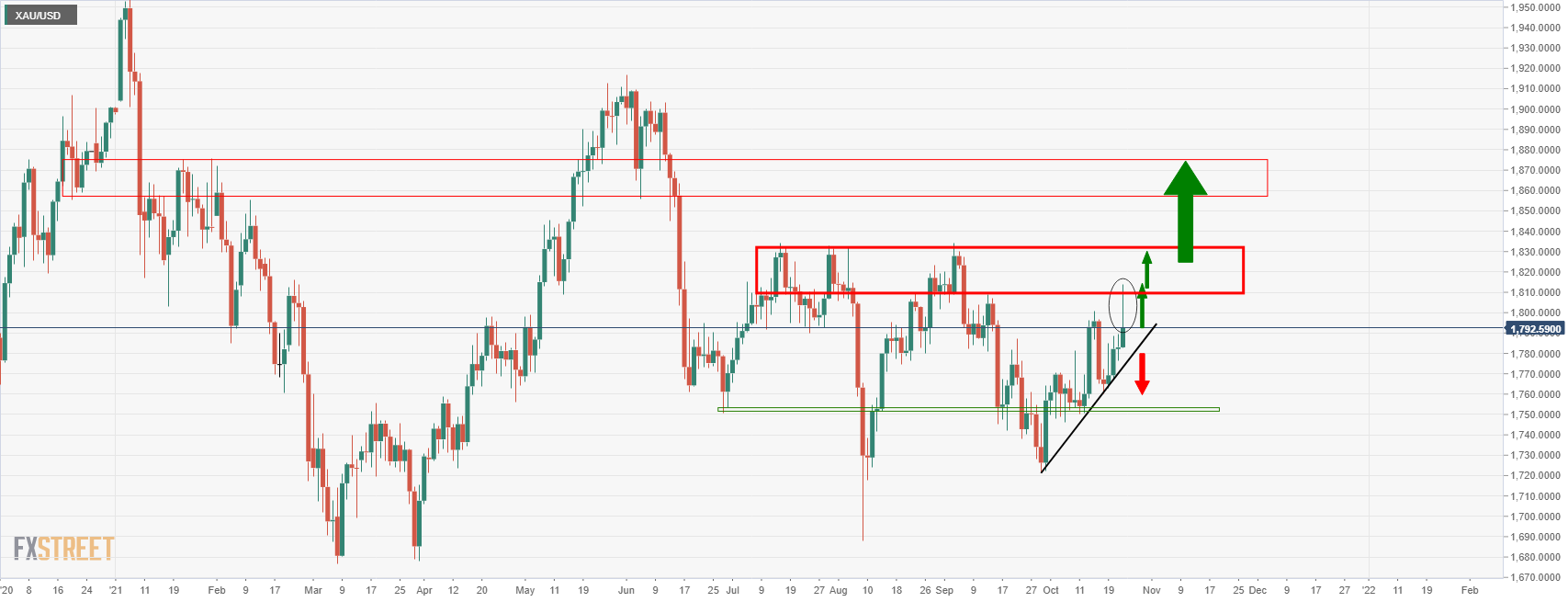
Gold bulls were making progress
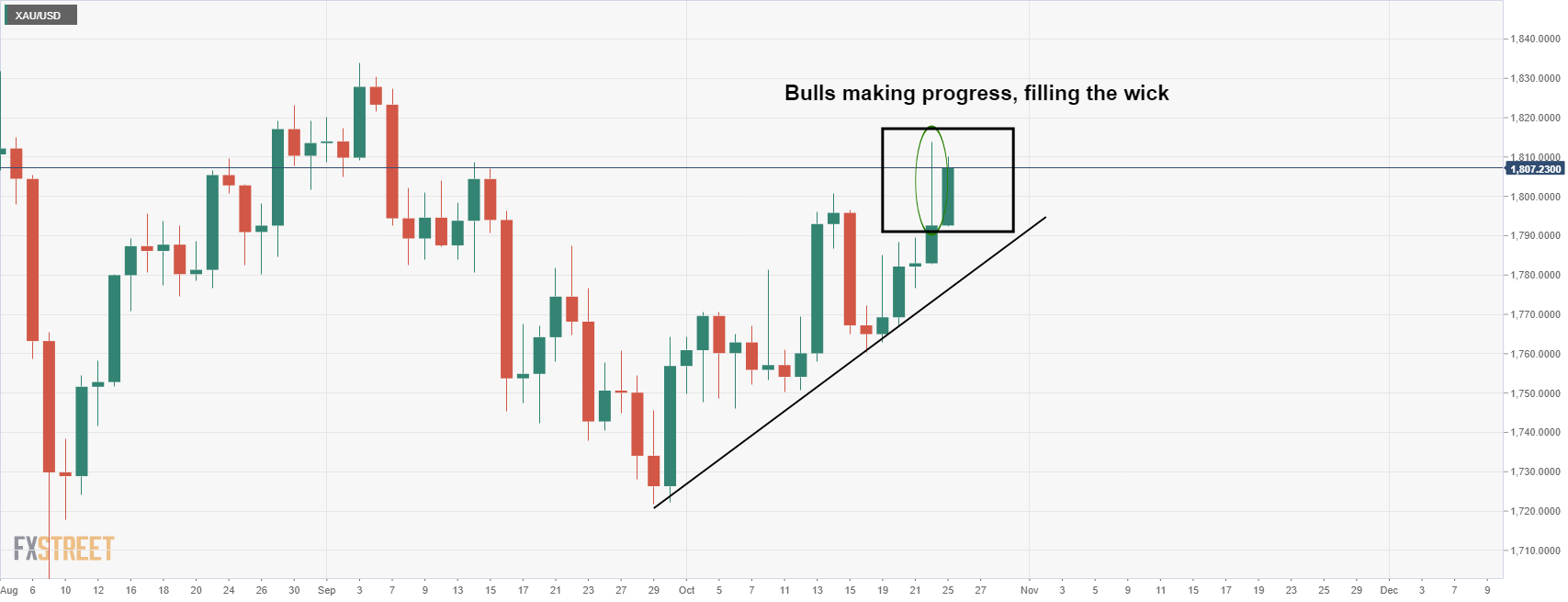
The price action on Tuesday, however, has moved in for a significant test of the dynamic support as follows:
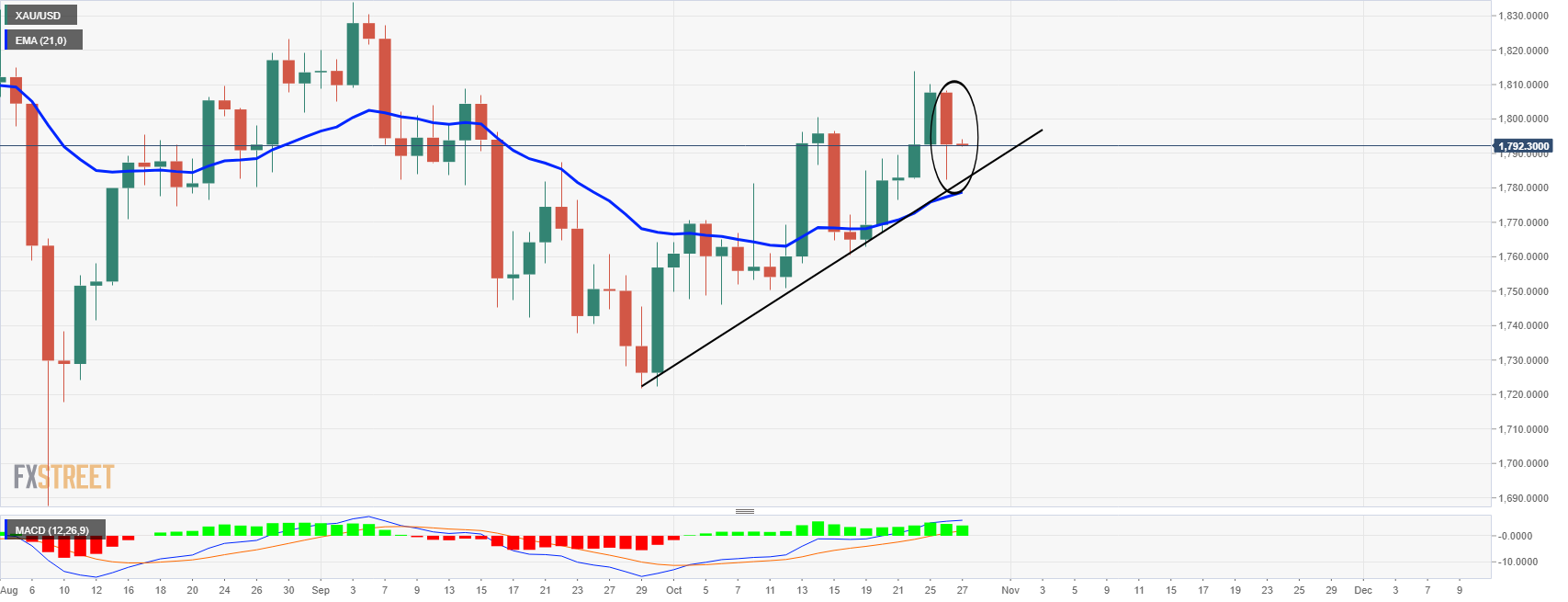
The price had left a tweezer top which indicated that the price could move in for another test of the dynamic support and the 21-day moving average:
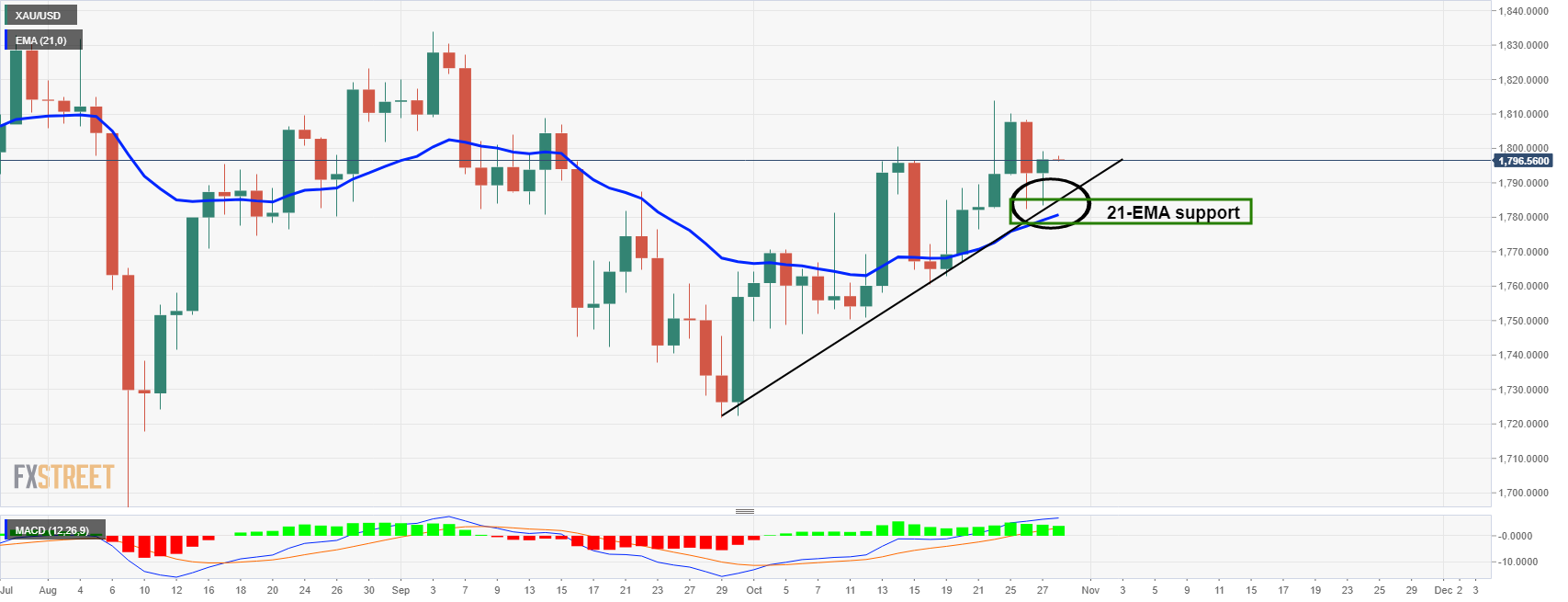
So long as this structure holds, the bias is bullish with positive MACD.
Author

Ross J Burland
FXStreet
Ross J Burland, born in England, UK, is a sportsman at heart. He played Rugby and Judo for his county, Kent and the South East of England Rugby team.