Gold Price Analysis: XAU/USD remains defensive below $1,800 amid softer USD
- Gold bulls step back in following the ECB as the US dollar melts.
- DXY is now on the backfoot as risk appetite recovers.

Update: Gold prices remain weak below the $1,800 mark following mixed global signals. The strength in the US dollar keeps the precious metal gains under check.
Gold takes cues from the major central bank’s views on tapering and economic stimulus.
The sentiment was beaten down after the European Central Bank (ECB) left its key rates unchanged as widely expected and plan of dialling back some of its massive emergency pandemic support.
The drop in the US benchmark US Treasury yields capped the steep downside in the prices. Furthermore, the rapid spread of the coronavirus delta variant and its impact on the global economic recovery continued to lend support near the lower levels.
However, the Fed’s official hawkish comments signalling a tapering action before the end of this year exerts pressure on the higher side.
End of update
Gold is higher on the day by some 0.45% near $1,797 and has moved up from a low of $1,783.90 to pierce the psychological $1,800 mark scoring $1,801.06 the high so far.
In recent trade, the US dollar dropped in the US 30-year bond sale, falling to a low of 92.380, extending its decline from the 92.761 highs that have ensued as a result of a firmer euro today.
The single currency has popped higher from a low of 1.1805 to 1.1841 following the European Central Bank trimming emergency support.
The ECB said it will trim emergency bond purchases over the coming quarter, taking a first small step towards unwinding the emergency aid that has propped up the eurozone economy during the pandemic.
The ECB will in the next three months buy bonds under its 1.85 trillion euro Pandemic Emergency Purchase Programme (PEPP) at a pace moderately lower than the 80 billion euros a month it bought over the previous two quarters.
“The ECB is delivering mainly as expected today,” analysts at TD Securities said in a report on Thursday.
“Looking ahead, the focus will be on how the ECB defines 'moderately'. Anything less than €60bn/mo could be bearish.”
But the ECB did not signal any further withdrawal of support and maintained its long-standing guidance that it will ramp up support further if it becomes necessary.
The inflation projections were revised up, but not to the extent that they sound hawkish. This leaves the focus back on the Federal Reserve for later this month.
Fed speakers yesterday were hawkish. Yesterday, John Williams said that it “could be appropriate” to begin tapering before year-end. He added that “I will be carefully assessing the incoming data on the labor market and what it means for the economic outlook, as well as assessing risks such as the effects of the delta variant.”
James Bullard argued that the Fed should press ahead with tapering despite the weak August jobs report, explaining that the labor market looks “very strong” and that another reason to taper is the “incipient housing bubble.”
Additionally, the Fed Beige Book offered a positive prelude before the September 21-22 FOMC meeting.
''Between the Beige Book and the Fed speakers, it seems that the Fed will not be deterred from tapering this year. The only question is one of timing,'' analysts at Brown Brothers Harriman argued.
Gold technical analysis
''Our ChartVision framework argues that gold prices need only breach $1870/oz by year-end for an uptrend to form,'' analysts at TD Securities said.
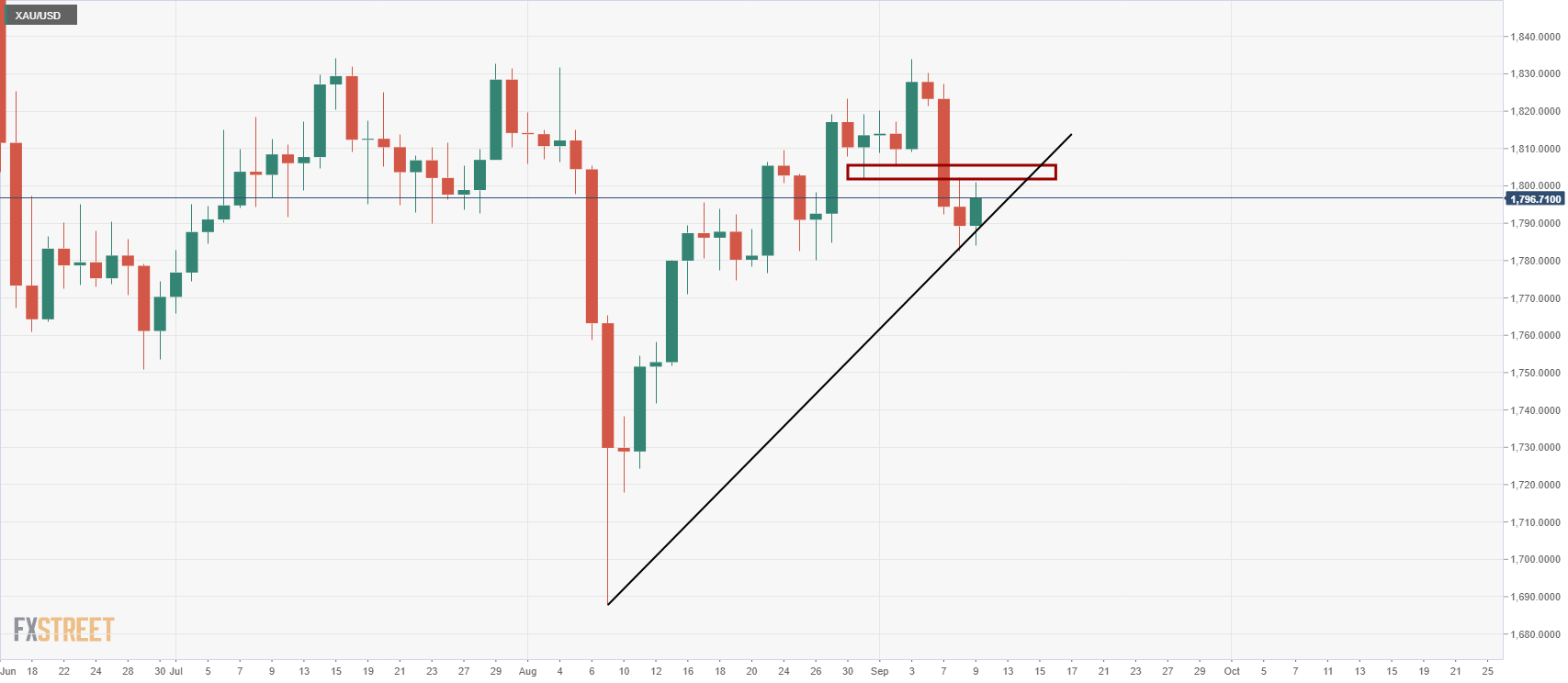
From a daily perspective, should the US dollar continue to recover, the price could extend to as low as 1,750 in the near future.
However, it is currently correcting towards daily resistance as follows:
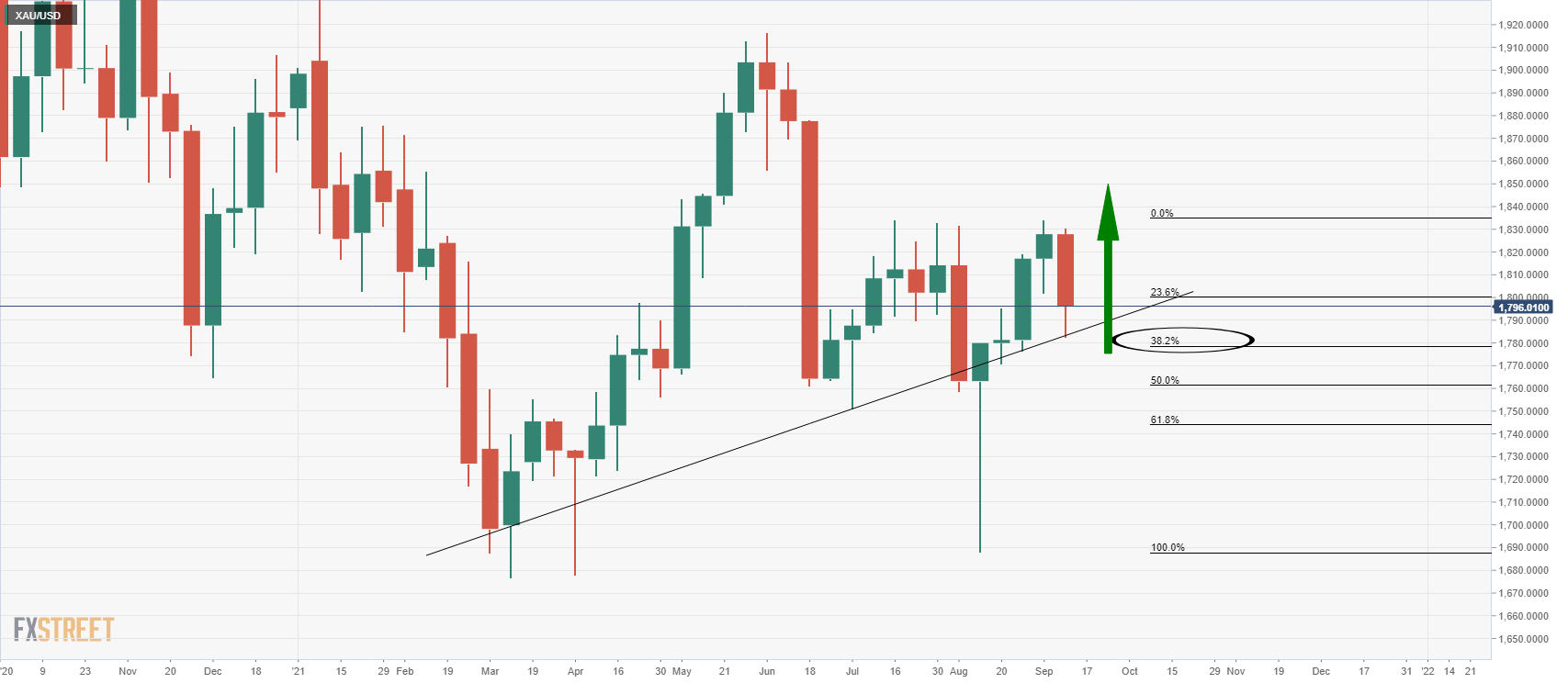
However, the weekly picture offers a bullish outlook also:
Author

Ross J Burland
FXStreet
Ross J Burland, born in England, UK, is a sportsman at heart. He played Rugby and Judo for his county, Kent and the South East of England Rugby team.

















