|

Gold one-year risk reversals hit lowest since June

  • Demand for gold call options has weakened over the last four weeks, risk reversals indicate. 
  • One-year risk reversals have dropped to multi-month lows despite coronavirus fears. 

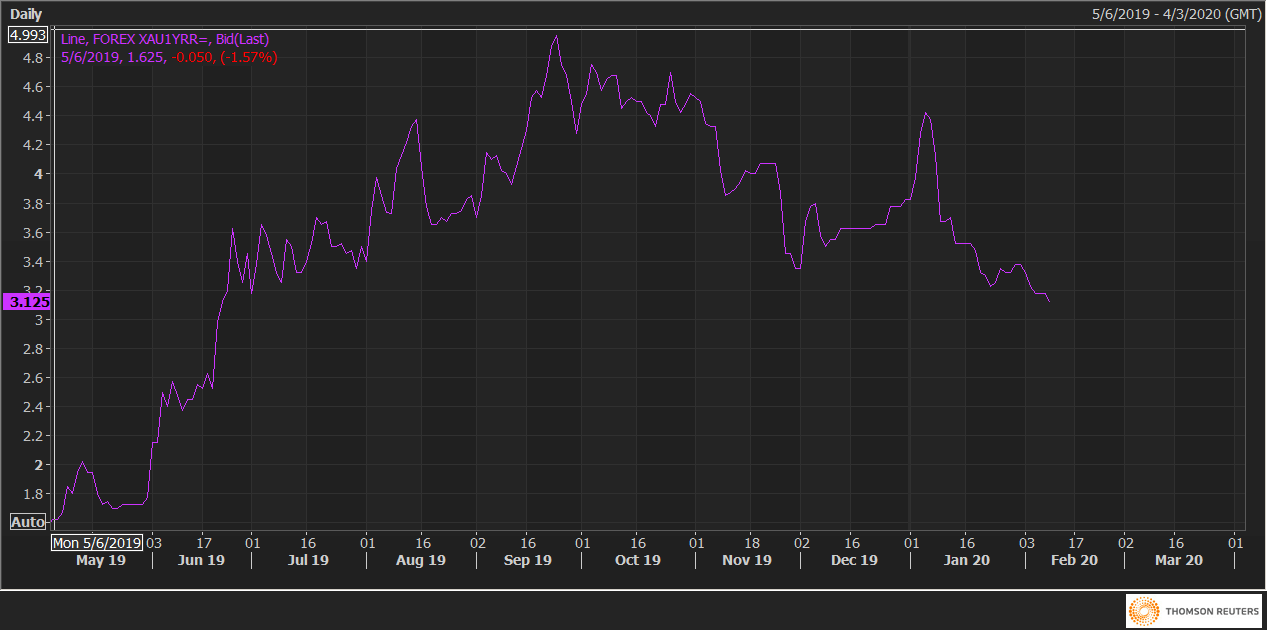
Gold one-year risk reversals, a gauge of calls to puts on the yellow metal and a barometer of positioning and sentiment, fell to the lowest level in eight months on Monday, indicating a weakening of demand for the call options or bullish bets. 

The risk reversals declined to 3.125, a level last seen on June 21, having topped out at 4.425 in the first week of January, when the US-Iran tensions had triggered a flight to safety and put a haven bid under gold. 

The yellow metal is currently trading at $1,570, having hit a high of $1,611 on Jan. 8. The markets have been recently roiled by coronavirus and fears of a sharp slowdown in China's economy.  

So far, however, that has failed to invite stronger demand for call options on gold, as indicated by the slide in the risk reversals. 

A call option gives the holder a right but not the obligation to buy assets at an agreed price on or before a particular date. A put option is the right to sell. 

A negative risk reversal indicates the premium claimed by puts (or demand) is higher than that for calls. 

  • FXstreet Indonesian Site - new domain! Access it ad www.fxstreet-id.com

XAU1YRR
Author

Omkar Godbole

Omkar Godbole

FXStreet Contributor

Omkar Godbole, editor and analyst, joined FXStreet after four years as a research analyst at several Indian brokerage companies.


More from Omkar Godbole
Share:

Editor's Picks

USD/JPY: Japanese Yen tumbles as Fed signals higher rate path

The Japanese Yen depreciated against the US Dollar on Wednesday after the US Federal Reserve delivered a hawkish hold, with most officials expecting one rate hike towards the end of the year, while the new Fed Chair, Warsh, reiterated the Fed’s commitment to achieving the 2% inflation goal. At the time of writing, the USD/JPY trades at 160.66 after bouncing off the daily low of 160.11.

AUD/USD folds to a hawkish Fed with no data to lean on

The Australian Dollar went into Kevin Warsh's first Federal Reserve decision as a high-beta currency with no domestic shield, and it paid for it. AUD/USD had been holding above 0.7050 ahead of the announcement and fell close to 80 pips in the reaction, slicing through 0.7050 and briefly breaking the 0.7000 handle to a session low just beneath it before clawing back above the figure.

Gold extends intraday slide towards $4,250

Gold turned negative by the end of Wednesday and trades in the $4,260 price zone. The US Federal Reserve left rates unchanged, but delivered a hawkish message, even though Chair Kevin Warsh refused to provide forward guidance.

Bitcoin remains under bearish pressure despite recent rebound — Glassnode

Bitcoin remains well below key onchain metrics, with realized losses continuing to dominate capital flows despite a partial price recovery. The top crypto rebounded from lows near $60,000 to the $65,000 range after the US-Iran peace deal reversed much of the war premium that had weighed on risk assets.

The next big AI trade may not be about chips or software
Artificial intelligence has already created some of the biggest winners in modern market history. Chipmakers have surged, data centre construction is booming, and electricity demand forecasts are changing globally.
Why a hawkish RBA is no longer enough to lift the Australian Dollar

The Reserve Bank of Australia delivered more than what markets expected: a hawkish hold that should have supported the Aussie. But markets widely ignored it, focusing instead on slowing economic growth and proving that central bank messaging alone isn’t always enough to drive currencies.