GBP/USD subdued just under 1.3550 with FX markets primed for US jobs report
- GBP/USD is subdued at just under 1.3550 as the key US jobs report looms.
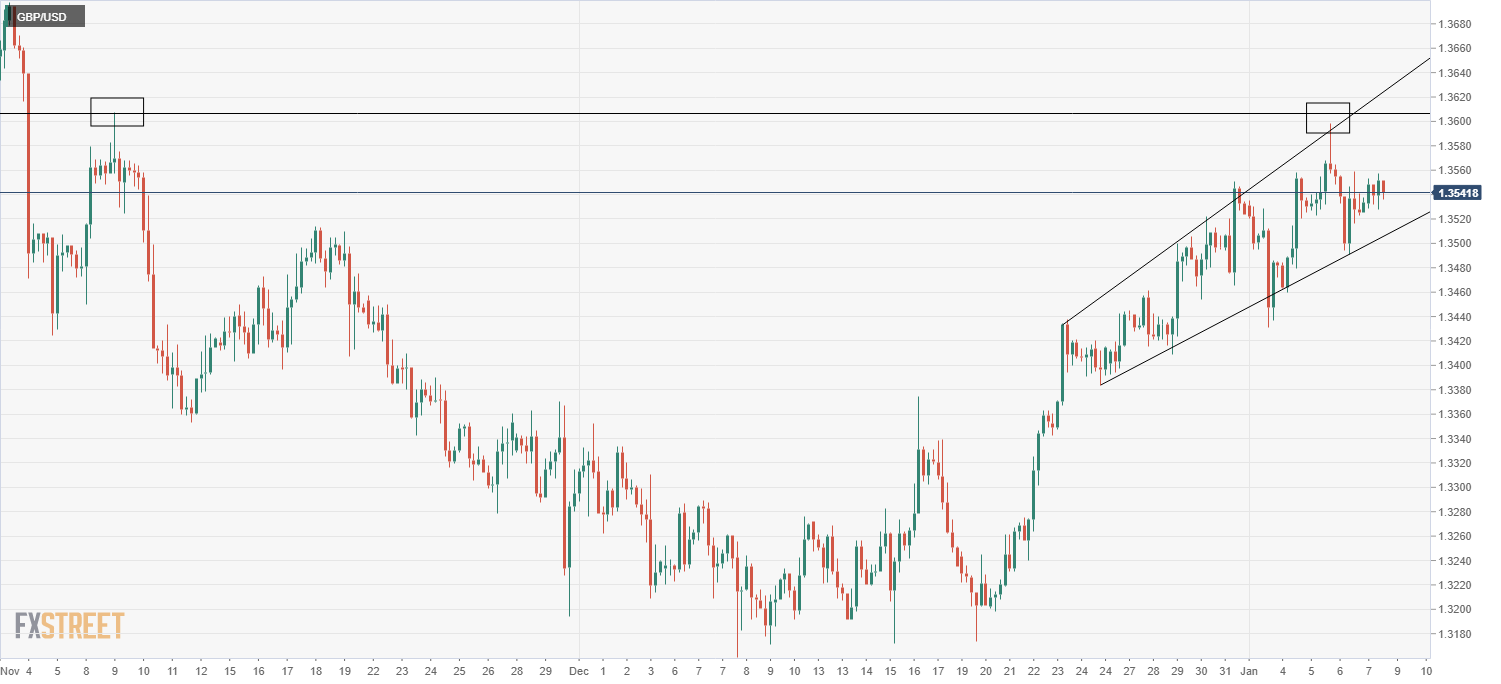
- The pair continues to trade within its recent bullish trend channel, with traders eyeing resistance at 1.3600 and support at 1.3400.

GBP/USD is unsurprisingly trading in subdued fashion as FX market participants await the release of the latest official US labour market report at 1330GMT. So far on Friday, the pair has been unable to poke above the 1.3550s and has mostly been going sideways in the 1.3530-50 area. In the broader technical context, GBP/USD’s has been moving higher within the confines of a bullish trendline since just after Christmas and this trend currently remains intact. But traders may be leery about chasing the pair any higher if the upcoming US labour market report comes in as good as expected, thus boosting the prospect of a March Fed rate hike.
GBP/USD bulls will be relieved that the hawkish Fed minutes from earlier in the week and associated sharp upside in US bond yields didn’t translate into broad USD strength. Indeed, the pair is actually on course to post a modest weekly gain of about 0.1%, which would mark a third successive week in the green, with sterling having gained recently as UK pandemic/lockdown fears subsided. But some FX strategists have argued that the proximity of the jobs report so close after the release of the hawkish Fed minutes may have deterred USD bulls from, at the time, increasing their long exposure. With the jobs report out of the way (as long as it is decent), the dollar may get the “green light” to push higher, analysts have warned.
Was that to be the case, GBP/USD likely would suffer and the 1.3500 level would below vulnerable. A break below that could open the door to technical selling to drive the pair as low as 1.3400 where the 50-day moving average resides. In the reverse case where the dollar sees post-jobs report weakness, the key area of resistance to watch is at 1.3600.
Author

Joel Frank
Independent Analyst
Joel Frank is an economics graduate from the University of Birmingham and has worked as a full-time financial market analyst since 2018, specialising in the coverage of how developments in the global economy impact financial asset















