|

GBP/USD Price Analysis: Bears are moving in but 1.1800 and then 1.2000 could be over the horizon

  • GBPUSD is meeting its highest levels since September 12. 
  • With the price on the backside of the weekly countertrend, 1.2000 is a realistic prospect. 

The Pound rallied on Thursday, hitting the best level against the greenback since September 12. The moves were inspired by lower-than-expected inflation reading for the US in the day's Consumer Price Index data.  CPI rose 0.4% in October to match the prior month's increase, the Labor Department said. Economists polled by Reuters had forecast the CPI would advance by 0.6%.

The markets reacted in such a manner that this might allow the Federal Reserve to ease up on aggressively hiking interest rates and this gives rise to the prospects of a prolonged offer in the US Dollar, bullish for GBP. However, there are prospects of a correction and the Dollar bulls may not be out of the game entirely: 

GBPUSD daily chart

If 1.1800 gives way, then 1.2000 will be on the horizon as the price moves between support and resistance within the ascending channel. The W-formation is, however, a bearish feature as the price could be drawn into the support of the neckline as it is rejected at resistance. 

GBPUSD weekly chart
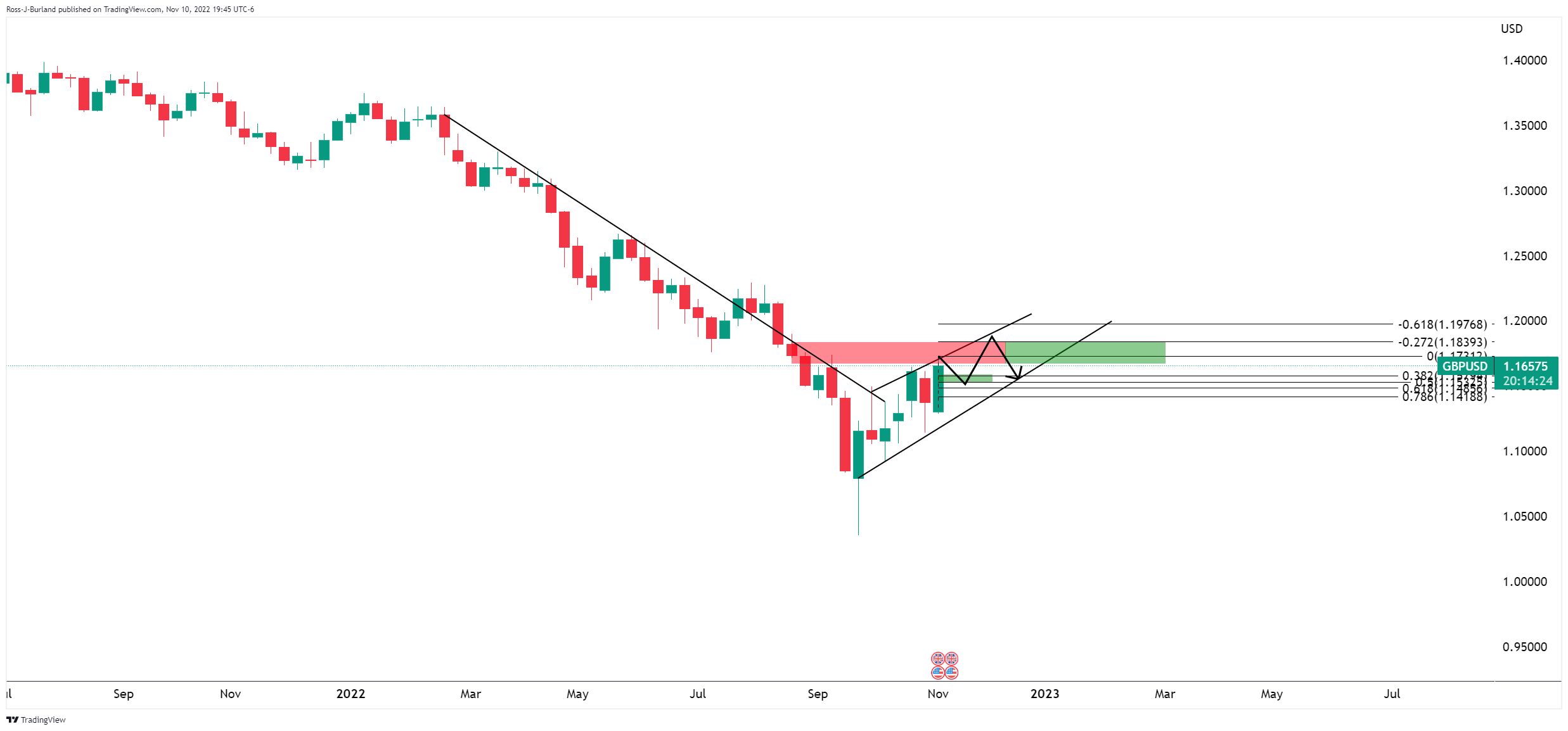
With the price on the backside of the weekly countertrend, 1.2000 is a realistic prospect. 

DXY technical analysis

The US Dollar has been sent into a critical support level as the following charts will illustrate: 
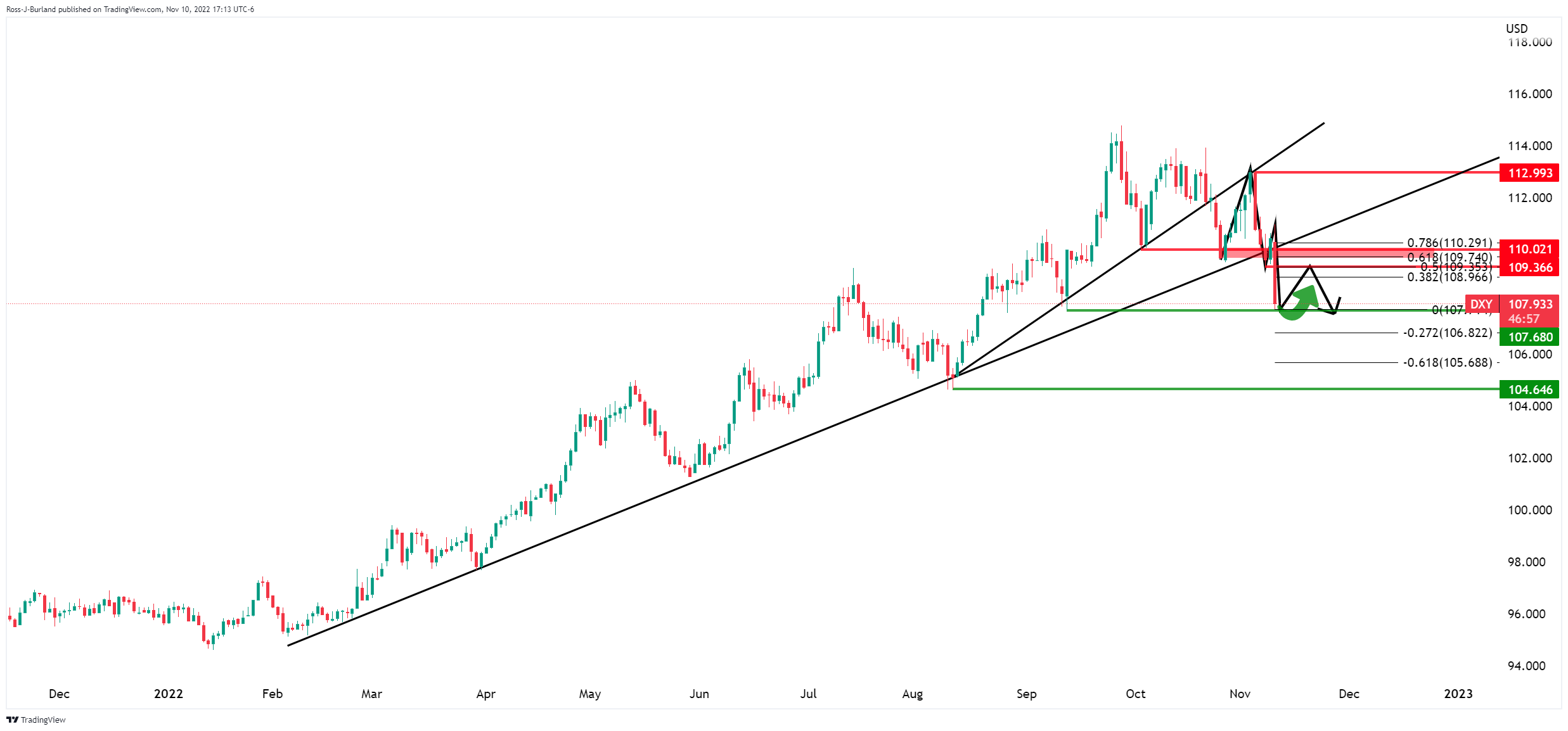
The DXY is now well below the counter trendline and has formed an M-formation. If the support holds, then there will be prospects of a significant correction. On the other hand, if the bears dig their teeth in again, the case for 1.2000 in Cable will be active. 

Author

Ross J Burland

Ross J Burland, born in England, UK, is a sportsman at heart. He played Rugby and Judo for his county, Kent and the South East of England Rugby team.


More from Ross J Burland
Share:

Editor's Picks

AUD/USD hangs close to monthly lows, still defends 0.7100 ahead of Fed decision

AUD/USD retains its negative bias for the third straight day, defending 0.7100 while trading close to a monthly low in Wednesday's Asian session on Wednesday. The US Dollar stands firm near a two-week high as the anticipated Fed rate hike and oil-driven inflation fears continue to push US bond yields to a multi-year high. Furthermore, escalating Middle East tensions benefit the safe-haven buck and weigh on the risk-sensitive Aussie.

USD/JPY holds firm above 155.00, awaits Fed policy announcements

USD/JPY climbs to a fresh one-week high above 155.00 in the Asian session on Wednesday amid a bullish US Dollar. Oil-driven inflation fears, along with the anticipated Fed rate hike, continue to support surging US bond yields. Moreover, rising US-Iran tensions underpin the USD's reserve currency status. The pair, however, remains below the mid-155.00s as bulls seem hesitant ahead of the Fed decision later today and the BoJ meeting, starting on Thursday.

Gold defends key $4,280 support ahead of Fed verdict

Gold is attempting another run above $4,300 early Wednesday, replicating a tepid bounce seen in Tuesday’s Asian trading. Gold’s next major directional move depends on the US Federal Reserve monetary policy decision and outlook due later in the day.

Ethereum continues to attract capital despite impending rate hike and Clarity Act failure

Ethereum declined to $2,400 on Tuesday after the Clarity Act failed to progress in the Senate. Despite that and the market's near certainty of an interest rate hike at the next Federal Reserve (Fed) meeting, the top altcoin has continued to attract fresh capital. Ethereum buyers have been dominating sellers over the past few days.

August UK inflation report expected to show rising inflation

The United Kingdom Office for National Statistics will publish the highly anticipated Consumer Price Index data for August on Wednesday at 06:00 GMT. The inflation report could trigger volatility in the British Pound, as it comes just one day before the Bank of England monetary policy decision.

How Japan became the World's Banker and why that era may be ending

Japan's ultra-low interest rates helped finance trillions of dollars in global investments for more than a decade, making the Japanese Yen one of the world’s cheapest sources of funding. With the Bank of Japan expected to tighten policy again this week, that advantage may be entering a new phase. While most major economies raised interest rates, Japan remained the world's outlier.