GBP/USD loses ground following strong labor market data from the US
- The GBP/USD currently trades at 1.2615, recording mild losses.
- Broad-spectrum technical indicators reveal a bullish hold for larger time-frames but the short term is somewhat negative.
- The USD is getting traction thanks to positive labor market figures and markets pushing the Fed’s easing cycle to May.

On Thursday, the GBP/USD pair declined towards the 1.2615 level showing slight losses with upbeat US labor market figures benefiting the Greenback with Jobless claims from the week ending on February 3 coming in lower than expected. However, the Bank of England (BoE) holds a somewhat similar stance as the Federal Reserve (Fed) in delaying rate cuts so the losses may be limited.
Moreover, markets are predicting 100 bps rate cuts over the next 12 months, starting in June while investors are seeing higher 125 bps of easing in 2024 from the Fed indicating that the losses from the Pound may be limited. However, it will all come down to the incoming data as they will shape the expectations of the next decisions. Next in line, next Tuesday, the US will release January’s inflation figures while the UK will reveal key labor market figures which may likely set the pace for the pair for the next sessions.
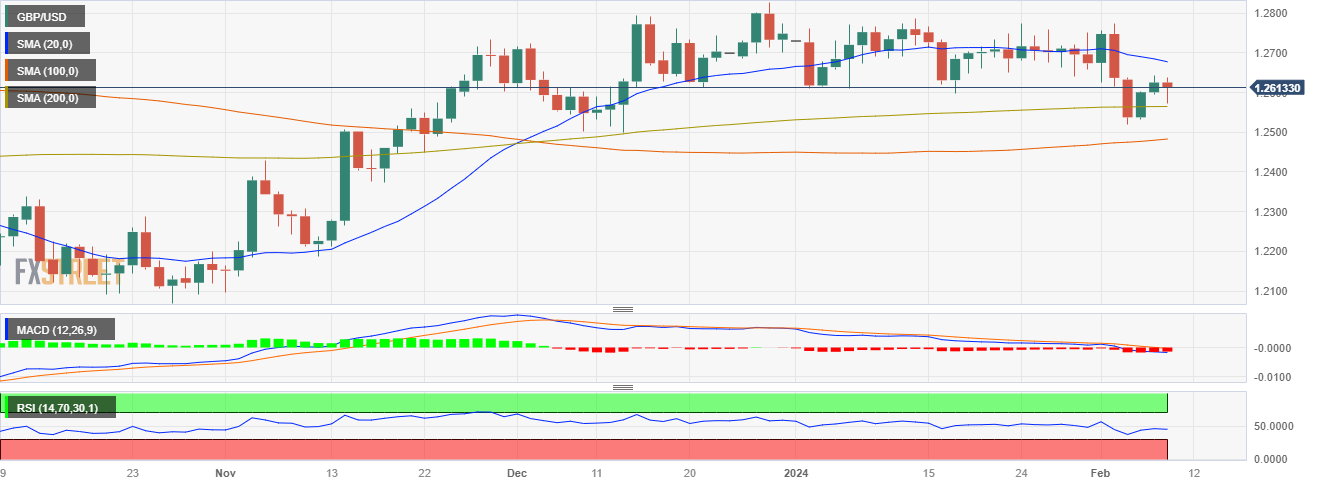
GBP/USD daily chart
The indicators on the daily chart reflect a somewhat bearish bias for the short term. The Relative Strength Index (RSI) is on a downward slope and in negative territory. This gives clear evidence that market sentiment is favoring the sellers. Concurrently, the Moving Average Convergence Divergence (MACD) is throwing out red bars, indicating the selling pressure is not diminishing. That being said, on the broader market outlook, the pair is below the 20-day Simple Moving Averages (SMAs), but above the 200 and 100-day SMA. This suggests that the overall uptrend prevails, despite the recent downward movements, but as long as the buyers fail to reconquer the 20-day average, more downside may be on the horizon.
GBP/USD daily chart
Author

Patricio Martín
FXStreet
Patricio is an economist from Argentina passionate about global finance and understanding the daily movements of the markets.